
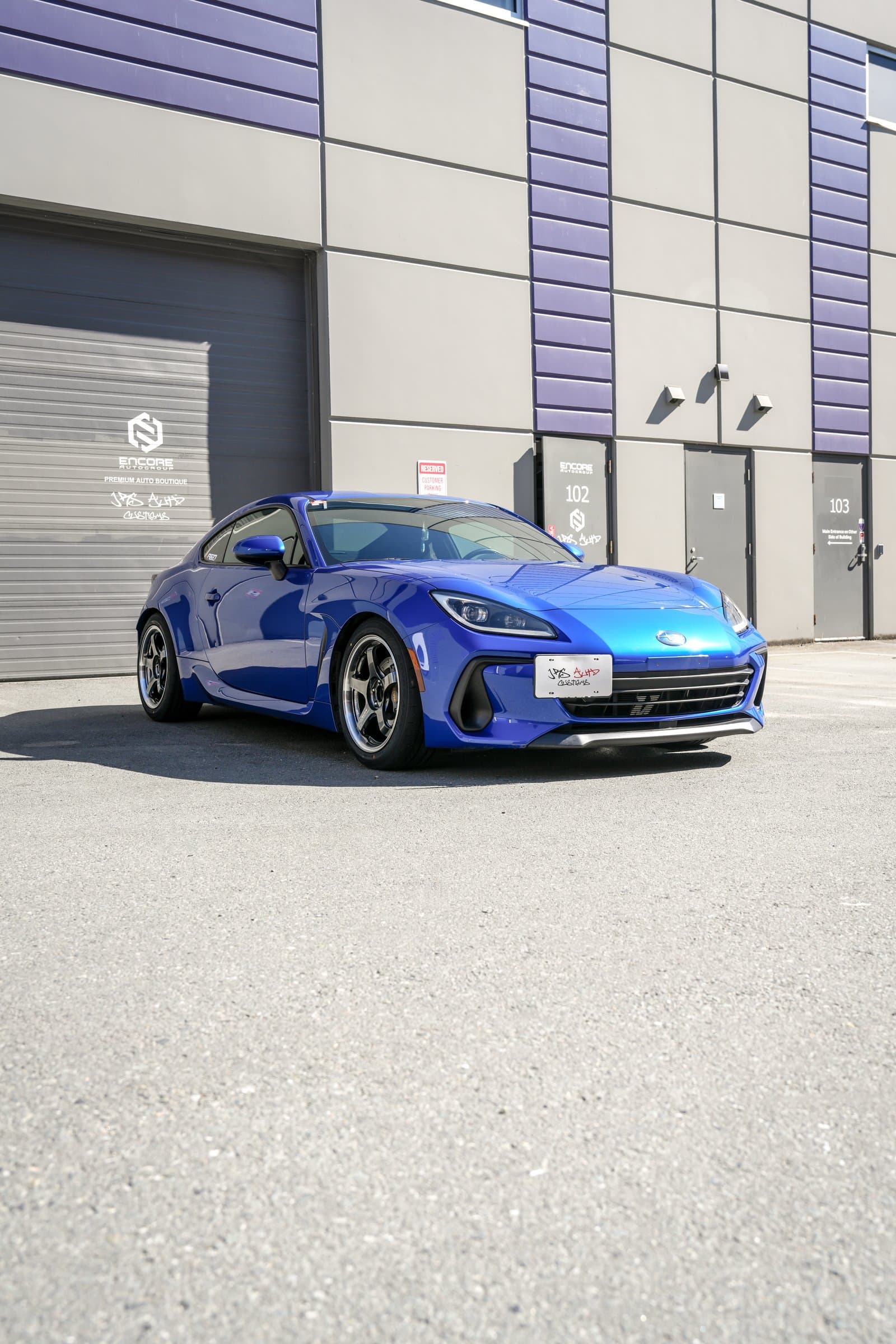
Why to PPF Your New Car Before Winter Hits Vancouver
Published
There is a narrow window after you take delivery of a new car when the paint is at its absolute best — and also at its most vulnerable. That window closes the moment you drive off the lot. In Vancouver this is especially true: our wet winters expose fresh paint to road film, salt, and stone chips from day one. Paint protection film (PPF) is the most effective step a new car owner can take to keep that factory finish intact.
Why Fresh Paint Is Most Vulnerable
A brand-new vehicle in Vancouver faces the same road conditions as everything else on the road — but it is often driven more and parked in less protected spots than an owned car might be. Test drives, dealership shuffling, and the first few weeks of commuting all expose the paint to conditions the vehicle was not designed to be tested in on day one.
Once a stone chip breaks through the clearcoat, the damage is permanent unless you pay to have it corrected. Over a single winter that single chip can begin to rust or spread. By spring the cost of repairing multiple chips and the surrounding oxidation often exceeds what a full PPF installation would have cost to prevent them entirely.
What PPF Protects That Clearcoat Cannot
Clearcoat is a sacrificial coating — it is designed to take a certain amount of damage before the base colour layer is exposed. But Vancouver's winter roads test it harder than the factory intended. Road salt accelerates corrosion in any exposed edge. Sand and grit act as an abrasive between surfaces. And the combination of water, salt, and warm brake discs creates a particularly aggressive environment for the front-end finish.
PPF absorbs these impacts instead. The film's self-healing top coat repairs minor scratches from washing and light surface contact automatically. Stone chips — the most common winter damage — leave no mark on the film the way they do on clearcoat. A quality PPF installation on a new car essentially freezes the paint in its delivered condition for years.
Full Coverage or High-Impact Zones First
For most new car owners the ideal approach is full vehicle coverage — every panel, from bumper to bumper. This removes any decision about which surface is most at risk and ensures the entire finish is protected equally. On high-end vehicles or exotics, full PPF also preserves the paint condition for valuation purposes at trade-in or sale.
If budget is a consideration, prioritise the front end: the leading edge of the bonnet, the front bumper, the rear bumper lip, and the door edges where handles and pockets create micro-damage over time. You can extend coverage to the remaining panels as the budget allows.
When to Install PPF on a New Car
The short answer: as soon as possible. Any kilometres driven before the PPF is applied are kilometres with unprotected paint. The paint is also at its cleanest and most defect-free right after delivery — the ideal surface for film adhesion. Once the paint accumulates wash marks, tree sap, bird droppings, or road film, those defects are locked under the film when it is applied.
We recommend booking the PPF installation before you arrange insurance, or immediately after — while the vehicle is still fresh. If winter is approaching, that timeline becomes urgent: the first salt storms on the North Shore and Highway 1 routes arrive in October and do not let up until March.
Maintaining PPF Through the Winter
PPF on a new car requires very little maintenance. Regular washing with a pH-neutral soap and a pressure washer is safe. Avoid abrasive brushes or harsh chemicals, and dry with a soft microfibre cloth or chamois. The film's self-healing layer activates with warm water or sunlight and will clear light surface marks on its own.
Quality PPF on a properly maintained vehicle typically lasts five to seven years or longer. The exact lifespan depends on the film quality, the climate exposure, and parking conditions — vehicles parked outdoors full-time will see faster film aging than those in covered parking. When the film does eventually show signs of wear, it can be removed and replaced without affecting the paint beneath.
unknown nodePPF on new vehicles
and can advise on whether full coverage or a phased approach fits your vehicle and budget. Get in touch before the worst of the season to have the work completed in good time.
Related project: Subaru BRZ — Full Gloss Clear PPF