
Paint Correction Before PPF: A Vancouver Driver Guide
Published
PPF protects your paint, but only from the day the film goes on. Any damage underneath — swirl marks, oxidation, bonded contamination — gets locked in rather than fixed. That is why preparation before installation matters as much as the film itself, especially in Vancouver where the coastal climate and four distinct seasons each leave their mark on vehicle finishes.
Paint Correction: What Gets Removed First
Paint correction uses compounds and polishes to remove a controlled layer of clear coat, eliminating swirl marks, fine scratches, and oxidation in the process. If this step is skipped, those defects sit under the film permanently — visible through it, and impossible to fix afterward without removing the PPF entirely. Correction also reveals the true condition of the paint underneath, so both you and the installer know exactly what the film is going over.
For Vancouver cars that have been through a summer of road trips and UV exposure, a single-stage or two-stage correction before PPF is the standard approach. The condition of the clear coat after winter road salt and spring rain determines how much work is needed — which is why a thorough inspection before booking installation is worth asking for.
Decontamination: The Step Most Drivers Have Not Heard Of
Iron remover and clay bar decontamination follow correction. Iron remover dissolves ferrous particles — brake dust, rail dust, industrial fallout — that embed themselves in the paint surface. Clay bar then pulls out the remaining bonded contaminants that washing alone cannot shift. The result is a surface that looks clean and is genuinely clean, which is what proper film adhesion requires.
In Vancouver, decontamination is particularly important. Coastal air brings salt mist; winter roads bring calcium and sodium chloride; summer brings tree sap, insect residue, and industrial particulate. None of these are removed by a standard wash, and none of them allow the film to bond as intended. Skipping this step is one of the main reasons PPF fails to adhere properly over time.
Why Late Summer and Early Fall Suit PPF in Vancouver
Once the paint is corrected and decontaminated, timing the installation matters. Early fall gives Vancouver stable temperatures and low humidity — ideal conditions for film adhesion. Applying PPF before the autumn rains means your car has its protection in place before the roads become wet and grit-covered, which is when most paint damage happens in Vancouver. Cold, wet weather in late autumn and early winter makes installation less reliable; spring brings rain and temperature swings that are equally difficult for proper curing.
Before booking PPF installation in Vancouver, ask whether the quote includes paint correction and decontamination, or whether these are priced separately. A low quoted price that excludes prep can mean the film is being applied to an unprepared surface, which compromises adhesion and longevity. Getting a clear breakdown of what is included — and having the shop inspect the paint first — is a reasonable request from any competent installer.
For Vancouver daily drivers, late summer and early fall combines the best of both: paint that has accumulated a full season of use to correct and decontaminate, and weather that allows the film to bond properly. The protection that follows then lasts through the harshest part of the year rather than being applied after the damage has already been done.
If you are thinking about PPF for your vehicle, a useful first step is to look at your paint in daylight — check for cloudiness, swirl patterns, and any patches that look dull. That gives you a realistic picture of what correction will involve before you book.
Looking at your paint? Here is what ceramic coating covers and how it differs from PPF.
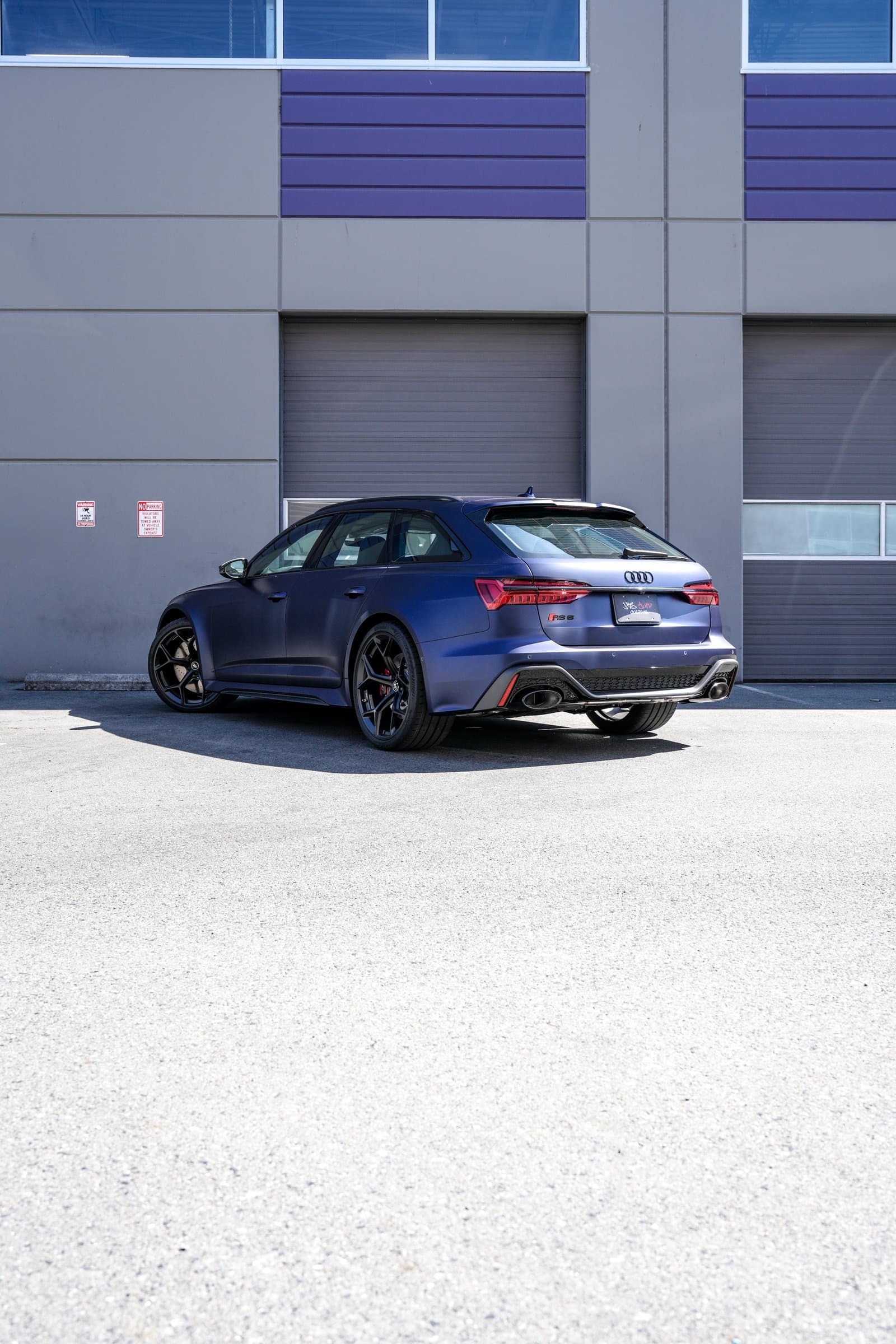
Related project: Audi RS6 Avant Matte Blue PPF