
When to Remove PPF and What the Process Involves
Published
Most people who invest in paint protection film know it is a durable product. What comes up less often in the conversation is what happens when it reaches the end of its service life — and that moment arrives for every installation, regardless of how well it was maintained. Understanding when PPF should come off, what the removal process involves, and what your paint looks like underneath helps you plan the work and avoid surprises when the time comes.
How long PPF lasts before it needs to come off
The industry range for quality PPF is five to ten years, with a significant spread depending on where the car is parked, how it is driven, and how well the film was maintained. A car parked outdoors in full sun year-round — common on the South Slope of Vancouver or in parking structures with glass roofs — ages film faster than a garage-kept vehicle. A car driven daily on the Upper Levels Highway or Highway 1, where road film and stone chips are a constant presence, puts different stress on the film than a weekend driver. The edges of a PPF installation — the places where film terminates against body lines — are the first areas to show wear. If the edges have begun to lift, collect road grime underneath, or show yellowing at the border, the film is reaching the end of its effective service life regardless of what the centre panels look like.
What the removal process actually involves
PPF removal is a heat-assisted peeling process. A heat gun or industrial steamer softens the adhesive, and the film is peeled back at a low angle — slowly, and with care — to avoid leaving adhesive residue on the paint surface. The key variables that affect how cleanly this goes are the quality of the original installation, the quality of the film itself, and how long it has been on the car. Professionally installed, high-quality film that has been on the car for seven years or less will typically peel cleanly. Older installations, film that was not fully cured after installation, or film that has been exposed to heavy UV degradation can leave adhesive behind. Adhesive residue requires a dedicated adhesive remover product and time to clean off before the paint can be assessed.
In Vancouver's climate, there is one additional factor worth noting: the freeze-thaw cycle puts stress on the adhesive bond at film edges over winter. If your car has been through several winters since the PPF was installed, the edges are the area to watch most carefully. A film that looks intact in summer can show edge lift after its first cold winter, and edge lift is where contamination gets underneath the film — which affects how cleanly it removes.
What your paint looks like after PPF removal
This is the part people are most curious about, and the honest answer is: it depends on the condition of the paint when the film was applied and how well the car was maintained while the film was on. On a car where the paint was in good condition before the film was installed, the protected area is usually in better shape than the surrounding panels. The contrast can be striking — particularly on lighter-coloured cars where UV yellowing on unprotected panels is more visible. On a car where the paint had existing defects before the film went on, those defects are still there underneath. The film protected what was underneath; it did not improve the surface.
After removal, the paint surface is typically cleaned, decontaminated, and assessed. If the paint underneath is in good condition, a light polish is usually enough to restore gloss and blend the transition between the protected and unprotected panels. If there is a significant visual difference between the protected area and the rest of the car — which is common on full-body installations on older vehicles — a more comprehensive paint correction may be needed to unify the appearance before the next protection layer goes on.
Removing PPF vs replacing it
If the film is reaching the end of its life but the paint underneath is in good condition, replacement is usually the practical choice. The existing installation is removed, the paint is cleaned and assessed, and a new PPF installation goes on. Partial re-installation is also possible — replacing only the panels where the film is failing while leaving panels that are still in good condition. This approach is most common on high-mileage vehicles where the front end has taken more abuse than the rear quarters.
If the paint underneath has significant defects — or if the car is being sold and new protection is not planned — removal without replacement is the appropriate choice. A full removal followed by a paint correction and a coat of ceramic coating is a common final step for a car that is changing hands.
Aftercare following PPF removal
Immediately after removal, the paint surface is vulnerable. The adhesive has been dissolved and the surface has been exposed to air for the first time in years. A gentle wash with a pH-neutral product and a soft microfibre mitt is safe within a day or two. Abrasive compounds, rotary polishers in the hands of someone inexperienced, and automatic car washes with stiff brushes should all be avoided until the surface has been properly assessed and any necessary correction work has been completed.
Whether you are going back into PPF, switching to ceramic coating, or leaving the paint unprotected, the first weeks after removal are when the surface is most receptive to a new protective layer. If ceramic coating is the plan, the paint should be decontaminated with an iron remover and a clay bar before the coating is applied — this removes any residue from the PPF adhesive and creates the cleanest possible bonding surface.
JRS Auto Customs handles PPF removal, paint assessment, and re-installation or the transition to ceramic coating. If your film is showing its age, contact the team to discuss the options for your vehicle.
For full details on PPF services available at JRS Auto Customs, see the PPF service page.
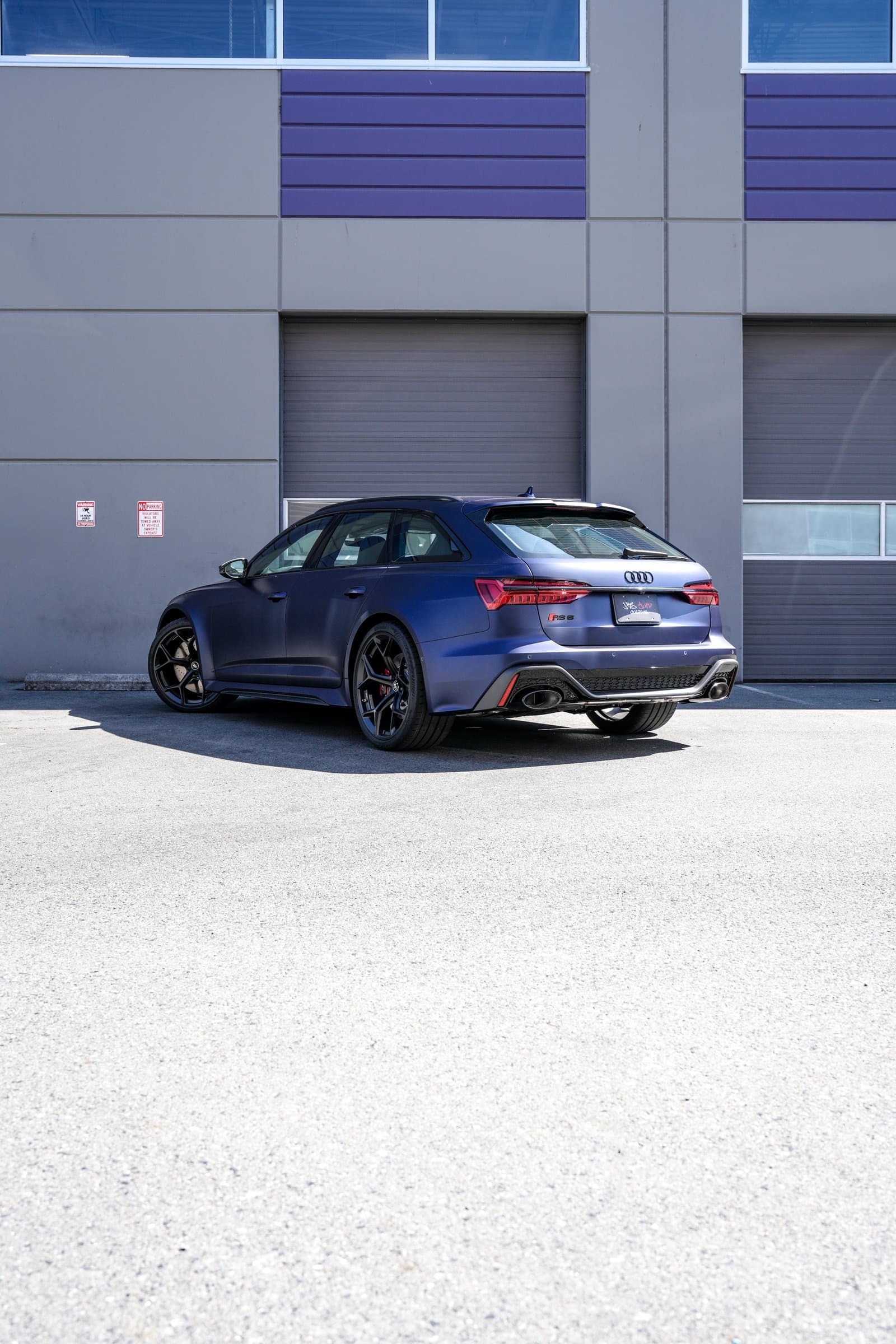
Related project: Audi RS6 Avant Matte Blue PPF