
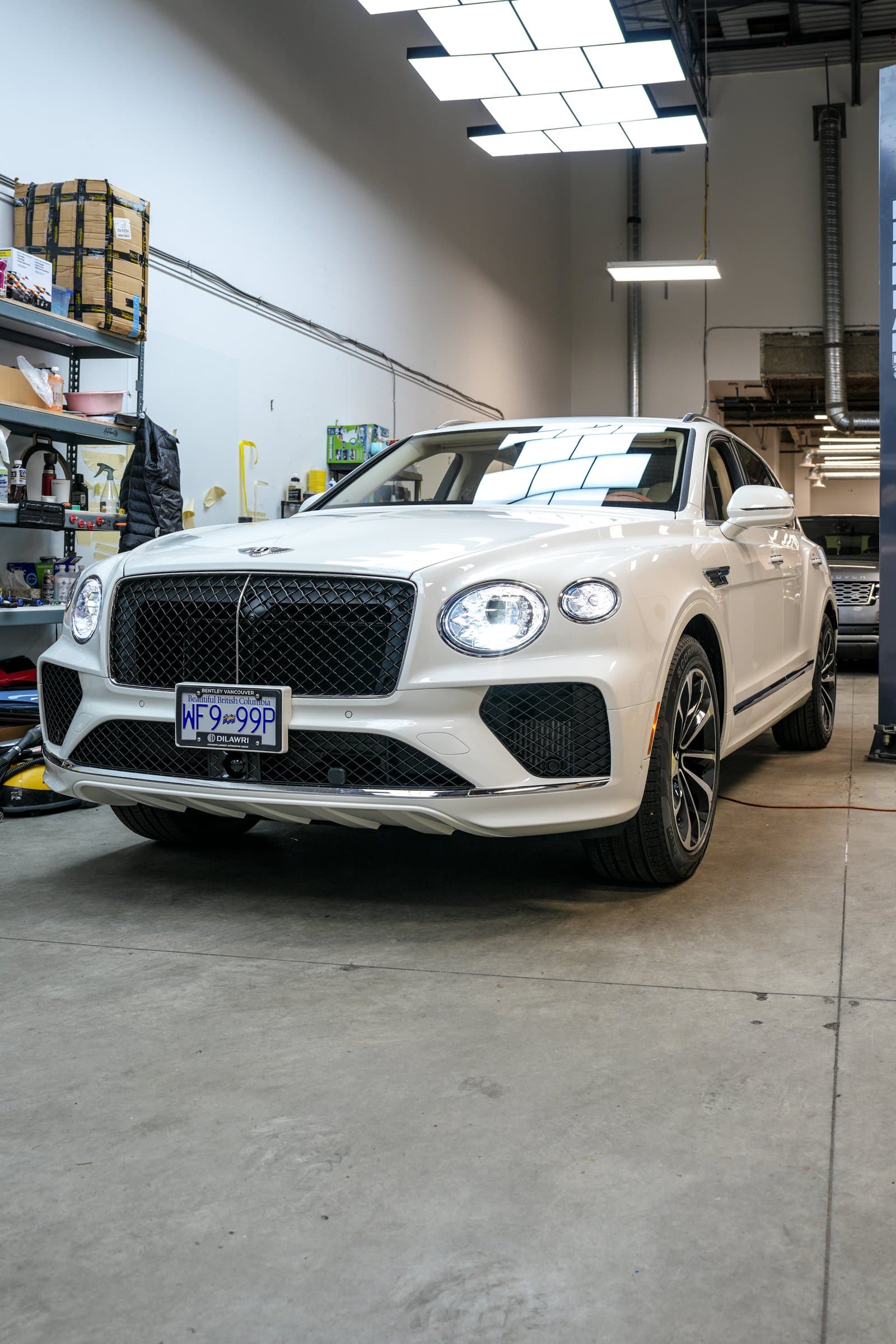
PPF and Vinyl Wrap Over Parking Sensors and Radar
Published
Almost every late-model vehicle rolling into our Vancouver shop has driver-assistance hardware built directly into the bumpers and grille. Between ultrasonic parking sensors, adaptive cruise radar behind the front emblem, and blind-spot modules tucked inside the rear bumper corners, drivers often ask whether paint protection film or a colour-change wrap will trigger false warnings or block safety features.
The short answer is that clear urethane PPF and non-metallic cast vinyl are safe around modern sensors when installed properly. Problems happen when film bridges the tiny isolation gap around a parking sensor, or when metallic vinyl is laid over a radar transmitter.
Ultrasonic Parking Sensors and the Isolation Ring
Those small circular discs flush-mounted along your front and rear bumpers are ultrasonic transducers. Each sensor sits inside a thin rubber or silicone isolation ring that lets the face vibrate freely while keeping it decoupled from the surrounding bumper plastic.
If an installer stretches a single sheet of film straight across the bumper without relieving that gap, the film bridges the sensor face to the bumper shell. In dry weather it may only mute sensitivity slightly, but in Vancouver rain or winter slush, moisture trapped under a bridged edge can cause constant false beeps at traffic lights or in tight underground parkades.
- Pre-cut PPF patterns leave a clean circular relief around each sensor bezel so the rubber ring stays unobstructed.
- For full-coverage colour-change wraps, the sensor face is wrapped separately as a small disc, and the film is trimmed neatly into the recessed channel.
- Double-layering film over a sensor face or leaving loose edges invites pressure-washer lifting and erratic readings.
Front Grille Radar and Gloss Emblems
Adaptive cruise control and forward collision systems rely on a 77 GHz millimetre-wave radar unit mounted behind a flat plastic grille plate or a smooth brand emblem. Unlike ultrasonic sensors that vibrate, this radar passes radio waves straight through the cover.
Clear aliphatic urethane PPF is thin, uniform, and non-conductive, so it does not interfere with radar transmission when applied smoothly without air pockets or stretched creases. Many Vancouver commuters choose to cover that gloss radar emblem with clear film because rock chips on Highway 1 and the Sea to Sky Highway can pit the soft acrylic face quickly.
Vinyl wraps require more caution. While gloss or satin cast vinyl without metal flake is generally transparent to radar, metallic, chrome, and carbon-weave films contain conductive pigments or metal particles that can scatter the signal. When planning a colour change wrap, we leave metallic films off the radar plate and either keep the factory finish or protect it with clear urethane instead.
Blind-Spot Radar Behind the Rear Bumper
Rear cross-traffic alert and blind-spot monitoring modules are hidden behind the left and right corners of the rear bumper cover. They transmit through the factory paint and urethane bumper skin, which means the total material thickness and composition over those corners matter.
A single layer of clear PPF or standard cast wrap film over an undamaged factory bumper stays well within normal operating tolerance. Issues usually appear only when a bumper has already been repainted with heavy body filler and then wrapped with metallic vinyl, stacking too much attenuation over the radar window. If a rear corner has had collision repair, we flag it before wrapping.
How a Shop Protects Sensors Without Triggering Faults
Clean sensor work starts before any film touches the car. At JRS Auto Customs, we inspect every bumper for prior bodywork, loose sensor clips, and existing dash warnings before washing and decontaminating the surface.
- Confirm all parking sensors and surround-view cameras work properly at check-in.
- Use precision-plotted patterns or dedicated relief cuts around every ultrasonic bezel.
- Keep metallic and chrome-effect vinyls off front radar covers and rear blind-spot zones where signal loss is a risk.
- Seal trimmed edges properly so Vancouver road brine and winter rain cannot creep under the sensor ring.
- Test parking sensors and verify zero dash warnings before handing the keys back.
When film is matched to the hardware underneath it, you do not have to choose between rock-chip protection and reliable parking aids. Proper edge relief and the right material around radar zones keep both your paint and your sensors working as intended.
Related project: Bentley Bentayga — Full Clear PPF