
PPF vs Repaint: What Vancouver Drivers Should Know
Published
When your car's paint takes a beating — whether from road gravel, sun fading, or years of neglect — you hit a decision point every owner eventually faces. Do you repaint, or do you wrap it? The answer is not the same for every car, and in Vancouver's climate it is worth thinking through carefully.
This guide breaks down what each option actually involves, what it costs, how long it lasts, and which one makes more sense given BC's road conditions and seasonal weather.
What PPF Actually Does
Paint Protection Film is a clear urethane layer applied directly over your existing paint. Its primary job is to act as a physical barrier against stone chips, gravel spray, bug splatter, and light scratches. The better films — the ones JRS Auto Customs works with — have self-healing properties: light swirl marks disappear with heat from the sun or a heat gun.
PPF does not restore paint — it preserves what is already there. If your clear coat is already hazed, oxidised, or full of swirl marks, PPF will lock those problems in rather than fix them. In that situation, paint correction before PPF is the right move, and a professional detailer can assess whether that correction is viable or whether the damage runs too deep.
A quality PPF installation — including proper surface prep, panel-by-panel application, and edge wrapping — typically carries a lifespan of 8 to 10 years for the film itself. In practice, how long it lasts also depends on whether it is maintained with compatible washing products and whether it is layered with a ceramic top coat for extra durability.
What a Full Repaint Involves
A full respray strips the car back to bare metal or primer and applies fresh base coat and clear coat from bumper to bumper. Done properly — with proper prep, filler where needed, primer, and base-clear application — it can restore a car to a better-than-factory appearance. Done poorly, it is a liability that will peel, fade, and trap rust within a couple of years.
A full respray does not offer meaningful protection on its own. Standard automotive clear coat is not designed to absorb stone impacts the way PPF does. After a respray, unprotected paint will accumulate chips, swirl marks, and oxidation again — especially in a city like Vancouver where road salt from October through March is a constant presence on the roads.
A full respray is also permanent. Once it is on, it cannot be removed to return to the original paint. For leased vehicles, or for owners who may want to restore the car to its factory colour later, this is a significant constraint.
Side by Side: PPF vs Repaint
Here is how the two options compare on the factors that matter most:
Cost: PPF on a full car is generally less expensive than a quality full respray. A repaint that is done properly — with rust repair, proper prep, and quality paint — easily runs into the thousands. PPF costs are tiered by coverage area, and the investment scales with the protection level you choose.
Durability: PPF wins on impact resistance. A stone chip that would chip clear coat will typically be stopped by the film. A resprayed car with no protection will accumulate new chips within the first winter season on Vancouver roads.
Reversibility: PPF is removable. When the film ages or if your preferences change, it comes off without damaging the paint underneath. A respray cannot be undone.
Appearance restoration: If your paint is already significantly degraded — peeling, heavily oxidised, or with severe clear coat failure — PPF alone cannot fix that. A respray rebuilds the surface from the ground up and can result in a genuinely like-new finish.
Which Should Vancouver Drivers Choose?
For most Vancouver drivers, PPF makes the more practical choice — particularly on the front-facing surfaces that take the brunt of road gravel and salt spray through the winter months. A full front-end PPF wrap — hood, bumper, fenders, and mirrors — costs significantly less than a full respray and will absorb the impacts that would otherwise damage the paint underneath.
If your paint is already in poor condition — beyond what a single-stage or two-stage correction can repair — then a quality respray is the right first step. After the respray cures, adding PPF over the top gives you both the restored finish you want and the ongoing protection that prevents the new paint from suffering the same fate.
Colour change wraps offer another middle path. A colour-change film gives you both a new look and a physical protection layer in one step. Matte or gloss, the film protects the original paint underneath, and it is fully removable — making it a flexible option for owners who want to change things up without committing to a permanent respray.
JRS Auto Customs works with both film protection systems and full respray preparation, and can advise on which approach makes sense for your car, your budget, and how you use it. Book a consultation to talk through your options.
Explore PPF options and coverage packages at JRS Auto Customs.
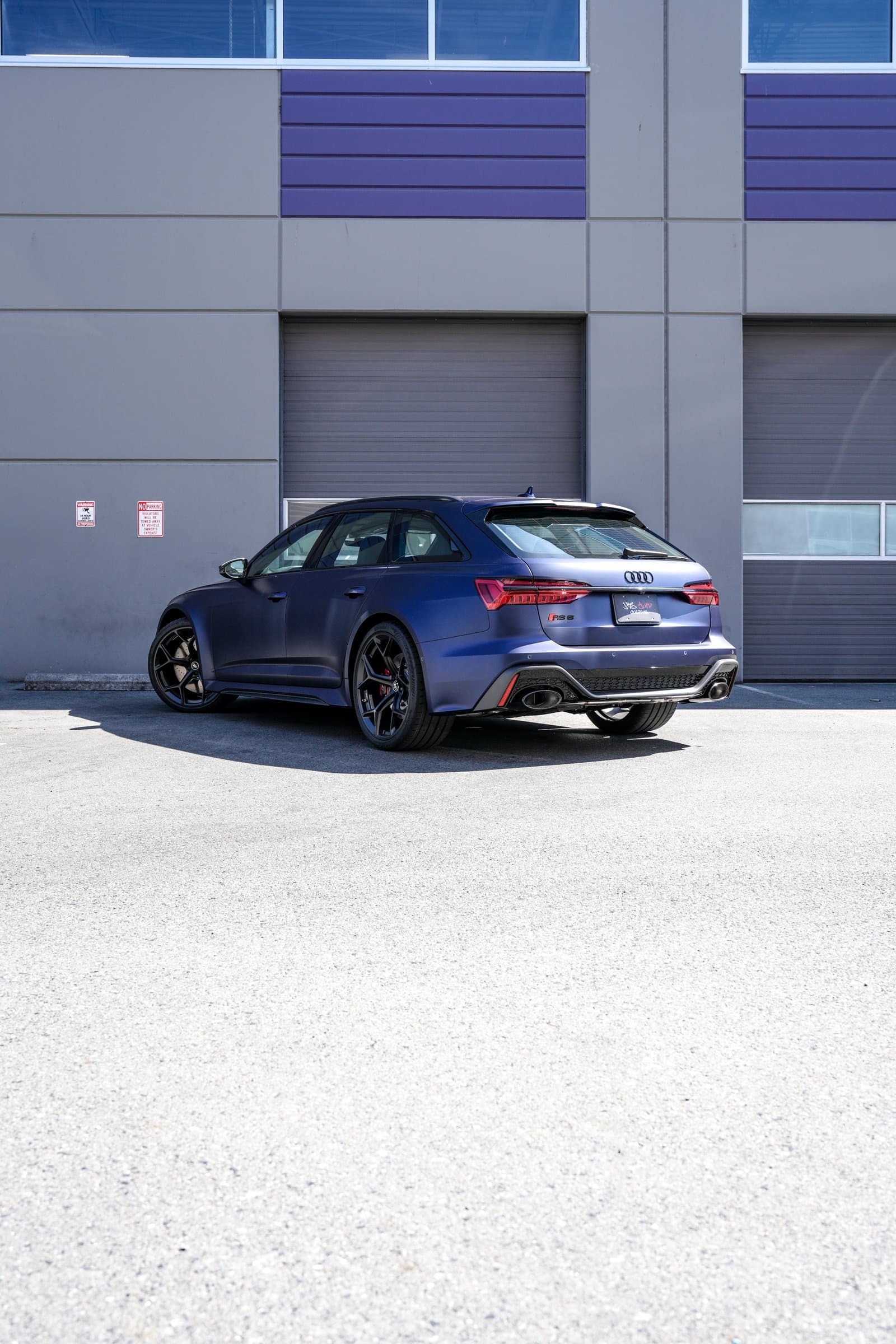
Related project: Audi RS6 Avant Matte Blue PPF