
Pressure Washing PPF and Wraps: Safe Distance and Tips
Published
Between November rain, highway salt brine, and grit kicked up along the Sea-to-Sky or Highway 1, Vancouver drivers rely heavily on pressure washers and coin-op wand bays to keep their cars clean. Used properly, a pressure washer is one of the safest ways to knock loose abrasive sand before a contact wash mitt touches the surface.
Used carelessly, that same wand is the number-one reason we see lifted edges on paint protection film and vinyl wraps in our shop. Understanding how water pressure interacts with film seams, wrapped corners, and adhesive lines lets you rinse off winter grime without peeling back your investment.
Why Film Edges Lift Under High Pressure
Even on a meticulous installation where edges are tucked around panel returns, every film still has termination points around wheel arches, bumper vents, sensor bezels, and rocker seams. A concentrated jet aimed directly at a seam acts like a mechanical wedge, forcing pressurized water underneath the adhesive edge.
Once dirty wash water or soap residue creeps under an edge, the adhesive loses tack and collects dark grit along the lifted lip. That small flap then catches more water on the next wash and gradually peels further back, especially on high-impact zones such as front bumper inlays, mirror caps, and lower side skirts.
Cold Vancouver mornings add another variable. When temperatures sit near freezing, both polyurethane film and cast vinyl become stiffer and less forgiving around tight bumper curves, so a close-range blast hits a rigid edge rather than a pliable one.
Safe Distance, PSI, and Nozzle Angles
Whether you wash in your driveway or at a local coin-operated bay, keeping four variables in check prevents almost every pressure-related edge failure:
- Keep the nozzle tip at least 45 to 60 centimetres away from all painted, wrapped, and film-covered panels.
- Use a wide 40-degree white fan tip on a home washer, or a 25-degree green tip only for heavy wheel-well mud; never use a 0-degree red pinpoint or rotating turbo nozzle on film.
- Limit home electric pressure washers to roughly 1,200 to 1,900 PSI with moderate flow rather than commercial-grade gas units.
- Angle the spray downward and across the panel at 45 degrees so water glides over seams instead of prying straight into an edge.
On a coin-op wand whose pump pressure is fixed, distance is your main control. Hold the trigger further back around emblems, trim gaps, and colour-change wrap recesses, and let the pre-soak foam dwell for two minutes so road salt and mud soften before you rinse.
Always start rinsing from the roof downward and keep the wand moving steadily across each panel rather than pausing over one spot. If stubborn tar or bug residue remains after rinsing, switch to a film-safe remover and a soft microfibre towel instead of moving the nozzle closer.
Coin-Op Wash Bays and Temperature Traps
Many self-serve wash bays in Metro Vancouver run heated water and strong alkaline pre-soak detergents formulated to strip road film off bare factory clear coat. Excessive heat softens vinyl adhesives, while harsh high-pH degreasers can dull satin or matte finishes over repeated visits.
Skip the hot-wax setting on matte or satin wraps as well, because spray wax leaves blotchy gloss patches that cannot be polished out of textured film. Instead, stick to cool or lukewarm rinse water, a pH-neutral soap when washing by hand, and a clean microfibre drying towel or filtered air blower afterward.
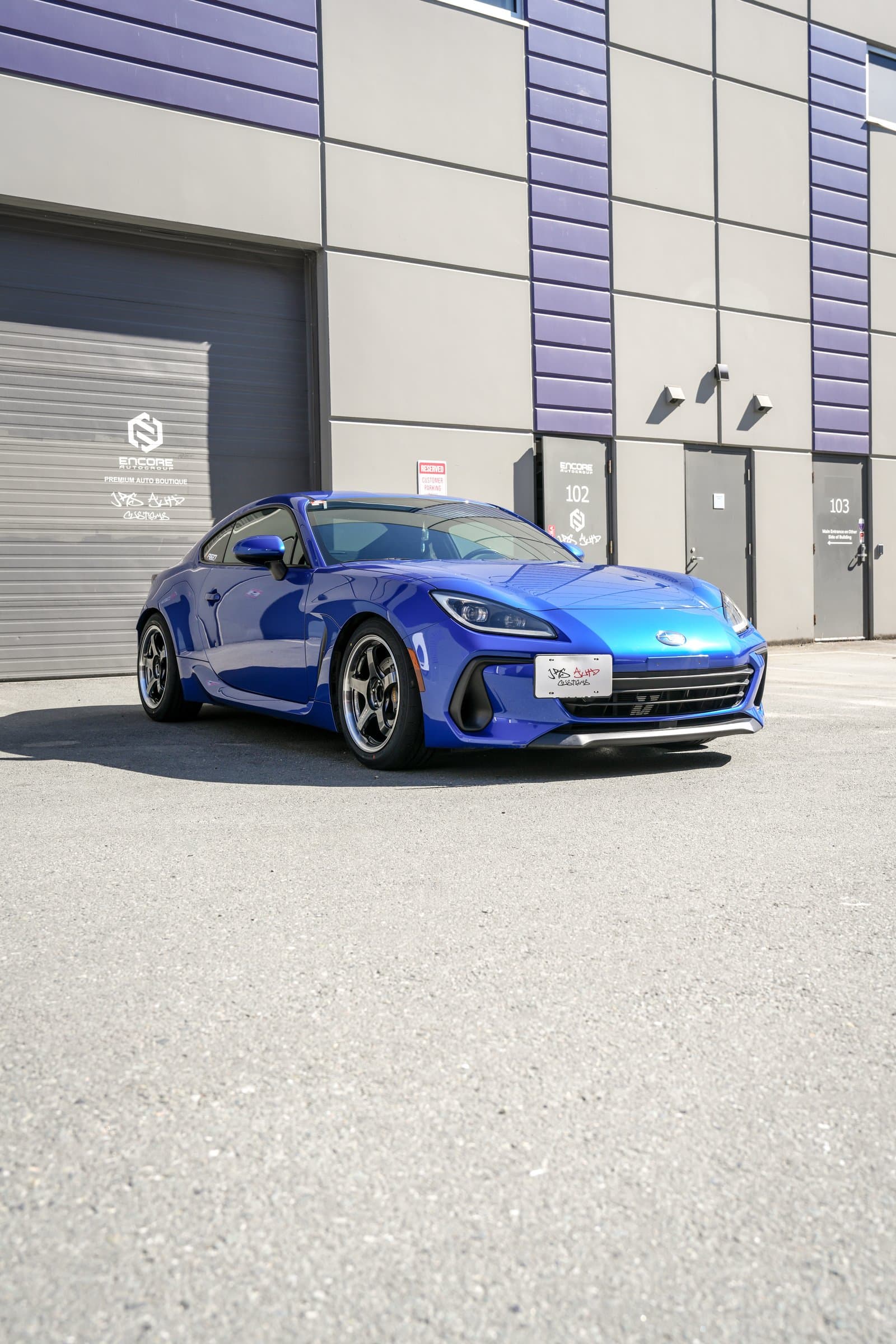
You can see how clean tucked edges hold up on daily drivers in our Subaru BRZ clear PPF project, where tight seam placement keeps exposed lips out of the direct spray path.
What to Do If You Spot a Lifted Edge
If a pressure washer catches a corner, resist the urge to pull at the loose tab or press it down over wet, dirty paint. Leave the lifted piece alone, keep the area dry, and avoid blasting that panel again until a technician can inspect it.
When caught early before road grit contaminates the backing, our automotive maintenance team can often clean, heat-set, and re-seat the edge cleanly. If dirt has already worked underneath the flap, trimming back the contaminated millimetre or replacing that single panel section keeps the rest of the film sealed for Vancouver's wet months ahead.
Related project: Subaru BRZ — Full Gloss Clear PPF