Reading a Paint Protection Quote: What Each Line Means
Published
Two quotes for "PPF and ceramic coating" are rarely the same job
Get two quotes for paint protection work and there is a good chance they are not quoting the same thing. One shop may be pricing a full-body film package and a coating across every panel. Another may be pricing the front end only, because that is where the chips actually land on the roads you drive. Both quotes are honest. They simply describe different scopes of work, and if you compare the two numbers directly you will end up choosing on price when you should be choosing on scope. That is the single most useful thing to understand before you start collecting quotes, and it is why a quote for PPF is not directly comparable to a quote for ceramic coating even when both are for the same vehicle. Before you read any numbers, the first question to ask is what is physically being installed, on which panels, and in what order.
Scope: which panels, and how many
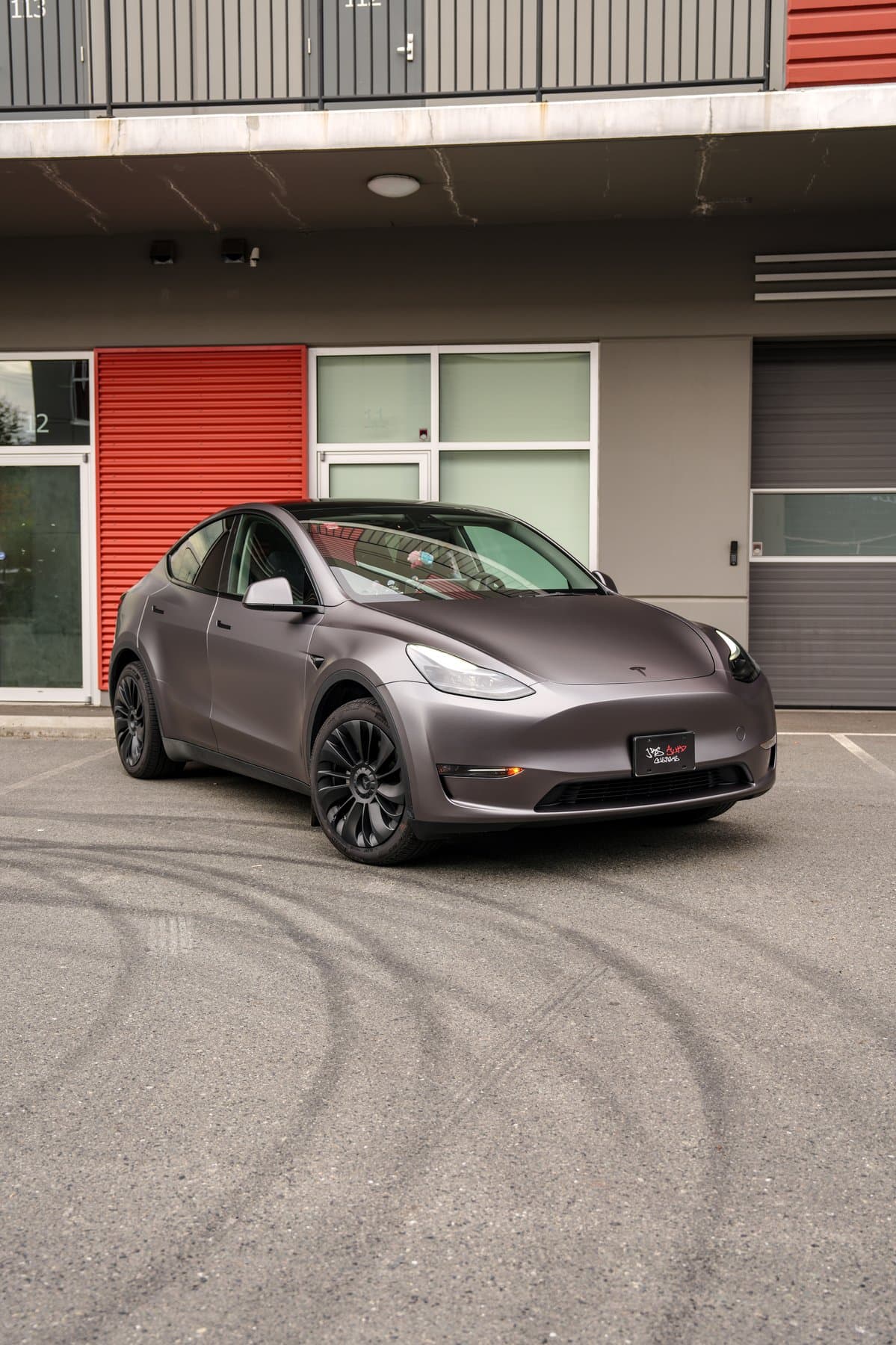
The largest source of variation between quotes is coverage. A full-body film package on a modern vehicle with a lot of separate panels can run to a very different figure from a front-end package covering the hood, front bumper, fenders and mirrors. Those are genuinely different products for genuinely different problems, and the front end is where rock chips actually originate on most Vancouver roads. Our own work includes a full clear film on a Bentley Bentayga, where every panel is wrapped, and a protection package on a Tesla Model Y that pairs front-end film with a coating across the rest of the car. That second approach is often the most practical one for a daily driver, because it puts the material where the damage happens and keeps the rest of the car protected by a coating rather than by film. When you compare two quotes, write down the panels for each one before you look at anything else. If they differ, you are not comparing quotes, and no amount of arithmetic will make them comparable.
Prep: what has to happen before the work starts
A quote that looks low may simply assume no prep. Paint correction, a decontamination wash and a clay bar treatment all add time and labour, and every reputable quote should say whether they are included or extra. If one shop has included a correction and the other has not, the difference in price may reflect the difference in work rather than a difference in quality. This is also where the condition of your specific car should come into the conversation. A car with an oxidized clear coat, existing swirl marks or a chalky finish needs different preparation than a car that has been carefully maintained. JRS inspects the paint before quoting a correction specifically so that the estimate matches the actual condition of the car in front of them, and it is reasonable to expect the same from anyone else. Ask directly: is correction included, is decontamination included, and what happens if the paint turns out to need more work than expected? Our guide to what actually goes into a correction covers the stages in more detail.
Film specification and coating tier
Within the same scope, quotes can still differ because the specification differs. Not every film is the same thickness, and not every coating is the same chemistry. A quote that specifies a thicker film with a longer manufacturer lifespan is quoting a different product from one that specifies a thinner film, and it is worth knowing which one you are being sold. We have written separately about which PPF thickness makes sense for Vancouver driving and about how washing changes once a coating is on the car. The useful question to ask any shop is not which brand they prefer but what they are specifying and why. A shop that can explain the specification in terms of your driving, your climate and your parking situation is doing the job properly.
Exclusions, cure time and aftercare
Every credible quote separates what is included from what is not, and that section is the one worth reading most carefully. Common exclusions are wheel removal, glass and brightwork, interior trim, and the cost of removing existing film. If your car has film on it already, or a coating that needs stripping first, that changes the labour and it should be on the quote rather than appearing as a surprise on the invoice. Cure time matters too. A coating needs to settle before the car goes back into regular use, and one of the more common questions we get afterwards is how long to leave it before washing the car. Our post on washing changes after a ceramic coating covers the routine that follows, and our first 30 days guide covers the settling period in detail. If a quote arrives with no mention of aftercare at all, ask what the maintenance expectation is, because a coating and a film do not have the same ongoing requirements. The same goes for storage. If your car spends the season outside, or in an uncovered parkade, the quote should reflect that, since protection choices and maintenance intervals change with exposure.
The questions that settle it
Once the scope is written down on both sides, comparing quotes becomes straightforward. Ask each shop the same four questions: which panels are covered and which are explicitly not, what preparation is included, what film or coating specification is being used, and what the aftercare and cure time look like. If two quotes agree on all four, they are comparable and you can weigh them on price and on how clearly they explained the work. If they do not agree, that is not a pricing problem to solve by picking the cheaper number. It is an indication that the two shops are recommending different approaches to your car, and that is worth understanding before you commit. Ask for the quote in writing, with the panels listed, and take a little time with it. A clear quote is a sign that the shop has thought about the work. A quote that arrives as a single number with no detail usually means the number can change once the car is in front of them, which is not a criticism of any particular shop, but it is worth knowing before you agree to anything. We respond to enquiries with a timeline, pricing and any prep notes, and the goal is always that the number you approve is the number you pay. If a quote you are holding elsewhere does not do that, comparing it against one that does is a reasonable way to decide.
Related project: Tesla Model Y — Protection Package