
Rear Bumper Loading Sill PPF: Stop Trunk Lip Scratches
Published
Ask most Vancouver drivers where their paint takes the worst beating, and they point straight to the front bumper and hood. Yet when a two-year-old SUV or sport wagon pulls into our bay, the most chewed-up painted surface on the entire vehicle is often the flat ledge right below the tailgate. That narrow shelf—the rear bumper loading sill—takes direct contact almost every time you open the hatch.
Unlike highway rock chips, trunk lip damage happens at walking speed in your own driveway or a crowded parkade. One slip with a heavy cooler, a metal stroller frame, or a wet ski bag drags gritty Vancouver road film straight across soft clear coat, leaving pale gouges that polishing can rarely erase completely. Because the top edge of a rear bumper is a flexible urethane panel rather than stamped steel, heavy machine compounding also heats the surface quickly and risks burning through thin factory clear.
Why the Rear Loading Sill Scratches So Fast
Modern crossovers, wagons, and electric hatchbacks mostly use painted urethane bumper covers that wrap high into the cargo opening without a factory black plastic step pad. When rain keeps the bumper damp for months, fine sand and brake dust stick to that horizontal shelf like mild sandpaper. Setting a cardboard box down and sliding it inward turns that grit into deep linear swirls.
Applying clear paint protection film over the loading sill puts an eight-mil self-healing urethane layer between your cargo and the factory paint. Minor scuffs from buckles or plastic crates level back out when the film warms in the sun or under warm wash water, while deeper scrapes stay in the sacrificial film instead of reaching primer.
Everyday Vancouver Cargo That Chews Up Trunk Lips
In our shop, rear sill wear follows predictable local habits across every body style. The most common culprits we see on Vancouver vehicles include:
- Folding strollers and wagon frames lifted out with one hand in tight underground parking stalls
- Wet ski, snowboard, and boot bags loaded after Cypress, Seymour, or Whistler trips
- Dog paws scrambling onto the bumper ledge before jumping into an SUV cargo area
- Heavy grocery crates, golf bags, and hockey gear slid across the outer corner lip
- Luggage wheels and hard-shell suitcases bumped against the painted edge at curb height
Because these impacts land on a sharp horizontal-to-vertical corner, touch-up paint almost always looks lumpy and dull. A blob of brush-in-bottle paint sits proud of the surrounding clear coat and catches overhead parkade lights every time you lift the hatch. Stopping the abrasion before the clear coat breaks is far cleaner and cheaper than respraying an entire rear bumper or blending adjacent quarter panels.
Clear PPF vs Stick-On Plastic Bumper Guards
Many dealerships sell thick ribbed black plastic or brushed-metal sill plates that tape onto the bumper with double-sided foam adhesive. While those guards block impacts, their raised edges trap pine needles, road salt, and moisture underneath, and they break up the clean colour line of a modern rear end.
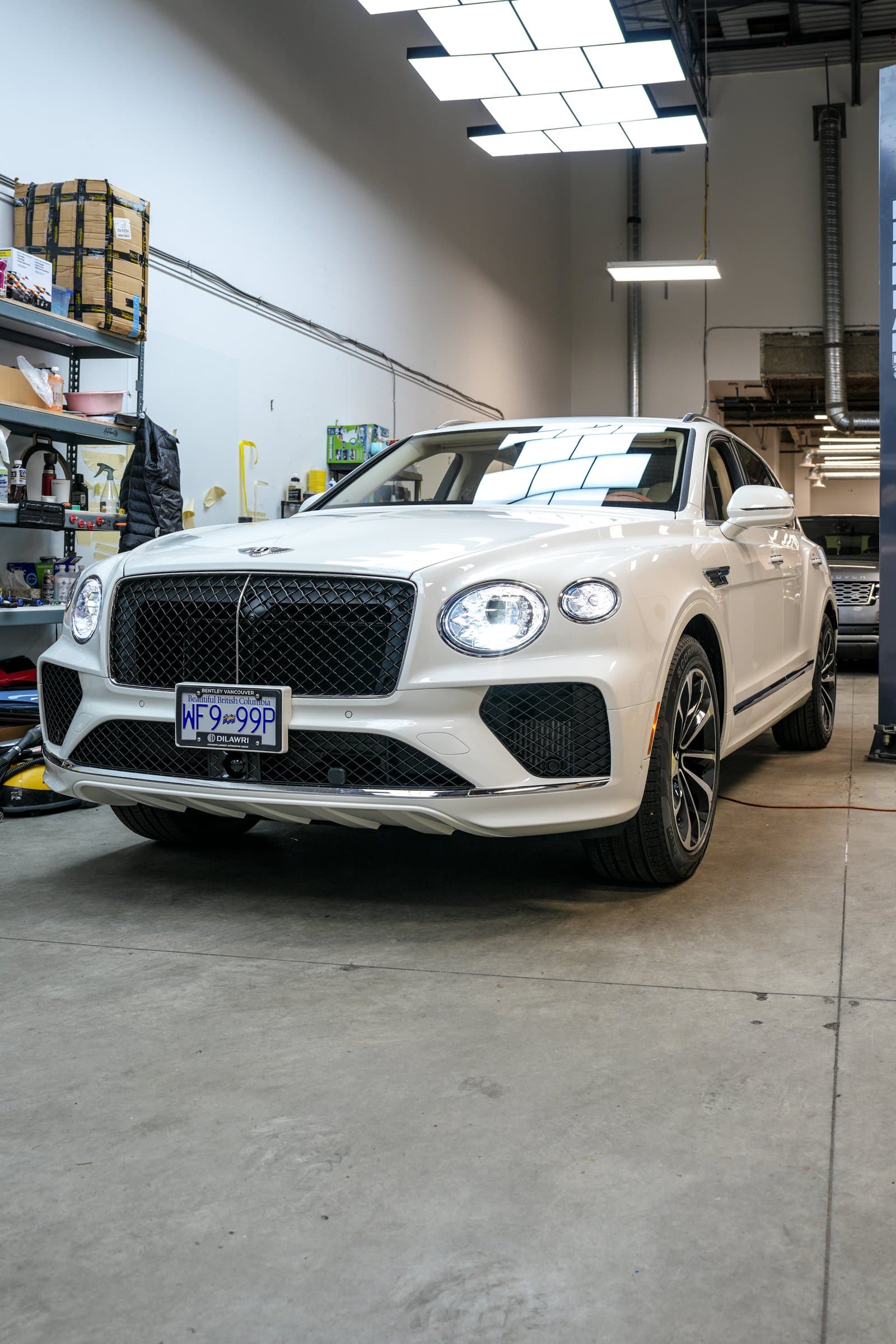
Optical-grade clear PPF is virtually invisible from a few steps back, even on dark metallic or pearl finishes. On full-coverage builds like our Bentley Bentayga full clear PPF project, the film wraps cleanly over the cargo sill without altering the factory trim lines, keeping the rear bumper uniform under showroom or street lighting.
Coverage Lines, Edge Wrapping, and Care
A proper loading sill pattern does more than sit on the flat top shelf. The film should wrap just past the outer rolled radius—where suitcases and stroller wheels actually strike—and extend neatly toward the inner rubber weatherstrip so there is no exposed lip facing the cargo floor. If your vehicle already has ceramic coating, we strip the coating on that sill panel first so the film adhesive bonds reliably.
Routine care takes almost no extra effort: wash the sill when you wash the car, avoid catching the film edge with a high-pressure nozzle at point-blank range, and wipe away winter grit before sliding heavy gear inside. If the sacrificial film eventually gets chewed up after several seasons of ski trips, dog claws, and weekend errands, a shop can peel that single strip off with mild heat and lay down a fresh piece without touching the factory paint underneath. Whether you add a standalone rear bumper strip or include it alongside a front-end package, protecting the loading sill keeps one of your car's busiest surfaces looking clean for years.
Related project: Bentley Bentayga — Full Clear PPF