Replacing One Damaged Panel on a Wrapped Car
Published
The most common worry from owners of a wrapped vehicle is not the wrap itself. It is the idea that one bad panel ruins the whole job. A shopping bag catches a door in a parkade, a piece of gravel opens a long scratch, and suddenly the question is whether the entire car has to come apart.
It does not. A wrapped car can be repaired panel by panel, and in most cases the single damaged section is replaced with film matched to the rest of the vehicle. The work is smaller than owners expect, the car comes back looking continuous rather than patched, and the factory paint underneath stays exactly as it was. This is worth understanding properly, because the difference between a panel replacement that reads well and one that does not comes down to a few specific decisions.
When a Single Panel Becomes the Whole Problem
Almost every wrap job has a point of failure, and it is rarely the middle of a door. It is a leading edge that meets a grille, a lower door section that takes a kerb, a quarter panel that gets opened too far in a narrow parkade, or a door cup that takes a key. Those are the areas that take the first impact, which is why the wrap films themselves are usually installed with the most attention at the edges and the tuck lines.
Once damage happens there, it is worth separating two very different problems. The first is whether the film can be repaired in place. A small scuff on a flat panel can often be cut out and a piece of matching film laid into the gap, and the result can be nearly invisible when the colour is a solid one and the light is even. The second is whether a large area — a full door skin, a full fender, an entire quarter — needs to come off and be replaced with new film cut and tinted to match what is already on the car.
The second problem is the one that concerns most owners, and it is the one this article is about.
What a Panel Replacement Actually Involves
Replacing a single wrapped panel is not a repair in the sense of putting a car back the way it was. It is a small fabrication job with a colour-matching problem attached to it. The panel comes off, the substrate underneath is inspected and corrected as needed, and new film is cut, tinted and applied so that it sits alongside the panels that were not touched.
The colour-matching step is where most of the care goes. Film from a catalogue is produced to a colour reference, and the reference on the shelf is not always the reference on your car. A car that was wrapped a few years ago has had its film exposed to UV, rain, salt and washing chemistry, and it has aged in a way that is specific to that car and that parking spot. The panels that have been replaced recently will not automatically agree with the ones that were installed years ago, and a shop working from the wrong reference will produce a panel that looks close in the shop and wrong outside.
That is why our colour change service includes custom colour matching, and why the process of establishing a reference from more than one area of the car matters more than the reference itself. JRS has been doing custom work in Vancouver since 2010, and a wrapped car that comes back from a panel replacement with a visible line is a problem we would rather not hand an owner.
The Questions Worth Asking Before You Book
The owner is in a strange position: they are about to pay for work on a car that already has money sunk into it, and the outcome is judged on continuity rather than on a single new panel. A few questions cut through that quickly.
Ask how the reference colour will be established, and whether it is being taken from more than one area of the car. A match built off a single door is weaker than a match checked against several panels, because wrap finishes can vary subtly from one section to the next depending on how the original film was laid and what it has been through since.
Ask how the shop handles a near miss. If the new film comes out a shade away from the original, a good shop will say in advance what the tolerance is and what the options are, rather than handing the decision back to you on collection day.
Ask what is going to be done to the panel underneath. A wrapped panel that has been off often has adhesive residue, edge adhesive, or a substrate that has been masked and protected for a long time. It needs to be prepared properly before new film goes down, and that preparation should be part of the quote rather than a surprise.
Ask whether the new panel will be sealed. On a car that was already coated, the replaced section needs the same protection layer brought back up to the surrounding panels, otherwise one door will behave differently from the rest the first time it rains. Our ceramic coating service covers how that layer is applied, and the maintenance detailing service page covers the compatible chemistry and the washing approach that keeps it performing.
What It Is Like to Live With Afterwards
A correctly matched replacement panel is not a compromise. It is the same film, the same colour, applied to the same surface, and in most cases it is indistinguishable once the car has been outside in daylight. What it is not is invisible in the sense of being forgotten — a well-done panel replacement is a normal part of owning a wrapped car, the same way a repainted panel is a normal part of owning any car.
Two things are worth doing afterwards. The first is to keep the edge of the new film watched in the first weeks, because that is where a replacement panel can show a lifting edge if it was not tucked properly. The second is to keep the car on a compatible wash routine, which for a wrapped and coated car means a hand wash rather than a drive-through with abrasive brushes.
If you are weighing a wrap for the first time and want to understand the finishes and the coverage options available, the colour change page sets out the range. If you are trying to work out whether a car that is already wrapped is worth saving, a straight answer on what a panel replacement involves is often the deciding factor.
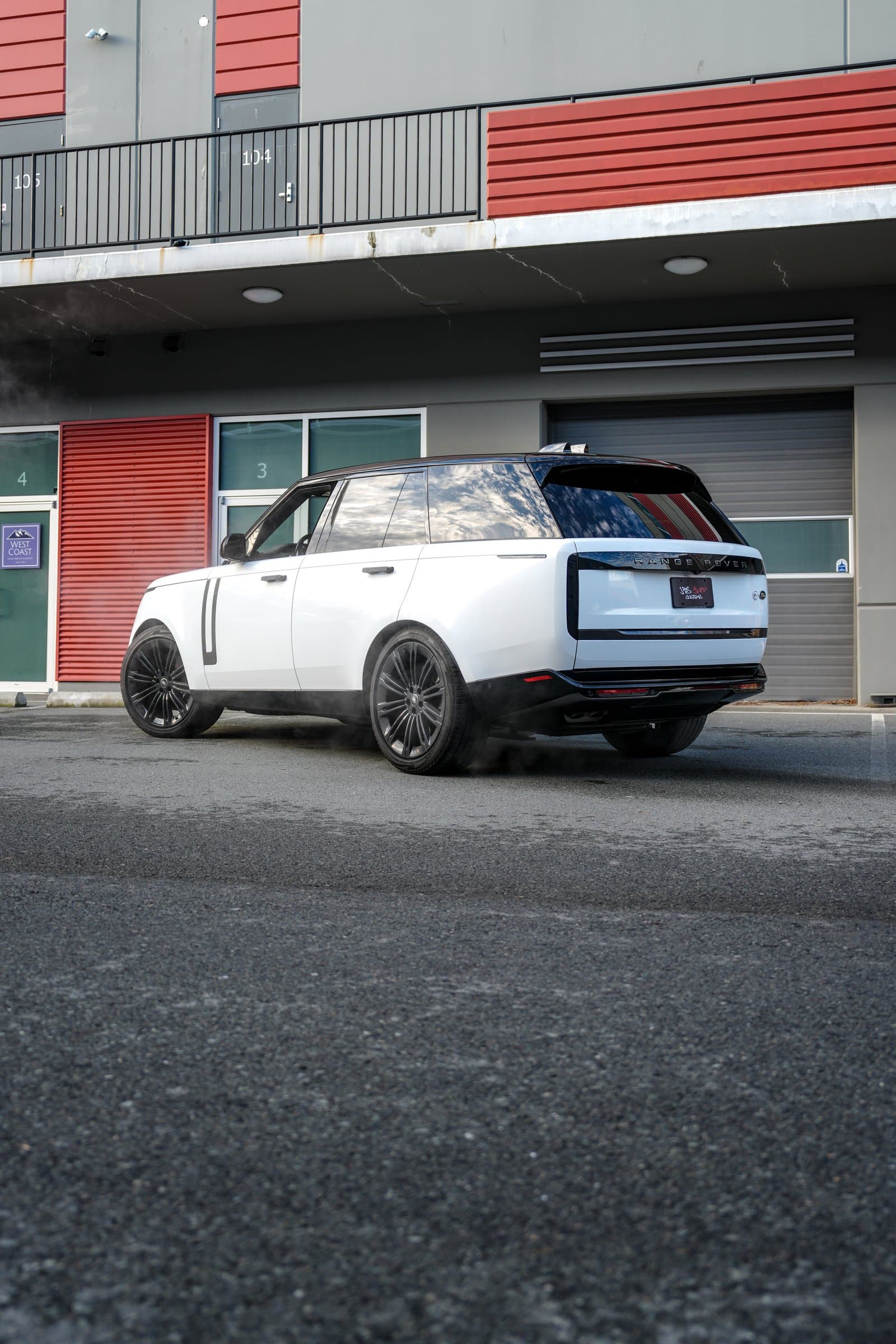
One Vancouver example worth looking at is a Range Rover finished in a pearlescent white wrap, where the finish shifts from warm cream to cool silver as the light changes — the kind of finish where any mismatch between panels would be obvious. Our Pearlescent White Range Rover project shows the standard that a panel replacement on a car like that has to meet.
Related project: Range Rover Pearlescent White Reskin