
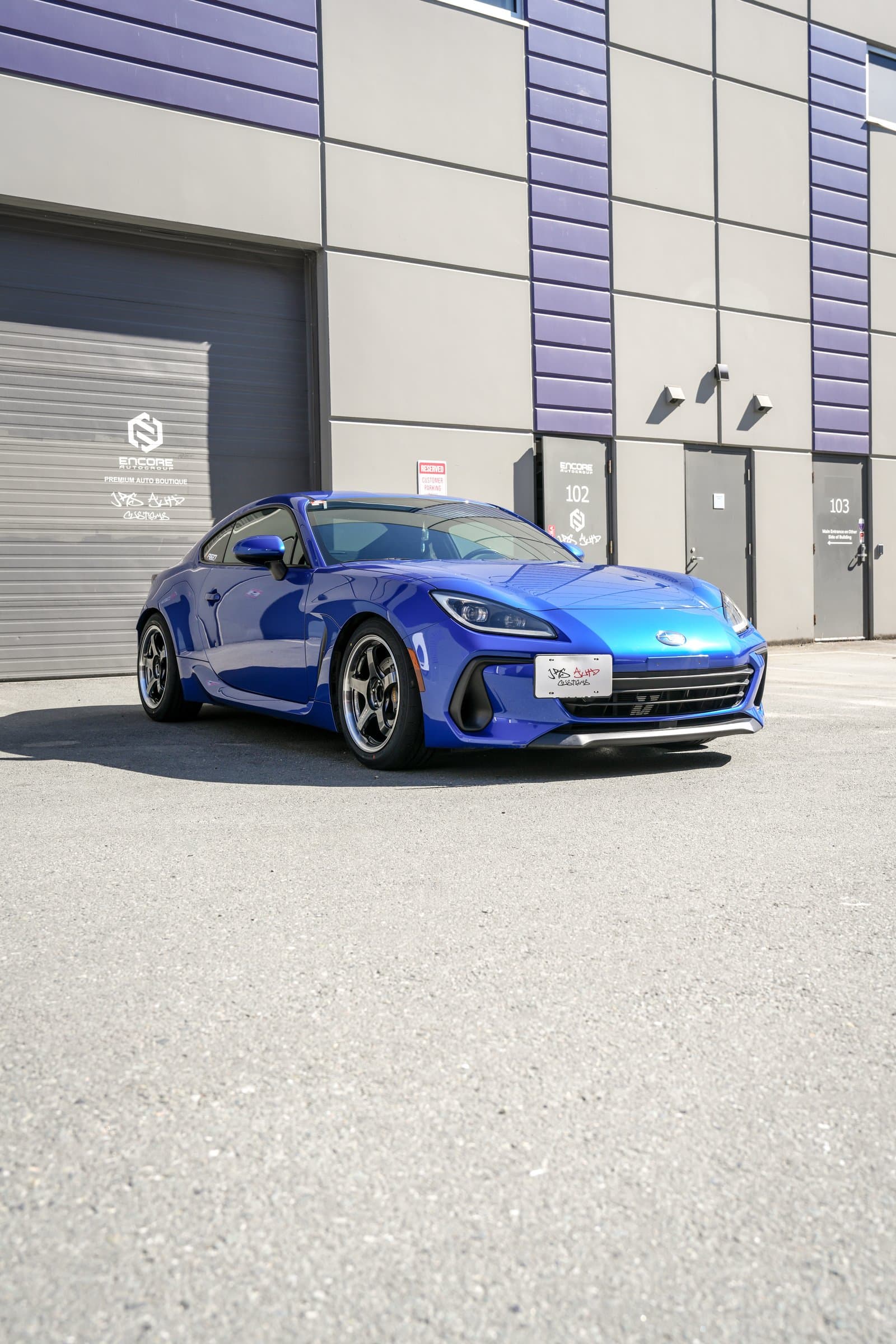
Rocker Panel PPF: Protecting Lower Doors in Vancouver
Published
Most drivers think about stone chips on the front bumper and hood first, yet the panels behind the front wheels often look sandblasted sooner. Every time your front tires roll over grit or winter sand, they sling particles backward into the rocker panels and lower doors. At JRS Auto Customs, we see this on daily commuters and sports cars alike when owners visit for paint protection film in Vancouver.
Why Rocker Panels and Lower Doors Chip First
The geometry of modern vehicles works against the lower body. Wider tires, aggressive wheel offsets, and sculpted side sills put painted metal or gloss trim right in the path of tire spray. Unlike a hood hit, which happens occasionally at highway speed, the rocker panel sits centimetres behind a spinning tread that picks up and fires small stones on every single block.
Lower doors and rear quarter flares suffer from the same trajectory. Once a single chip breaks through the clear coat and base coat, moisture creeps underneath the surrounding paint edge. On metal rocker sills or steel door skins, bare primer quickly turns into bubbling surface corrosion if left untreated.
Factory mud flaps help reduce the heaviest splash, yet they rarely stop fine grit from curling inward along the lower door crease. Even tall SUVs and crossovers with black cladding often have painted rocker corners or lower door lips that sit directly inside that turbulent spray zone.
How Vancouver Rain, Sand, and Salt Accelerate Wear
Driving around Vancouver adds a wet-weather multiplier to ordinary road rash. Heavy autumn and winter rain suspends fine grit in standing water, so tires throw a steady slurry of sand and silt along the lower sills. When temperatures drop near freezing, municipal crews spread brine and crushed aggregate on bridges, highway ramps, and steeper routes toward the North Shore.
Even drivers who skip mountain passes still cross salt-treated overpasses and construction zones around Burnaby, Richmond, and downtown Vancouver. Fine grit packs into the bottom pinch weld and clings behind mud flaps or aero side skirts. Washing the car helps remove loose residue, but it cannot stop the next commute from peppering the same bare paint.
Which Lower-Body Zones Need Paint Protection Film
Protecting the lower body does not always require wrapping the entire vehicle. Many Vancouver owners pair a front-end package with targeted rocker and lower-door coverage so the highest-impact zones are shielded together. A practical lower-body layout usually focuses on four specific areas:
- Full length of both rocker panels from the front fender arch to the rear wheel well
- Lower door skins below the body crease line, where tire spray fans upward
- Rear fender dog-legs and lower quarter panels in front of the rear tires
- Painted side-skirt extensions or carbon-style aero blades that sit close to the road
Cars with staggered wheel setups or spacers need extra attention along the rear quarter flare. Because wider rear tires sit closer to the fender lip, they catch debris kicked up by the front axle and also throw grit onto the lower rear bumper corner behind the wheel.
Film finish can also be matched to the vehicle's trim. Gloss clear PPF blends invisibly over factory clear coat, while satin or matte film protects textured or low-sheen lower body panels without adding unwanted shine.
Film Coverage, Seam Placement, and Ongoing Care
Clean installation matters just as much as film thickness on a rocker panel. Because this area stays wet and dirty longer than the roof or hood, exposed film edges placed right in the spray line can collect grime over time. Experienced installers wrap edges around wheel-arch lips and under-sill returns wherever the panel shape allows, keeping seams tucked out of direct water blast.
If your car already has a few pinhead chips along the sill, the surface needs thorough decontamination and touch-up prep before film goes down. Sealing over fresh, uncured touch-up paint or trapped tar leads to lifting edges later, so proper surface prep is always step one.
Once the film is installed, routine washing keeps the edges clean and the gloss uniform. Using pH-neutral soap and avoiding high-pressure nozzles aimed directly at a seam will keep the lower sills looking sharp season after season. Pairing the film with regular exterior maintenance washes also prevents winter brine and road tar from building up along the bottom edge.
Related project: Subaru BRZ — Full Gloss Clear PPF