The Side Skirt: Why This Small Panel Changes Everything
Published
Of all the parts of an aero kit, the side skirt is the one most owners could not pick out of a photograph. It is a long, low panel that runs along the base of the car between the front and rear wheels, and on a factory car its job is mostly decorative. Its real value is subtler: it changes how the body appears to sit. And for anyone in Vancouver deciding whether an aero package is worth fitting to a daily driver, that visual effect is usually the deciding factor, not downforce.
What a side skirt actually is
A side skirt is an extension panel that fills the space between the rocker panel and the ground, closing a gap that every car has along the bottom of its doors. On a factory car that gap reads as a shadow, and the shadow makes the body look taller and narrower than it is. On many modern vehicles it has been widened and shaped deliberately, usually to hide the gap and give the car a planted look. Side skirts continue that idea but with a removable panel rather than a reshaped factory panel.
Most aftermarket side skirts are made in one of two ways. The more common approach is an ABS plastic or polyurethane part that bolts to existing mounting points along the rocker. The higher-end approach is dry carbon fibre, which is lighter and stiffer and takes paint or clear coat more readily. Both are body panels, not aerodynamic devices in the strict sense, and it is worth being clear about that before spending money.
Why one panel changes the proportions
The effect comes from the way the eye reads a horizontal line. Your car's actual proportions are set by the wheel size, the wheel-to-body relationship and the roofline, none of which change when a side skirt goes on. What changes is how those proportions are framed. A side skirt creates a continuous lower edge that runs the length of the car, and the eye treats that line as the bottom of the vehicle rather than the gap beneath it.
That has a knock-on effect. When the gap under the car is filled in visually, the body appears to sit lower over the wheels. The wheels look larger relative to the body, because the reference point for the body's bottom edge has moved up. A car that looks slightly tall or narrow on the street often looks noticeably more planted once that line is closed. This is the same reason a car with larger wheels and lower-profile tyres reads as more aggressive, and it is why side skirts are one of the most effective visual upgrades for the money.
There is a second, subtler effect in the rear three-quarter view. A side skirt that is visually continuous with the rear diffuser or the front splitter makes the car read as one designed object rather than a collection of parts. This is why fitting a single element from an aero kit on its own often looks worse than fitting nothing at all. The eye is very good at detecting a line that stops.
The Vancouver reality: driveways, parkades and salt
A side skirt sits lower than any factory panel on the car. It is the first thing to meet a steep residential driveway, a speed bump, a steep parkade ramp or the raised concrete lip at the entrance of a parking structure. In a city built on some steep terrain and with a lot of underground parking, that is a regular occurrence rather than an edge case.
Then there is the salt. A side skirt sits in the same zone as the wheel arch and the lower door, so it takes road spray, winter road salt and grit directly. Anything that has been sprayed from the road collects on the lower edge of the panel, and salt that stays wet through a January freeze is corrosive. Any side skirt on a car that is driven through Vancouver winters needs to be washed properly, and that is the part owners often skip because the panel is easy to overlook from standing height.
The panel can also mark the paint it sits against. On a car with a factory side skirt or a tucked wheel, the fitment gap is small and the parts move as one. On a car with extended wheels and larger tyres, the side skirt has to clear the tyre as the wheel moves through lock and over a bump, and if the clearance is too tight it will contact the paint or the wheel arch. This is a fitment question, and it should be settled before anything is ordered rather than discovered afterwards.
What to ask before ordering
The first thing worth asking is how the panel is meant to attach. A part designed around the factory rocker will have mounting points and hardware that line up, and it will be a shorter job with less chance of damage to the paint. A universal-fit panel that relies on adhesive or tape is a different proposition entirely: it may look fine on a showroom floor and be sitting in a driveway gutter by December.
The second is clearance. Ask specifically about the wheel and tyre combination the car will actually be running, because a side skirt that clears the stock wheel can scrape the arch on a lowered car with wider rubber. The third is whether the panel is left in primer and needs paint, or supplied in a finished state. And the fourth is simple: ask to see the panel fitted to the car before the car is released.
If the plan includes protecting the lower body, that decision usually belongs with the panel rather than after it. Our performance and aero service covers side skirt extensions alongside the rest of the aero package, and a car that is having paint protection film fitted at the same time is easier to protect properly than one that has to come apart later. Our ceramic coating option works alongside a wrap or a film install for the same reason. If the car is keeping its factory paint underneath the panels, paint protection film is the part that protects what happens behind the skirt once the road starts throwing things at it.
None of this makes side skirts a decision to rush. They are a visible, permanent change to the shape of the car, they add cost and they add a panel that needs looking after. But they are also one of the few modifications that improves how a car looks without touching how it drives, and that is a trade-off a lot of Vancouver owners find worth making.
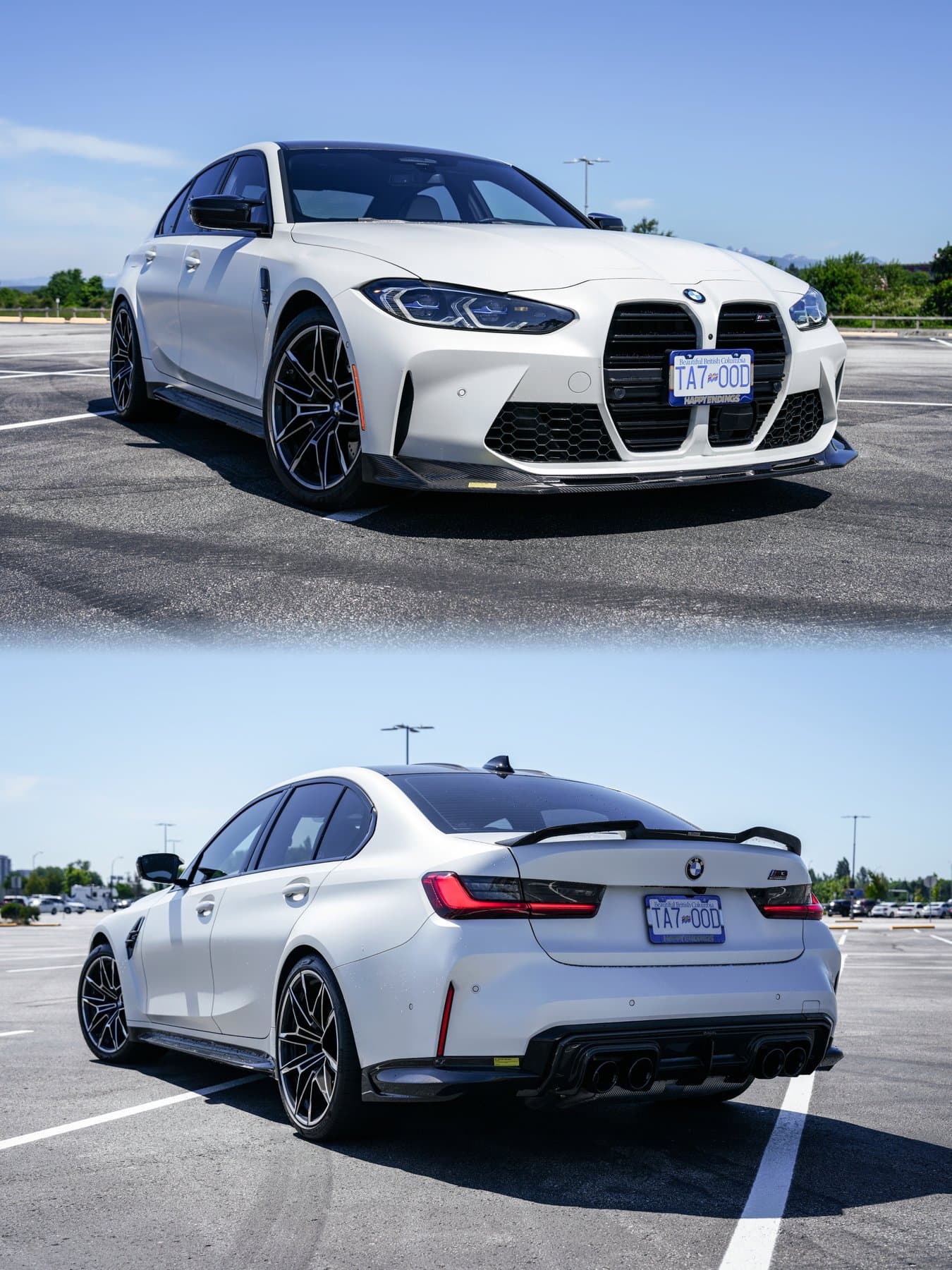
Related project: BMW M3 — Vorsteiner Build