
Spray Sealants and Wax: Where They Fit in Your Protection
Published
Most people arrive at the same question from different directions. You have just had a wash and the paint looks better than it has in years, so it seems a shame to leave it there. Or you have a coating on the car and someone told you that wax on top is either essential or pointless. Or you simply want to know what you should be doing between the big appointments.
The short answer is that wax and sealant are a maintenance layer, not a protection upgrade. They sit underneath ceramic coating and paint protection film in the order of importance, and they do a genuinely useful job in that position. They just do not do the same job.
What a sealant actually does
A sealant is a synthetic polymer that bonds to a clean, prepared paint surface. It sits on top of the clear coat as a thin, even layer that gives the surface more resistance to grime, road film and the stuff that makes a car look tired. It is easier to apply than traditional wax, and it usually lasts longer before it needs reapplying.
Traditional wax works on a similar principle. It is a sacrificial layer that sits on the surface and gives you the same benefit of extra gloss and a bit more resistance to contamination. The difference is mostly in how long it takes to wear off and how much effort it takes to buff it in. Wax looks fantastic when it is fresh. Sealant is more forgiving to maintain.
Neither of them changes anything about how the paint itself is protected from stone chips, scratches or UV. That is a different layer of the problem, handled by paint protection film and ceramic coating.
Why they matter more in Vancouver
Here is where the local climate makes this more than a cosmetic decision. Between November and March the roads carry salt, and a car that has been sitting in that environment without protection picks up a film that ordinary washing does not fully remove. In the wet season, road grime settles onto the paint and holds there through every dry spell.
A sealant layer gives you two practical advantages in that situation. It gives the grime something to sit on rather than the paint itself, which makes decontamination easier and less aggressive. And it makes routine washing noticeably more rewarding, because water behaves better on a sealed surface and the car stays looking presentable between major work.
If your car sits outside, or in one of the parkades around the city where salt and exhaust residue collect, that difference shows up quickly. Ourmaintenance and detailing serviceis built around that kind of regular upkeep rather than one-off treatments.
Where ceramic coating and film fit
It helps to think of these as layers rather than competitors. Paint protection film handles impact: stone chips, road debris, the thing that happens when someone backs up close. Ceramic coating handles chemical and surface protection: UV, bird droppings, sap, road film, and the general dulling that comes from a car living outside in this climate.
Wax and sealant sit underneath both of those. If a car has ceramic coating, adding wax or sealant on top is usually a mistake, because the coating needs a clean, uniform surface to bond to and an extra layer will interfere with that. If the car has film, the exposed paint around it can still benefit from a sealant.
If you are trying to work out what the next step should be for the car rather than what to put on top of what is already there, ourceramic coating servicecovers what coating actually does and where it fits, and ourpaint protection film servicecovers the film side.
Working out what your car actually needs
This is the part where it is worth being honest about how much of this is maintenance rather than necessity. A car that is garaged, driven a few kilometres a year and never sees salt might genuinely not need a sealant. A car that is driven every day through the wet season and the salt months will get more out of it than most people expect.
The practical way to decide is to look at what is already on the car and how it is behaving. If the paint is already coated, protect that coating instead of adding to it, and check where the coating is wearing. If it is not coated and the car lives outside, a sealant is a sensible, low-commitment way to keep the paint in better condition while you think about something longer term.
One thing worth doing whatever your car has: a proper decontamination before anything is applied, because sealant bonds to a clean surface and behaves poorly over bonded contamination. Ourdaily essential packagescombine wash, decontamination and protection in a single visit if that is the route you want to take.
JRS Auto Customs has been detailing and customising cars in Vancouver since 2010. The honest recommendation is always the least expensive option that solves the actual problem, and in a lot of cases that is a maintenance layer rather than a bigger investment.
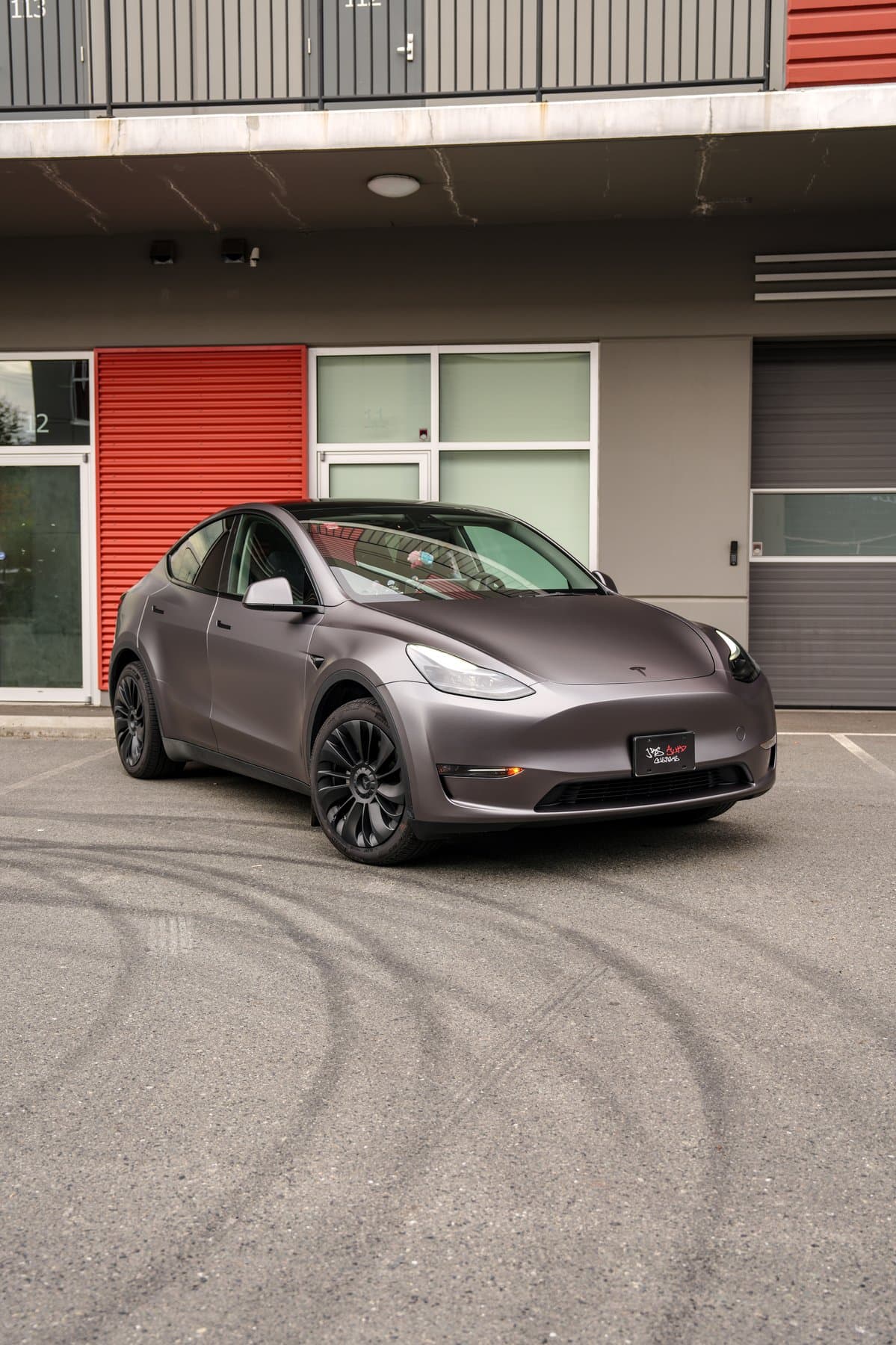
Related project: Tesla Model Y — Protection Package