
Spring Maintenance Checklist for Vancouver Drivers
Published
Vancouver winters are not dramatically cold by Canadian standards, but the combination of persistent rain, road salt, and the kind of freeze-thaw cycles that the Lower Mainland does get in January and February still takes a toll on vehicles. By the time spring arrives, a number of maintenance items tend to have been neglected or have developed quietly over the winter months. Here is a practical checklist for Vancouver drivers heading into the warmer season.
Undercarriage and Wheel Wells
Road salt collects in the undercarriage and wheel wells, where it stays damp for long periods. By spring, this is a significant source of surface corrosion on exposed metal components. Rinsing the undercarriage with a pressure washer — available at most self-serve car washes in Vancouver — is the single most useful step most drivers can take on their own. Pay particular attention to the inner wheel wells, around the brake calipers, and the lower control arm mounting points where salt collects in seams and cavities.
If your vehicle has an undercoating or rustproofing treatment that was applied in previous years, winter is when its condition matters most. A professional undercarriage inspection can identify where the protection has worn thin and whether reapplication is needed before the wet season puts the undercarriage under pressure again.
Brakes and Brake Lines
Winter driving puts brakes under more stress than normal: wet roads, lower visibility, and stop-start traffic in rain all mean more braking. The brake lines — particularly the flexible rubber lines at each wheel — are also vulnerable to salt exposure over winter. A brake inspection before spring should cover pad thickness, rotor condition, and the flexibility of the brake lines. Soft or spongy brake pedal feel is a sign that the lines need attention regardless of pad condition.
Brake fluid also absorbs moisture over time, which is accelerated by the humidity of a Vancouver winter. Moisture in brake fluid lowers its boiling point and can cause corrosion inside the ABS unit. If the brake fluid has not been flushed in two years or more, spring is a good time to do it.
Tyre Condition After Winter
Winter tyres that were run through the cold season should be inspected for remaining tread depth and any cuts or chunking on the sidewalls before they are stored. Even all-season tyres that were on the car through winter can have hidden sidewall damage from curbs, potholes, or frost. Check the tyre pressure as well — cold weather causes gradual pressure loss, and tyres are often below specification by the time spring arrives.
Wheel alignment is also worth checking after a Vancouver winter. Potholes from frost damage are common on Lower Mainland roads from February through April, and a hard kerb hit or a significant pothole strike can throw out alignment. Misalignment does not always produce obvious symptoms — it often shows up as uneven tyre wear or a steering wheel that is slightly off-centre when driving straight.
Lights, Wipers, and Visibility
Wet-weather visibility depends on clean headlights, functioning wiper blades, and properly aimed headlights. Salt spray on headlights and taillights is a gradual winter accumulation that many drivers do not notice until they realise their lights look permanently foggy. Restoration of hazy plastic lenses is straightforward and significantly improves night visibility. Wiper blades that were adequate in summer often degrade through winter, particularly if they sat frozen to the windscreen — spring is a good time to replace them as a matter of course.
Paint, Glass, and the Wet Season Ahead
Road salt, calcium chloride, and the organic debris that accumulates on paint through a wet Vancouver winter all work together to degrade the paint surface. A thorough wash followed by a decontamination treatment removes the bonded contaminants that washing alone will not shift. If the paint is showing signs of oxidation or water-spot etching, a paint correction before the summer season protects both the appearance and the resale value.
Windscreen chips are another spring consideration. A chip that was acceptable in dry winter conditions can become a crack the first time the windscreen heats up in direct sun, particularly if there is any flex in the body around the screen. Addressing chips before spring is cheaper than a full windscreen replacement.
The items on this checklist are ones that most Vancouver drivers can assess themselves, and many can be addressed at home. For a comprehensive spring inspection that covers brakes, suspension, and paint condition in one visit, the team at JRS Auto Customs can run through the car and identify what needs attention before the season turns.
Spring is also when many drivers think about paint protection options for the year ahead. If you are considering paint protection film or ceramic coating for the coming season, spring is an excellent time to have the paint assessed and corrected before protection goes on.
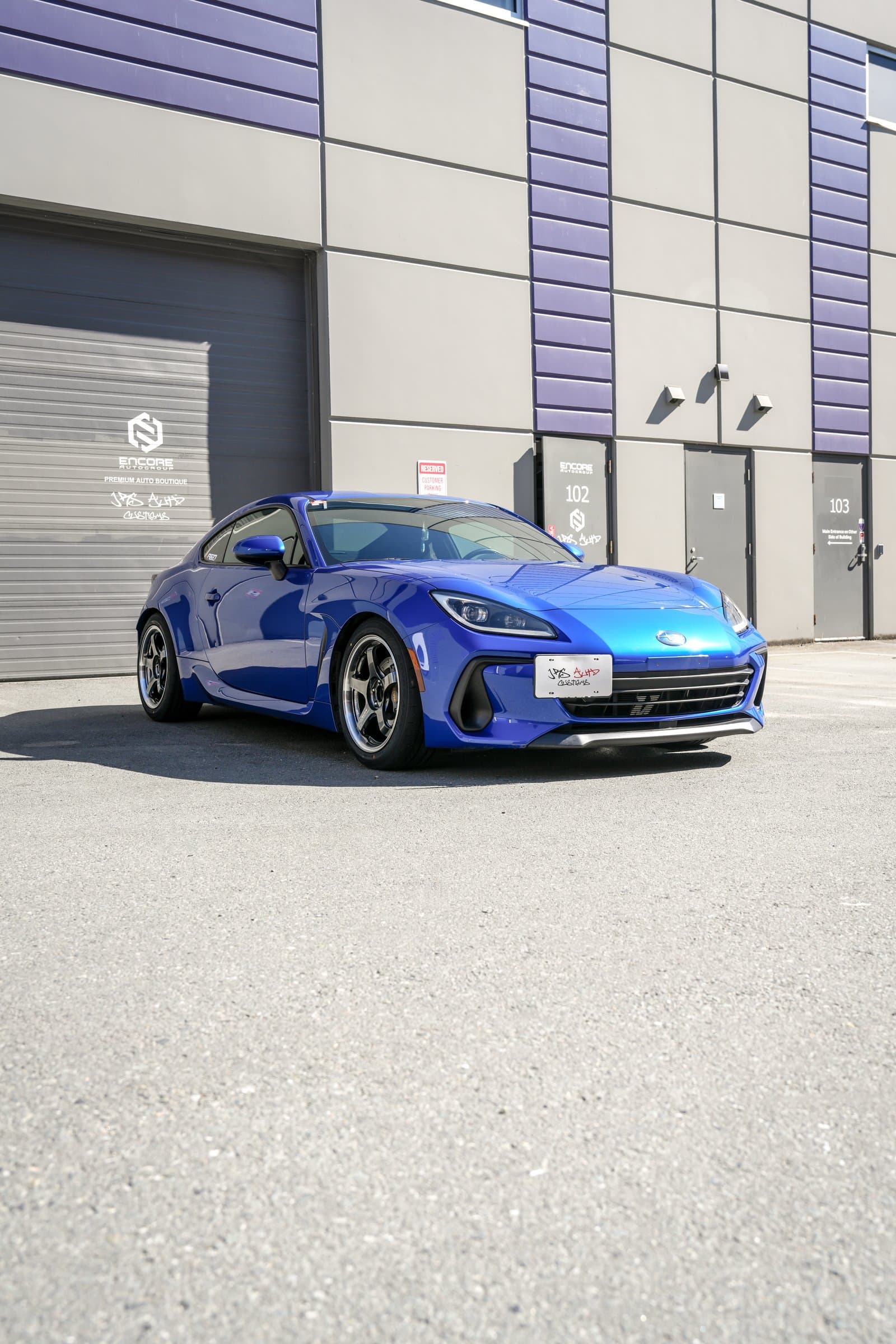
Related project: Subaru BRZ — Full Gloss Clear PPF