
SUV and Truck Protection in Vancouver: What to Prioritise
Published
Vancouver drivers who own SUVs and trucks face a specific set of challenges that sedan and coupe owners do not. The vehicles are larger, heavier, and often used differently — commuting, hauling, off-road weekends, or carrying families and gear through the city's wet winters. That usage pattern, combined with BC's climate, means the protection priorities for an SUV are different from a sports car. Here is what Vancouver SUV and truck owners need to think about.
Why SUVs and Trucks Face Different Protection Challenges Than Cars
An SUV's higher ride height and larger footprint expose different parts of the vehicle to damage. The lower front fascia, running boards, side skirts, rear bumper, and the full undercarriage are all more exposed on an SUV than on a sedan. Off-road capable vehicles — particularly those with steel bumpers, skid plates, and underbody components — face additional hazards that most passenger cars never encounter.
Vancouver's climate amplifies these challenges. Road salt and sand in winter accumulate in the lower door panels, wheel arches, and undercarriage more aggressively on taller vehicles because they are closer to the road surface. The additional weight of SUVs and trucks also means brake components work harder and wear faster in city traffic.
Many Vancouver SUV owners also use their vehicles for outdoor recreation: mountain access roads, beach approaches, and logging roads that throw gravel and debris at the lower body. These are not hypothetical scenarios — they are routine use for a significant proportion of Metro Vancouver SUV owners.
Front Fascia and Lower Bumper Protection
The lower front fascia is one of the most vulnerable areas on any SUV. It is the first point of contact with parking stops, curbs, and the constant stream of gravel kicked up from the road by your own front tyres. On vehicles with adaptive cruise control or front-facing cameras, damage to the lower fascia can also affect sensor alignment — an expensive problem that a simple protection film could have prevented.
Paint protection film on the lower front fascia, bumper valence, and hood leading edge is one of the highest-value PPF applications on an SUV. Many SUV owners who have experienced a cracked lower fascia or damaged front camera housing wish they had invested in film protection before it happened.
For vehicles with steel front bumpers or aftermarket bull bars, the mounting points where metal contacts paint under vibration are potential corrosion sites. Protecting the paintwork around mounting points with film or a rubber isolator is a practical step.
Running Boards and Side Steps: Protection vs. Function
Running boards and side steps on SUVs perform a useful function but they create their own protection challenges. The mounting points where the steps attach to the vehicle's frame or rocker panels are exposed areas that can accumulate road salt and moisture, particularly if the step blocks airflow to the lower rocker panel.
Protecting the rocker panels and door sills with PPF is a sensible complement to having running boards. The film guards against gravel chips from the road and against moisture that accumulates beneath a step over winter. Some aftermarket steps create a sealed gap that traps moisture against the body — look for designs that allow airflow to avoid accelerating corrosion.
Rear Bumper Protection for SUVs Used for Hauling
SUVs and trucks used for hauling — whether that is sports equipment, cargo, or pets — face specific rear bumper risks. Loading cargo over the rear bumper loads stress onto the paintwork at that exact point. Pet claws are another common source of rear bumper scratches, particularly for families with large dogs that jump in and out of the boot.
A clear bra on the rear bumper, including the upper loading surface, protects against scratches from cargo loading and from pet access. Rear sensors embedded in the bumper can crack or lose calibration from impact damage, and the cost of replacement is significant on most modern vehicles.
Undercarriage Protection: The Overlooked Risk
The undercarriage of any vehicle takes more abuse than the visible bodywork, but SUVs and trucks are particularly exposed. Ground clearance is higher, which means the undercarriage is closer to road level — and on any vehicle, the undercarriage is where road salt does its most concentrated damage.
In Vancouver, undercoating is one of the most valuable protective treatments for SUVs and trucks, particularly for vehicles that see winter driving or any off-road use. A professional undercoating seals the undercarriage against salt and moisture intrusion, protects exposed steel components from corrosion, and adds a degree of sound and heat insulation. Rubberised undercoatings are preferred over tar-based products for their flexibility and longevity.
For vehicles with exposed differentials, transfer case undersides, and exposed suspension components, an annual undercarriage wash — removing accumulated road salt after the winter season — extends the life of these components significantly.
Cargo Area and Boot Protection
The boot of an SUV takes more punishment than the cargo area of a sedan, by design. Hauling sports equipment, groceries, pets, and outdoor gear means the boot floor, side walls, and loading lip all accumulate wear. Rubber all-weather floor mats are the first line of defence, but they do not protect the boot walls or the load lip from scratches and dents.
A full boot protection package — including a cargo mat, side wall guards, and tailgate protection — is worth considering for SUVs used as genuine work vehicles. For luxury SUVs, this kind of protection is a standard part of the ownership expectation; for hard-use off-road vehicles, it is a practical investment against expensive interior damage.
PPF on SUVs: What Makes Sense and What Does Not
Full-body PPF on an SUV is a significant investment, and for most owners a targeted approach makes more sense than covering every panel. The highest-value areas for film protection on an SUV are: the front fascia and leading hood edge, the rear bumper loading surface, all door sills and rocker panels, and the rear quarter panels behind the rear wheels where gravel spray is heaviest.
Areas that benefit less from film protection are the flat roof panels, the upper doors above the sill line, and interior surfaces. Discussing your specific vehicle and usage patterns with a PPF installer will help identify the right coverage for your situation — there is no single correct answer for every SUV.
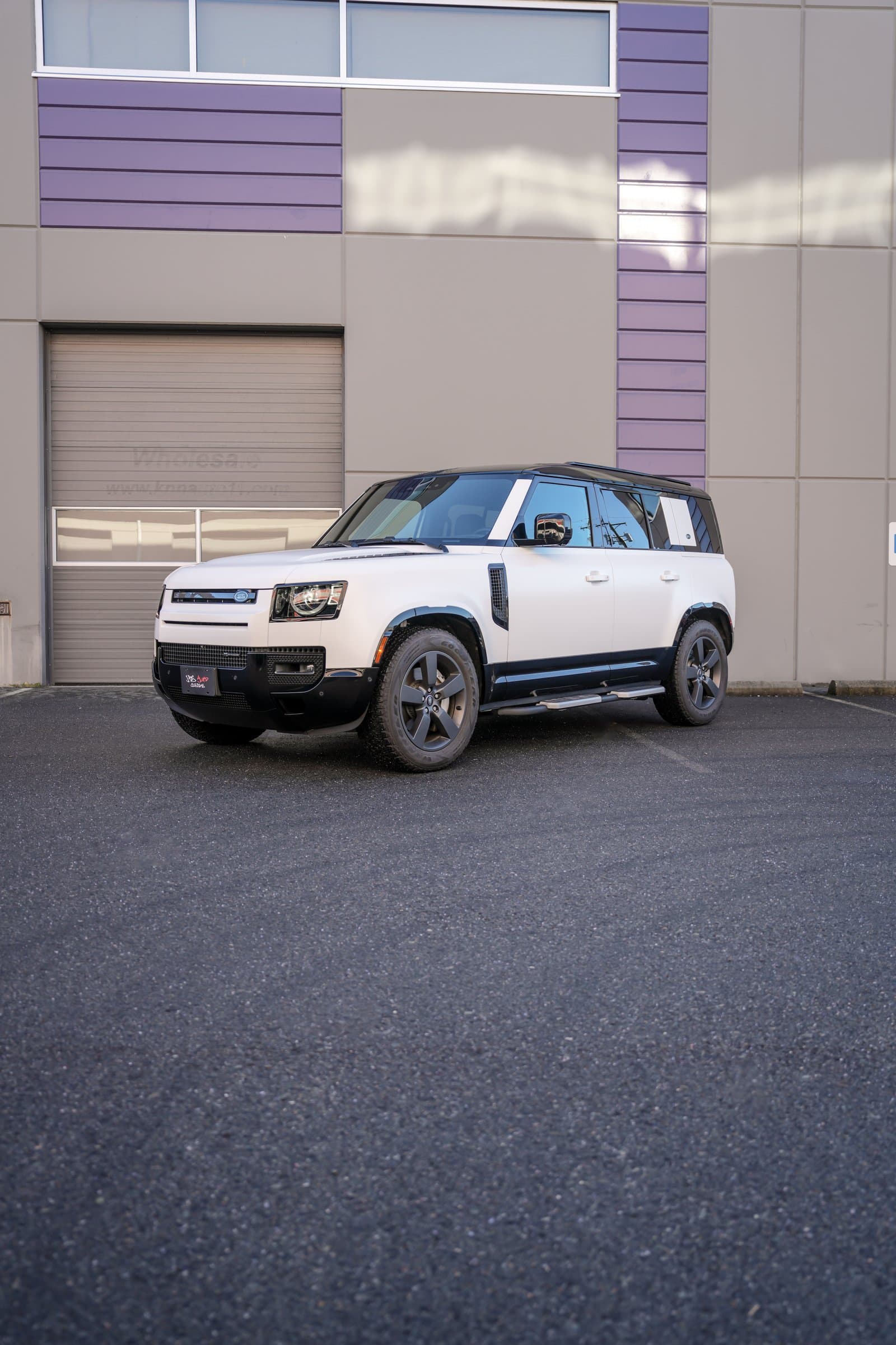
JRS Auto Customs has extensive experience protecting SUVs and trucks in Vancouver. See SUV and truck protection work in the PPF portfolio.
See JRS Auto Customs SUV and truck PPF protection workRelated project: Land Rover Defender Matte White PPF