
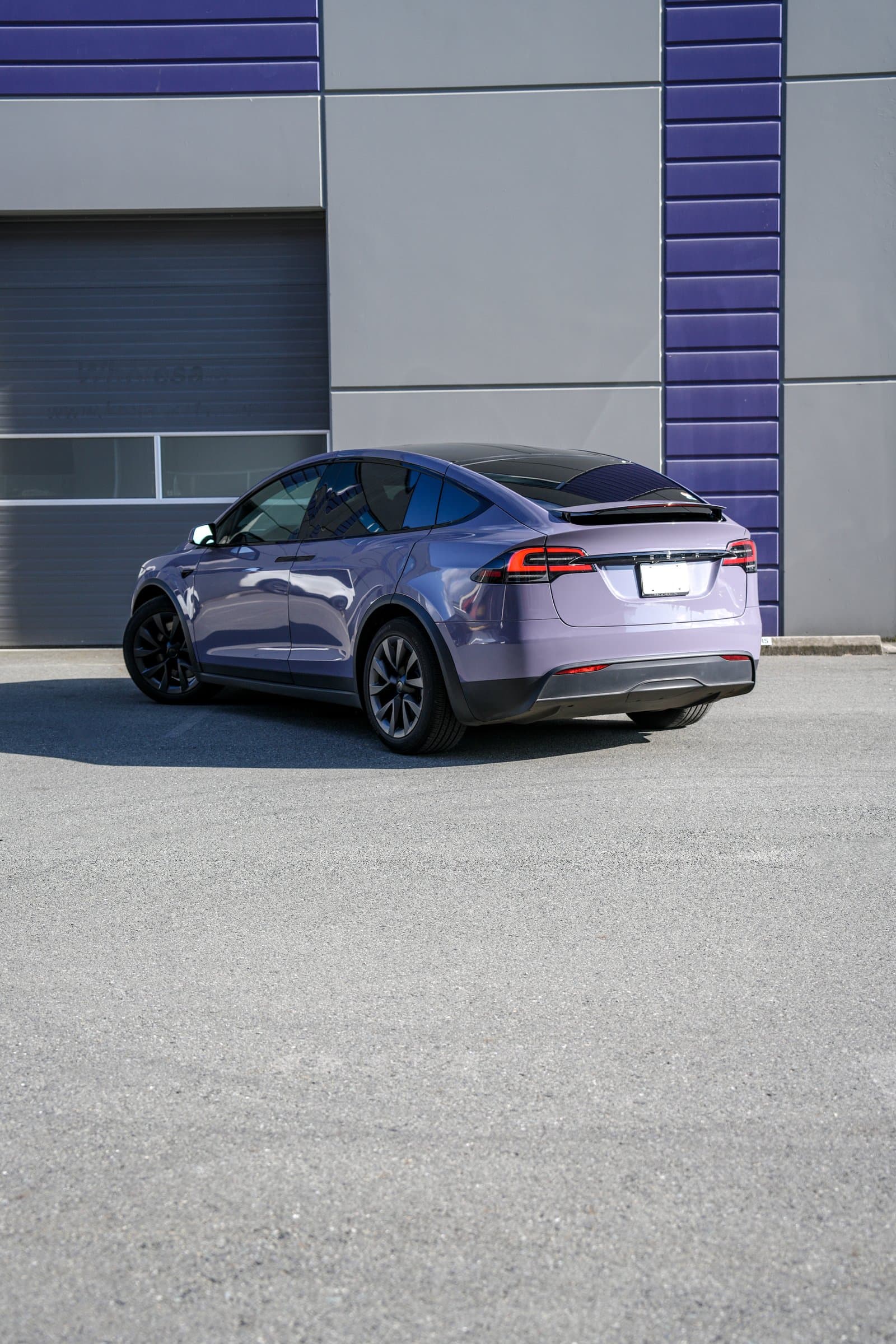
Why Tesla Owners in Vancouver Should Consider PPF
Published
Tesla vehicles have a reputation for being particularly prone to paint chips. If you own one in Vancouver and have been driving it for more than a few months, you have probably already noticed small marks on the front fascia, hood, or side mirrors. That is not your imagination — it is a documented characteristic of how Tesla applies paint to its vehicles, and it is one of the main reasons Tesla owners in Vancouver end up looking at paint protection film.
Why Tesla Paint Chips More Easily
Tesla uses an aluminium alloy body construction, which is excellent for weight reduction and range efficiency but creates a different surface for paint adhesion compared to traditional steel panels. The paint system Tesla applies is thinner in some layers than what you find on vehicles from European brands with deeper paint booths, and it sits on a substrate that does not bond as tightly in certain conditions. The result is a car that looks stunning from the factory but where the clear coat can be compromised more easily by gravel, road debris, and even automated car washes with worn brushes.
On top of that, the instant torque delivery of an electric motor means Teslas accelerate hard and fast from standstill. That acceleration kicks up gravel and debris from the road surface with more force than most drivers of internal combustion vehicles experience, especially in the first few seconds of a launch from a traffic light or roundabout. For a car with already-sensitive paint, this combination of factors means rock chips arrive faster and more frequently than on a comparable non-electric vehicle.
What PPF Does for a Tesla That Ceramic Coating Cannot
Ceramic coating bonds with the existing paint surface and makes it more resistant to chemical staining and UV damage. It does not add any meaningful thickness to the paint. If the road surface throws a stone at your hood at 60 km/h, the ceramic coating does not absorb that impact — the stone still contacts the paint and can chip it.
PPF is a thick, clear urethane film that sits on top of the paint as a sacrificial layer. It absorbs the kinetic energy of a stone impact and spreads it across the film surface rather than concentrating it on the paint. On a self-healing PPF, minor scratches in the film disappear when the car is parked in the sun or washed with warm water. The paint underneath stays pristine.
For Tesla owners, the combination is often the right answer: PPF on the front fascia, hood, side mirrors, and rear haunches — the areas that get the most stone impact — with ceramic coating across the rest of the body to make the unwrapped panels easier to clean and more resistant to the acidic bird droppings and UV exposure that are part of Vancouver parking outdoors.
Front-End vs Full-Body PPF on a Tesla
Front-end coverage protects the leading surfaces: the full hood, both front bumper covers, the side mirrors, and the front portion of the front fenders. For most Tesla owners who primarily drive in the city, this covers the vast majority of the rock chip risk.
Full-body coverage wraps every painted panel. On a Tesla, this is worth considering if you do highway driving regularly, if you park in uncovered outdoor lots frequently, or if the car is used for rideshare where passenger loading creates more contact risk. Full-body PPF also protects the side sills from door-edge impacts in tight parkades — a real risk in Vancouver's dense downtown parking environment.
There is also the resale consideration. A Tesla with documented full-body PPF coverage and a clean paint surface underneath commands a meaningfully different price than one with visible stone chips and touch-up marks on the front panels. For an owner planning to sell within three to five years, the cost of full-body PPF can be partially recovered in the resale premium.
What to Do if Your Tesla Already Has Chips
If paint damage has already happened, the first step is to assess how deep it goes. A chip that has penetrated the clear coat and reached the primer or bare metal beneath needs attention faster than one that is purely cosmetic — bare aluminium exposed to the wet Vancouver climate will corrode. A paint protection film installer can assess the existing condition and recommend whether to apply PPF over the current paint or to do a targeted paint correction first.
The longer exposed aluminium sits in a Vancouver winter without protection, the more the corrosion spreads under the surrounding clear coat, which makes later correction more complex and expensive. If you have chips from last season, get them assessed before the wet weather returns.
Find out more about PPF options for your Tesla at JRS Auto Customs: paint protection film. For owners considering ceramic coating as well, see our ceramic coating service page.
Related project: Tesla Model X — Provence Purple Color Change