Do Teslas Need PPF? A Vancouver Owner's Guide
Published
Tesla builds most of its vehicles with aluminium body panels. That is a deliberate engineering decision -- aluminium is lighter than steel, which matters for range in an electric vehicle. But it has consequences for paint and protection that many Tesla owners do not discover until the first stone chip appears. Understanding why Teslas are more susceptible to paint damage than many other vehicles makes the PPF decision clearer.
Why aluminium body panels chip more easily
Aluminium is a softer metal than steel, which means it deforms more easily under impact. A stone that bounces off a steel panel at highway speed may leave a small dent on an aluminium panel, or chip the paint at the point of impact. Aluminium body panels are also thinner than structural steel panels, which means there is less material to absorb energy before the paint surface is affected. The paint system on aluminium -- the primer, base coat, and clear coat layers -- is applied differently from steel panels, and the bond between the paint and the aluminium substrate can be more vulnerable to chipping at the edges of repairs or at panel joins.
Tesla's own paint is applied relatively thinly compared to some European manufacturers, and the factory clear coat on some model years has shown susceptibility to swirl marks and etching from automatic car washes. For a daily driver in Vancouver -- where Highway 1, the Upper Levels, and the North Shore roads are part of many commutes -- the front end of an unprotected Tesla accumulates stone chips faster than most owners expect in the first year.
The Cybertruck is a different problem
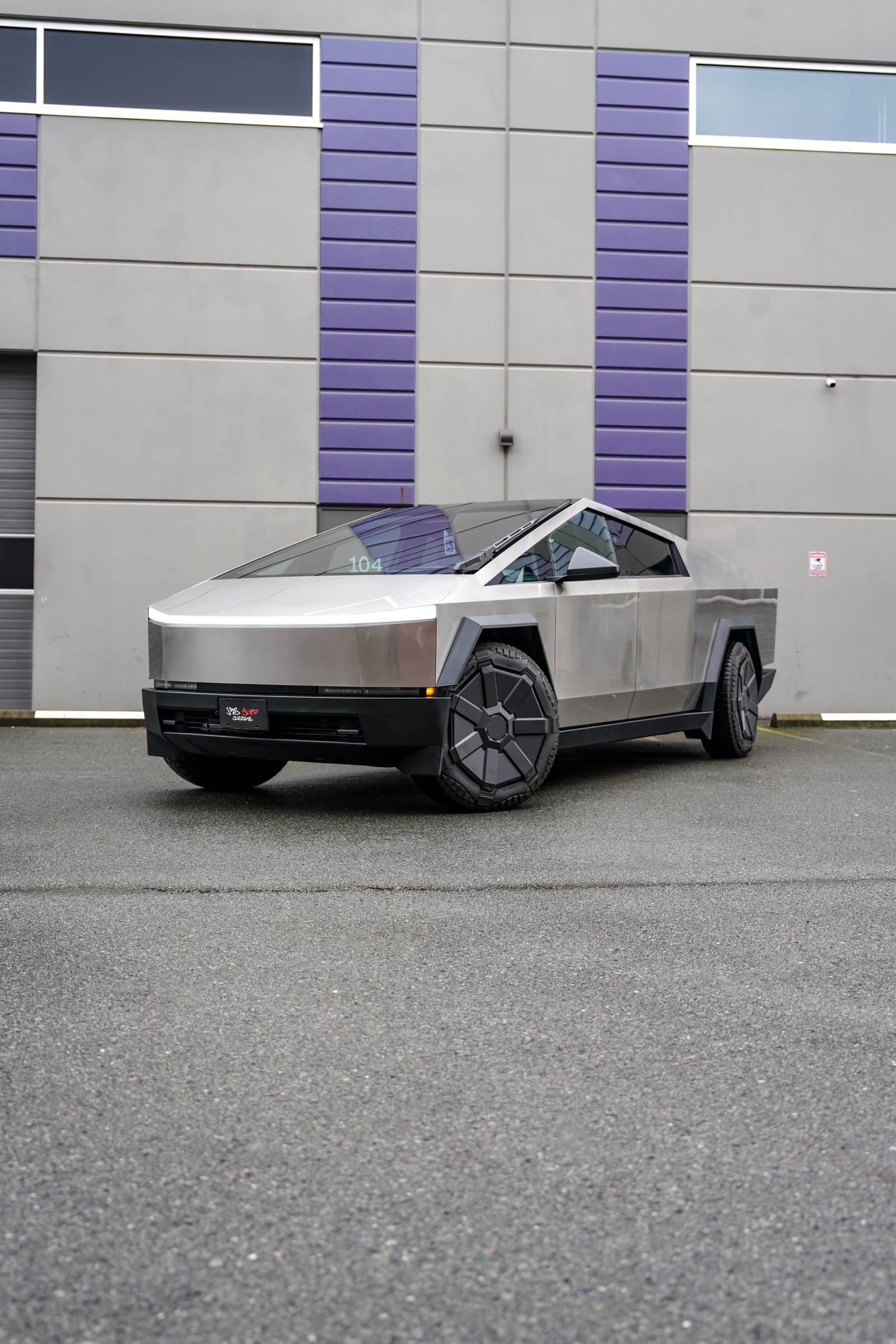
The Cybertruck uses an exoskeleton of cold-rolled stainless steel -- a material chosen for its corrosion resistance and durability. Stainless steel does not rust, but it does scratch, and unlike aluminium or steel body panels with paint, a scratch in stainless steel is not just cosmetic. The scratch is visible, it can corrode at the microscopic level, and the patina that develops over time is not always even across body panels. Some owners embrace the rugged appearance; others want to keep the factory finish intact. PPF on a Cybertruck protects the stainless surface from scratches and road debris, and clear TPU PPF does not alter the appearance of the stainless steel -- it just adds a layer of impact and scratch resistance.
There is also a practical consideration for Cybertruck owners in BC: the exposed stainless body panels show every piece of road film, salt, and water spot, more so than painted panels. Maintaining the appearance of an unprotected Cybertruck takes more effort than maintaining a painted car, and many owners find that PPF reduces the day-to-day maintenance burden as much as it reduces the scratch risk.
What PPF coverage makes sense for a Tesla
The front end is the highest-priority area on any Tesla -- the hood, front bumper, fenders, and mirror caps. These are the surfaces that face the highest rate of stone impact on the highway. A front-end PPF package covers these areas and represents the most protection per dollar spent. Full-body PPF is the most comprehensive option and is worth considering for owners who keep their cars for more than three years, or who plan to sell the car and want the paint in the best possible condition.
On a Model S or Model 3 with the glass roof, the front section of the glass roof is also exposed to stone impact and can crack. Some owners apply PPF to the front roof glass as well as the paint surfaces -- this is worth discussing with an installer to understand the trade-offs, including how PPF on glass affects the appearance of the roof at night.
PPF, ceramic, or both on a Tesla
The same logic applies to Teslas as to any other vehicle: PPF handles impact protection and ceramic coating handles chemical contamination. They address different risks and are not mutually exclusive. On a Tesla with aluminium body panels, PPF on the front end combined with ceramic coating over the full vehicle gives both impact resistance where it matters most and chemical protection across all surfaces. On a Cybertruck, ceramic coating on top of PPF adds UV protection that further slows any surface degradation on the stainless steel.
Maintenance and longevity on a Tesla with PPF
Teslas with PPF should still be washed regularly -- the film surface collects road film and contamination just like paint does. Use a pH-neutral wash product and a soft microfibre mitt. Avoid abrasive compounds and rotary polishers on the PPF surface. If the PPF picks up minor scratches, TPU-based PPF with self-healing properties can be refreshed with heat -- from a heat gun on a low setting or from sunlight on a warm day. The self-healing property works on light surface scratches but does not repair deeper damage that has penetrated the film.
One practical note for Vancouver Tesla owners: automatic car washes with stiff brushes should be avoided regardless of whether the car has PPF. The brushes cause fine scratches in the clear coat and in PPF. Touchless car washes or hand washing with a two-bucket method are the appropriate approaches for any Tesla.
JRS Auto Customs can advise on PPF coverage options for your specific Tesla model and advise on whether PPF, ceramic coating, or a combined approach makes sense for your usage pattern. Contact the team to discuss what your car needs.
For details on PPF and protection services available at JRS Auto Customs, see the PPF service page.
Related project: Tesla Cybertruck Stainless Steel PPF