
Paint Correction After Winter: What the Salt Season Does
Published
After a Vancouver winter, your car's paint often looks worse than it actually is. The combination of road salt, sand, gravel, and the repeated wet-dry cycles of a Pacific Northwest winter can leave paint that looked fine in September looking tired and damaged by April. Understanding what the salt season does to paint, what can be corrected, and what comes after correction helps you decide how to respond.
What the Salt Season Leaves Behind on Paint
The damage from a Vancouver winter accumulates in layers. Road salt in solution splashes onto the lower panels and dries there, leaving behind sodium compounds that are mildly corrosive. Sand and fine gravel work as an abrasive between surfaces during the wet-dry cycling, creating fine scratches that are most visible in direct light. On lighter-coloured cars, this shows as a general haziness to the finish. On darker cars, it shows as swirl marks and light scratches that catch the light at an angle.
Iron-rich brake dust from the frequent braking that winter driving demands settles into the paint surface and embeds itself if it is not removed regularly. Over a full winter, the combination of salt, brake dust, and road grime can build up to the point where washing alone cannot restore the surface. A single wash-and-wax routine is not sufficient for this level of contamination — it needs a dedicated decontamination step.
Water spots from rain and the spray of other vehicles leave mineral deposits on the paint surface. In Vancouver's climate, where rain is persistent and drying conditions are often cool and cloudy, these water spots can remain on the surface long enough to begin etching into the clear coat before they are noticed. The longer they sit, the deeper the etching, and the more difficult the correction.
Identifying What You Are Looking At
Before deciding on paint correction, it is worth understanding the type of damage present. Fine surface scratches — the kind that appear as a general haziness on light-coloured cars or as swirl marks on dark cars — are in the clear coat layer. These are correctable through a surface polish or light compound treatment without penetrating into the colour coat beneath.
Deeper scratches that have penetrated the clear coat and reached the colour layer are not correctable through polishing alone. They require a more involved repair or will remain visible even after a full paint correction. These are usually caused by more significant impact events — a more aggressive rock chip, an incident with a car door, or deliberate contact with an abrasive surface.
Acid-etched water spots are a specific category. They occur when mineral-rich water sits on the paint surface long enough to begin reacting with the clear coat. They appear as small, circular marks or patterns, often most visible on the roof and hood where water pools and evaporates most slowly. These can sometimes be corrected depending on how deep the etching has reached.
What Paint Correction Involves
Paint correction is the process of restoring a paint surface by removing a controlled amount of clear coat to eliminate surface defects. It is not the same as painting — the goal is to restore the existing finish, not replace it. The correction process uses progressively finer abrasive compounds applied by machine or hand to level the surface and remove defects.
A single-stage correction uses one or two passes with a compound or polish to address mild hazing and light swirl marks. A two-stage correction adds a subsequent refinement pass with a finer compound to remove the micro-scratches left by the first stage and restore a higher level of gloss. The result is a more complete restoration but takes more time.
Paint correction does remove a small amount of clear coat each time it is performed. Over the life of the car, there is a practical limit to how many times a surface can be corrected before the clear coat is too thin. This is one reason why protecting the corrected surface afterward — with a ceramic coating or paint protection film — extends the value of the correction significantly.
Timing: When to Correct After Winter
The best window for post-winter paint correction in Vancouver is typically April through June, after the worst of the wet season has passed but before the summer sun reaches full intensity. The cool, overcast conditions of a Vancouver spring are ideal for correction work — the paint surface stays cool, compounds cut more consistently, and there is less risk of products drying too quickly on the surface.
Attempting paint correction in direct summer sun is not recommended. The paint surface heats up quickly, which causes compounds and polishes to flash dry, leading to uneven results and potential hologramming — a visible pattern of fine circular marks that appears under certain lighting conditions.
If you are planning to apply a ceramic coating or paint protection film after correction, correcting first and coating immediately afterward is the most effective sequence. The corrected surface is perfectly clean and defect-free, and coating it locks in that result without any contamination between the coating and the paint.
After Correction: Protecting What You Have Restored
Explore ceramic coating options at JRS Auto Customs
See paint protection film options
Browse the portfolio of completed projects
Paint correction without protection leaves the restored surface in the same vulnerable position it was in before winter. Without a barrier over the corrected finish, the surface will begin accumulating the same damage again within weeks of normal driving. The protection applied after correction is what preserves the result and makes the investment worthwhile.
Ceramic coating after paint correction creates a chemically bonded hydrophobic layer over the corrected surface. Water and road grime bead off more readily, making the car easier to clean and reducing the accumulation of the substances that caused the damage in the first place.
Paint protection film applied after correction offers a physical barrier against rock chips, salt, brake dust, and road debris. It is more durable than ceramic coating against impact damage and does not degrade from UV exposure in the same way.
For most Vancouver drivers, the combination of paint correction followed by ceramic coating or paint protection film represents the most effective approach to maintaining a clean, protected finish through subsequent winters.
JRS Auto Customs can assess your vehicle's paint condition and advise on the most appropriate correction and protection path for your specific situation.
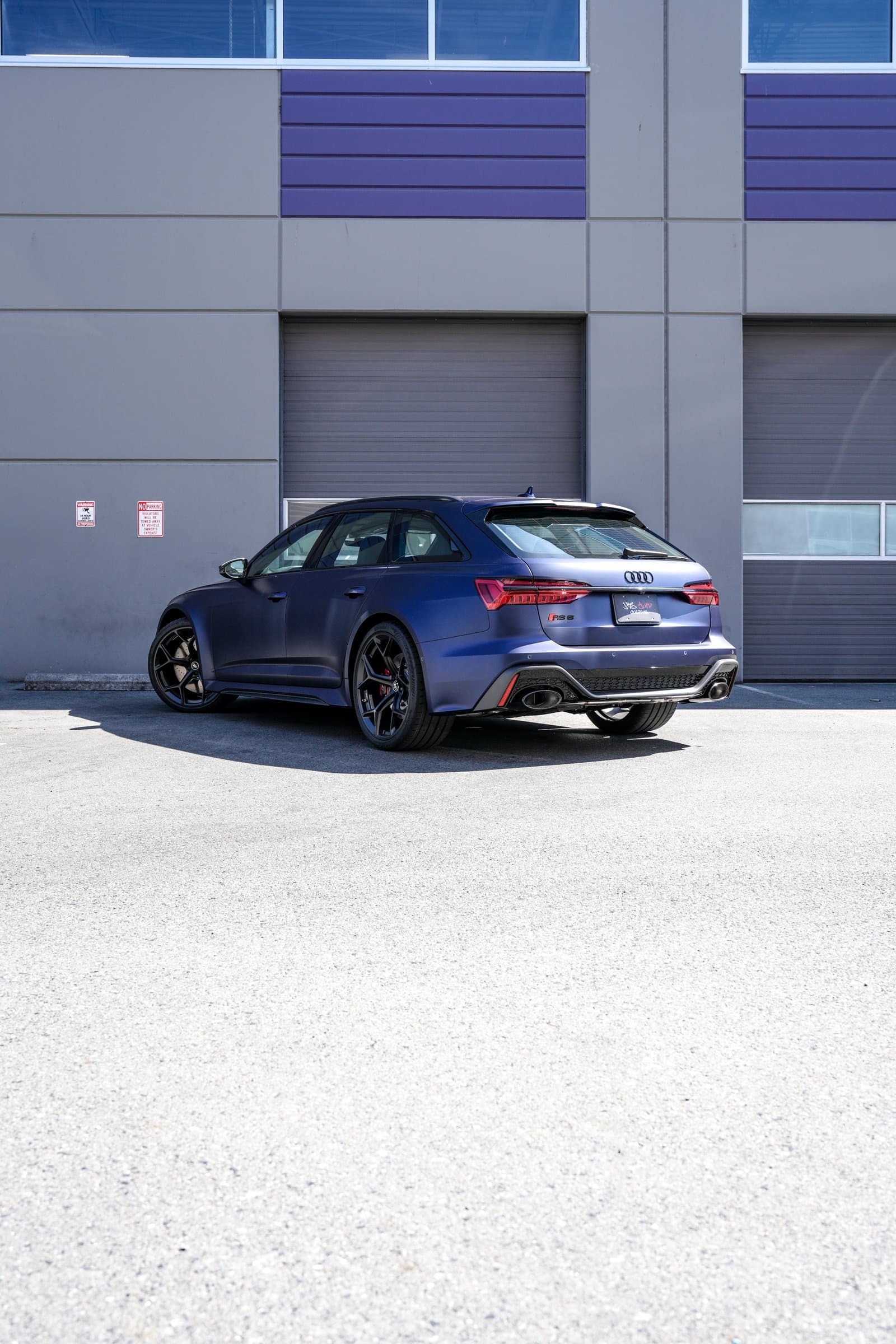
Related project: Audi RS6 Avant Matte Blue PPF