
TPU Color Change Wraps in Vancouver's Wet Climate
Published
Color change wraps have been around long enough that most Vancouver drivers know what they are. What fewer people know is that the material underneath the color has changed — TPU film is replacing PVC as the standard for quality installs, and the difference matters more in Vancouver's climate than almost anywhere else in Canada.
What TPU Actually Is and Why It Performs in Wet Weather
TPU stands for thermoplastic polyurethane. It is the same material used in paint protection film — the product designed to absorb impacts and resist scratches on high-end vehicles. When that material is made optically clear and then pigmented, you get a color change film that is considerably more durable than the older PVC alternatives.
In practice, this means a TPU color change wrap resists the kind of damage that PVC films cannot handle. Road salt and calcium chloride — the de-icers used on Lower Mainland bridges and highway ramps — do not break down TPU the way they eventually do PVC. Minor scratches on TPU film can self-heal with heat, something PVC cannot do. And because TPU is more flexible and conformable, it adheres more evenly around complex curves, reducing the risk of edge lifting over time.
For Vancouver drivers, the wet weather case for TPU is straightforward: a vehicle that is parked outside through fall and winter, washed less frequently, and regularly exposed to salt and grime, needs a film that can take that treatment without degrading. TPU is built for exactly that.
TPU vs PVC: The Real Differences for Vancouver Drivers
If you have looked into color change wraps before, you have likely seen PVC films described as a budget-friendly option. That is accurate — PVC is less expensive to manufacture and install. What that price difference does not always make clear is what you are trading away.
PVC films are more susceptible to fading from UV exposure. In a city with bright reflected light off water and snow, and a surprisingly high number of sunny winter days, that UV exposure adds up. PVC is also more prone to staining from contaminants like tree sap, bird droppings, and the mineral deposits left behind when water evaporates off the surface.
TPU resists all of those. Its hydrophobic surface means water sheets off rather than pooling, which reduces water-spot staining. It holds its color better over time. And when the film does take a scratch — from a washing mishap or a low-speed contact — the self-healing layer activated by heat returns the surface to its original condition. For a car that lives outside in Vancouver, those are not small advantages.
The honest trade-off is cost. TPU color change wraps are more expensive than PVC. Whether that premium is worth it depends on how long you plan to keep the car and how hard your parking situation is on the vehicle. If the car is a daily driver parked outside through most of the year, the durability difference between TPU and PVC tends to show up within the first winter.
What TPU Color Change Looks Like on a Vancouver Car
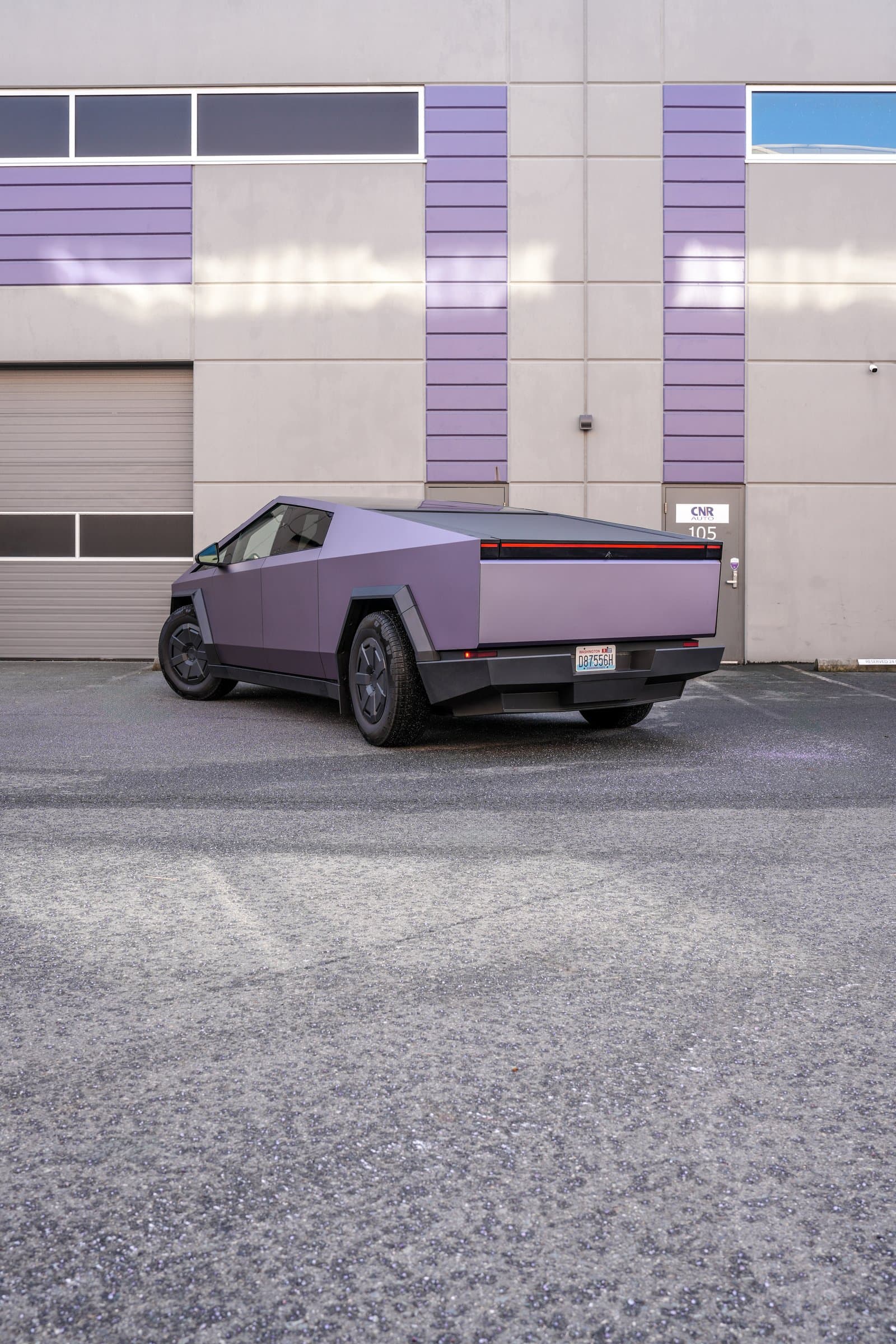
JRS Auto Customs has installed TPU color change wraps on a range of vehicles in the Lower Mainland. The finish quality is comparable to a factory paint job — the film conforms to body lines with no vinyl texture showing through, and the edges wrap cleanly into panel gaps. When the film is removed, the original paint underneath is typically undamaged.
If you are considering a color change and want a film that can handle a Vancouver winter without needing early replacement, TPU is worth discussing with the team before you decide on a finish. You can see examples of recent TPU installs on the JRS Auto Customs color change portfolio. The team can walk you through the available finishes, what each material performs like through a BC winter, and what maintenance looks like over the life of the wrap.
Related project: Tesla Cybertruck — Capri Grey Purple TPU Color Change