
TPU vs PVC: Which Wrap Lasts Longer in Vancouver Winter
Published
A colour change wrap is a significant decision for any car owner. The appeal is obvious: a new look without the permanence or cost of a respray. But if you are considering one for a car that will be driven daily through Vancouver's wet winters, the material matters as much as the colour. Here is what TPU and PVC wraps do differently in the kind of conditions Metro Vancouver throws at a car all winter long.
Vancouver's Winter Conditions Are Hard on Car Surfaces
Between November and March, a daily driver in Vancouver faces a combination of road salt, frequent rain, frost, and temperature cycling between just above and just below freezing. These conditions affect every exterior surface on the car. A factory paint finish is tested against these conditions by design; an aftermarket wrap is subject to the same environment but without the same OEM-grade testing behind it. The material you choose determines how well it holds up.
TPU vs PVC: What the Difference Actually Means in Practice
TPU — thermoplastic polyurethane — is a more advanced film than PVC — polyvinyl chloride. This matters practically in Vancouver winter conditions in several ways. TPU is more flexible at low temperatures: it does not become brittle in the way that PVC does when the temperature drops below freezing. This means TPU film is less likely to crack or lift at edges during a Vancouver winter, particularly around doors, boot shuts, and bumpers where the film is under mechanical stress.
TPU also has better chemical resistance than PVC. Road salt, de-icing agents, and the acidic runoff from brake dust are all more likely to degrade a PVC film over a season of exposure. TPU handles this exposure with less surface degradation and less discolouration at the edges. These are not cosmetic complaints — edge failure on a wrap is the most common reason a colour change needs to be removed and reapplied earlier than expected.
What Vancouver Winter Actually Does to a TPU Wrap
A properly installed TPU wrap handles the wet season well. The film's hydrophobic surface sheds water effectively, reducing the amount of road spray that adheres to the surface. When it does get dirty — and it will, through the salt season — a standard automotive wash restores it. TPU is also more resistant to the minor stone chips and road debris that accumulate through winter driving: it absorbs small impacts without cracking the way PVC film often does.
The most vulnerable points on any wrap through winter are the leading edges — the front bumper, leading edge of the bonnet, door edges, and mirror caps. These areas take the most road spray and the most physical abrasion from washing. A full-front PPF layer applied over the colour change wrap in these areas is a common and practical combination that many owners choose, particularly for daily drivers on the Highway 1 corridor.
Driving Frequency and Parking Situation Matter
A garage-kept car through winter will always look better than one parked outside. That is true for factory paint and it is equally true for a colour change wrap. But the difference in outcomes between TPU and PVC is most pronounced on cars that are parked outside through the season. PVC film that has been frozen and thawed repeatedly, coated in salt and road film, will show edge degradation sooner than TPU in the same conditions. For a car that lives outdoors in North Vancouver or Burnaby through the winter, TPU is the more durable choice.
How Long Does a TPU Colour Change Actually Last in Vancouver?
Industry consensus for TPU colour change film in a moderate climate is in the five-to-seven year range with proper maintenance. That maintenance is not intensive: regular washing, avoiding abrasive brushes in automated car washes, and having edges inspected once a year are the main points. This is a realistic expectation for a daily driver in Metro Vancouver. The installed film carries a product warranty that covers manufacturing defects — ask about the specific terms when discussing installation.
JRS Auto Customs in Vancouver has installed TPU colour change wraps on vehicles across Metro Vancouver since 2010. If you are considering a colour change for a daily driver and want to discuss whether TPU is the right choice for your situation, get in touch. See TPU colour change wrap options at JRS Auto Customs.
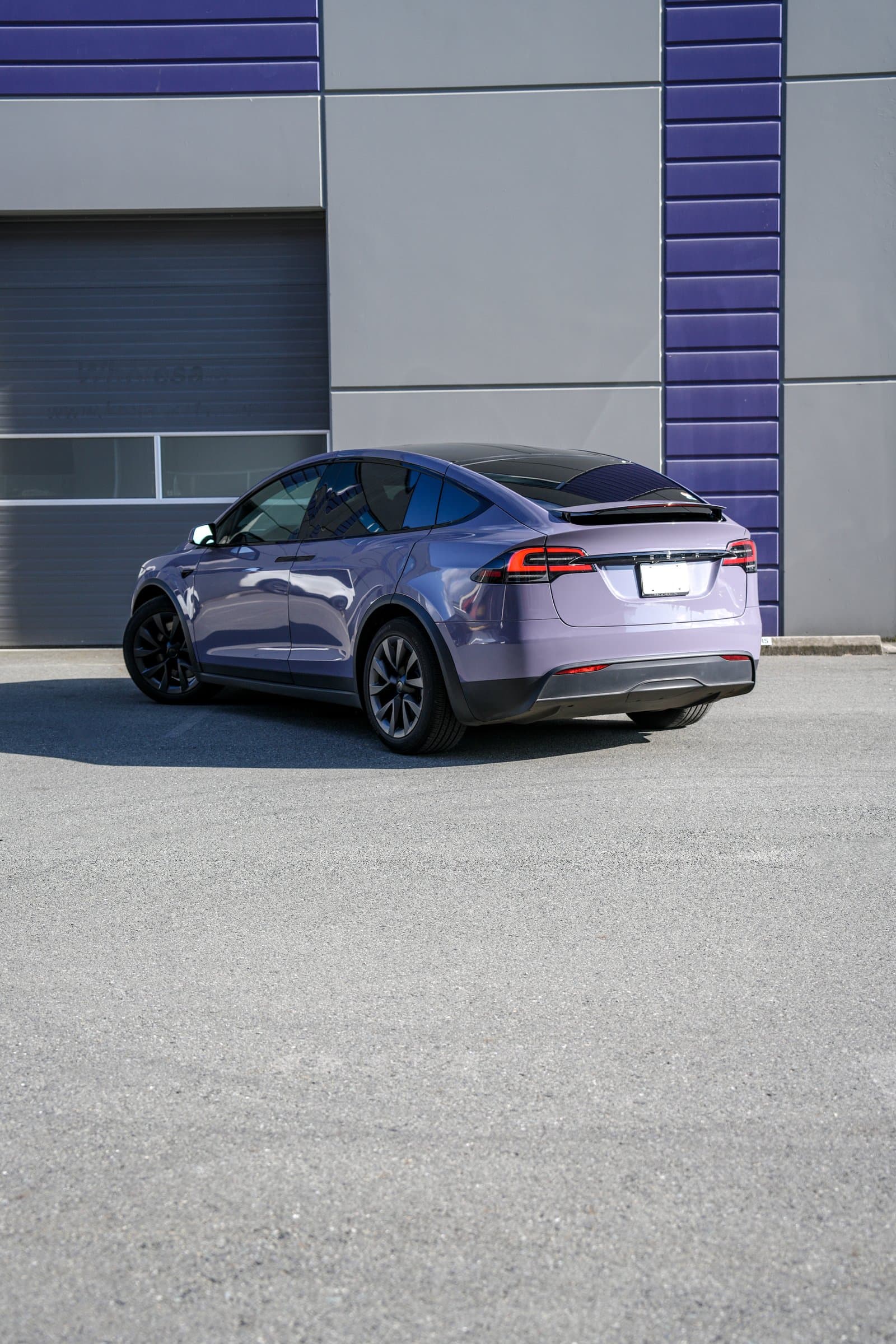
Related project: Tesla Model X — Provence Purple Color Change