
TPU vs PVC PPF: Which Film Is Right for Your Vancouver Car
Published
If you have been looking into paint protection film for your car, you have probably come across two material types: TPU and PVC. Both cover your paint and claim to protect it, but they behave very differently over time especially in a climate like Vancouver. Here is what the difference actually means for your car.
What TPU and PVC Actually Are
TPU stands for thermoplastic polyurethane. It is a flexible rubber-like material that can be stretched around curves and body lines without cracking. PVC is polyvinyl chloride, the same material used in older vinyl wraps and signage. It is stiffer and less forgiving, which affects both how it applies and how it ages. Most quality PPF products used by specialist installers today are TPU-based.
How They Perform in Vancouver Climate
Vancouver cycles between cold wet winters and warm dry summers. TPU handles that expansion and contraction cycle well: it flexes with temperature changes without lifting at the edges or yellowing from UV exposure. PVC does not flex as gracefully. In cold weather it can become brittle, and over a wet cold winter the adhesive can weaken, causing edges to lift or trap moisture underneath the film.
TPU also has self-healing properties in many of the higher-end formulations. Minor surface scratches from washing or light road contact can be activated by heat, either sunlight or a heat gun, and the film surface returns to smooth. PVC cannot self-heal: any scratches or swirl marks in the surface are permanent for the life of the film.
Application and Finish Quality
TPU wraps conform more easily around complex panel shapes, compound curves, and sharp edges, which matters on modern sports cars, luxury SUVs, and anything with aggressive body lines. The result is a cleaner finish with fewer visible seams and less risk of the film pulling away from a corner over time. PVC requires more heat and force to stretch, which can cause stress marks and makes it harder to get a truly invisible edge on tight radii.
For a full-body or partial front-end install on a car you plan to keep, this difference in finish quality compounds over the years. A well-applied TPU film is difficult to spot unless you are looking for it. A lower-quality PVC install becomes more noticeable as the material ages.
When PVC Still Makes Sense
PVC has a legitimate use case: temporary or short-term protection where budget is the primary constraint. A short-term lease car, a track-day vehicle that will see hard stone chips regardless, or a car being prepared for sale where a full PPF investment does not make financial sense: PVC can serve those situations without the same cost as TPU. The trade-off is planning for a shorter replacement cycle, typically two to three years before visible degradation.
For a daily driver in Vancouver that you intend to keep for several years, the math usually favours TPU. The longer lifespan, better cold-weather performance, and self-healing properties mean you are not replacing the film as frequently, and the protection it provides through multiple winters of road salt is more consistent.
What to Ask Your PPF Installer
Before committing to a PPF install, ask what material the film is made from. If the answer is PVC or if the installer cannot specify the brand and formulation, it is worth getting a second opinion. Reputable PPF manufacturers specify TPU as standard and provide documentation on thickness, UV resistance, and expected lifespan. Ask to see a sample of the film, how it stretches, and what the edge finish looks like on a curved panel.
JRS Auto Customs installs TPU-based PPF on full-body and partial coverage packages. We walk through the options with each customer before recommending coverage. If you are considering PPF and want to understand what material you are actually getting, bring your questions before you commit.
If you are weighing PPF against other protection options, our PPF service page covers what is included, what the coverage choices look like, and what to consider for your vehicle and driving patterns.
Explore PPF options at JRS Auto CustomsThe material your PPF is made from is not a minor technical detail. It determines how well the film protects your paint through Vancouver winters, how long it lasts, and how much maintenance it needs over time. Understanding the difference between TPU and PVC before you book an install means fewer surprises and a better outcome for your car.
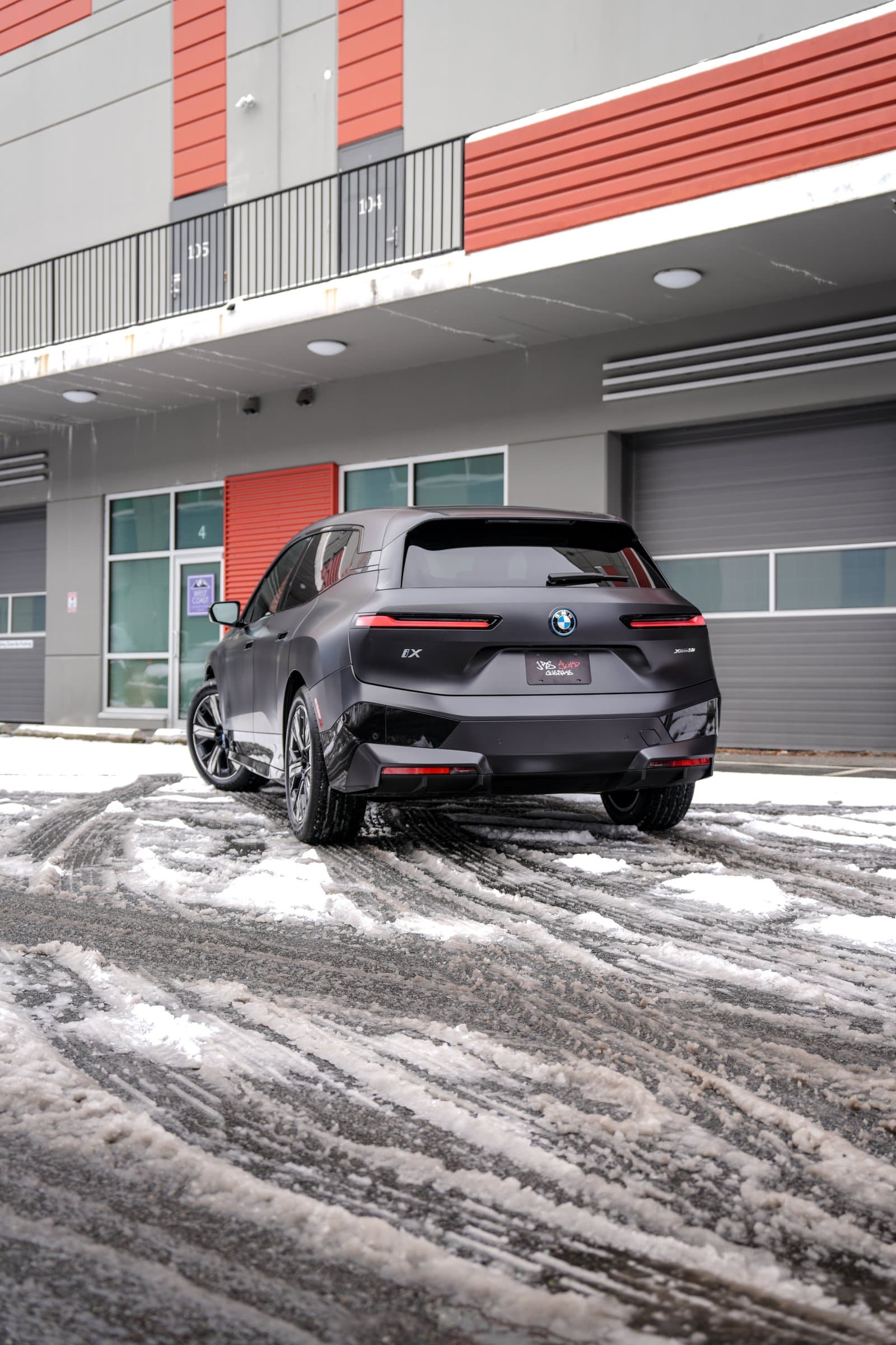
Related project: BMW iX Matte PPF