
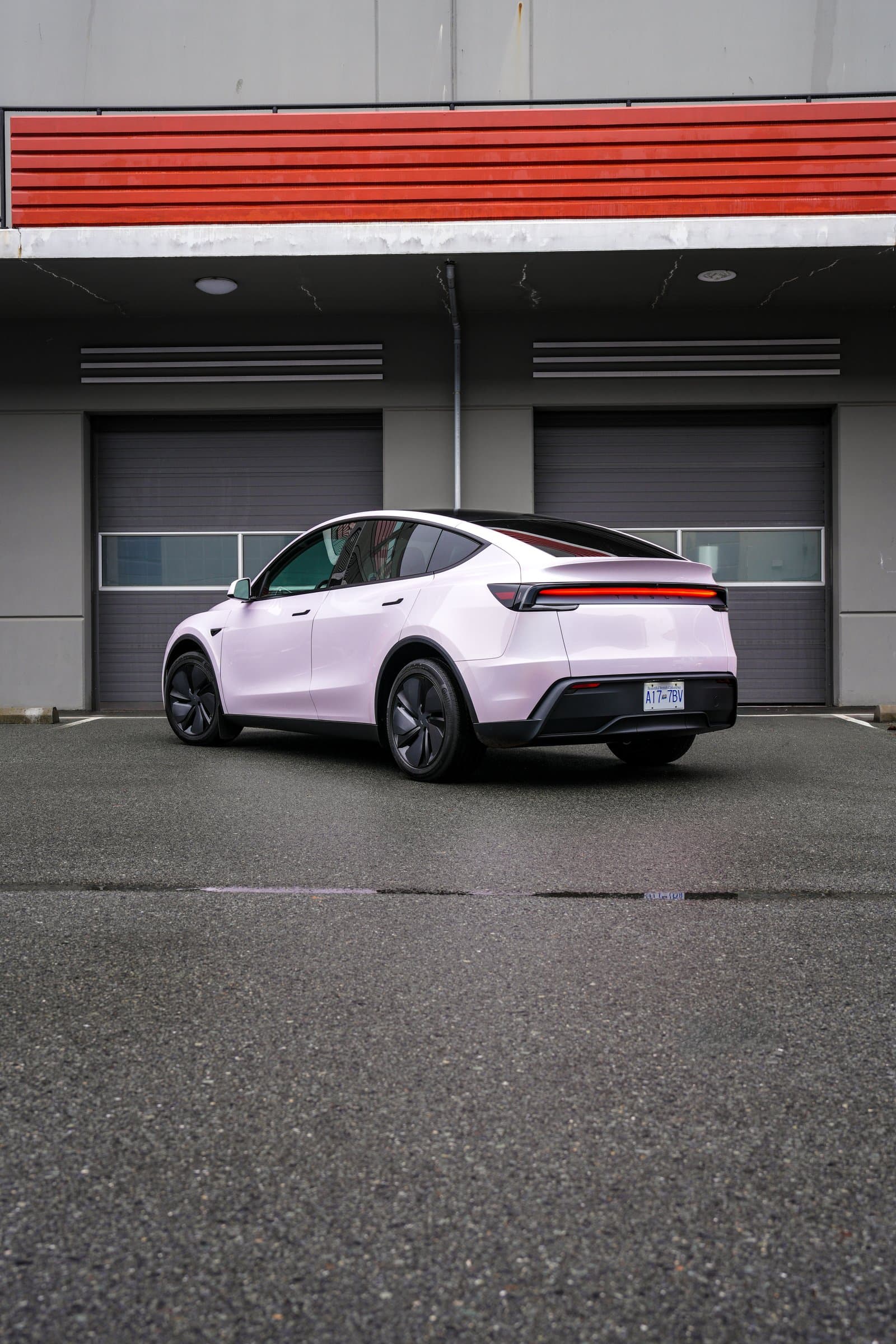
TPU vs PVC: Choosing a Vinyl Wrap for Vancouver's Climate
Published
If you are considering a colour change wrap for your car, the choice between TPU and PVC vinyl is the most important technical decision you will make before booking. It affects how the wrap looks after a few years, how it handles Vancouver is weather, and how much it costs upfront versus over time. Most colour change posts explain what wraps are and what they cost; this one focuses on what the material actually means for your car.
This guide is for Vancouver car owners who have decided on a colour change and want to understand the practical differences between TPU and PVC before committing.
What PVC and TPU Actually Are
PVC vinyl — polyvinyl chloride — is the traditional wrap material. It is a rigid, relatively thin film that is heated and stretched over body panels during installation. It holds colour well, comes in an enormous range of finishes, and has been the standard for colour change wraps for over two decades. Manufacturers have refined PVC formulations considerably, and modern cast PVC is significantly more durable than the calendared PVC of previous generations.
TPU — thermoplastic polyurethane — is a newer material originally developed for paint protection film. It is softer and more elastic than PVC, which gives it different performance characteristics. TPU wraps are less widely available than PVC, come in fewer colour and finish options, and cost more — but they offer genuine advantages in specific conditions.
Cold Weather and Moisture Performance
Vancouver is climate is the central reason this comparison matters for local car owners. The city experiences extended periods below freezing in winter, combined with heavy rain and road salt. These conditions test wrap materials in ways that warmer climates do not.
PVC vinyl is most vulnerable at the extremes: very cold temperatures make it more brittle and less forgiving of the micro-vibrations from driving on rough roads, and very hot temperatures in direct summer sun cause it to expand and, over years, to lift at edges and seams. In Vancouver is moderate but damp climate, PVC performs reasonably well, but it is not optimised for this environment.
TPU is more resilient at temperature extremes. Its elasticity means it tolerates the micro-vibrations from rough road surfaces without cracking or delaminating as readily as PVC. It is also more resistant to the chemical exposure from road salt and calcium chloride, which can degrade the adhesive on PVC wraps over a Vancouver winter. These are practical advantages for a car that will spend years on Lower Mainland roads.
Self-Healing Properties
One of the most significant practical differences between TPU and PVC is the self-healing top coat found on most TPU films. Light surface scratches — from washing, from light contact with a brush in an automatic car wash, or from airborne grit — can be restored by applying heat: warm water, a heat gun on low setting, or even leaving the car in the sun on a warm afternoon. The top coat softens and flows back, reducing or eliminating the scratch.
PVC wraps do not self-heal. Any scratch that penetrates the clear coat is permanent until the film is replaced. For a car driven daily in the city, where light scratches are inevitable, this difference compounds over time. A TPU wrap that self-heals retains its appearance better through the first few years.
Installation and Finish
TPU is softer and more elastic, which makes it more forgiving during installation on complex curves and recessed areas. It stretches more before it bonds, which reduces the risk of tearing during heating. For experienced installers, both materials are workable; for complex bodywork with tight radii, TPU is generally easier to work with.
In terms of finish quality, PVC still has the broader range of options — including many more colours, textures, and specialty finishes that TPU manufacturers have not yet replicated. If you have a specific colour in mind, check whether it is available in TPU before assuming your choice is limited to PVC.
Longevity and Cost
TPU wraps generally carry a higher upfront cost than PVC — typically 20 to 40 percent more depending on the brand and installer. For a full colour change on a mid-size vehicle, the difference can be significant. However, the longevity argument favours TPU: a TPU wrap that self-heals and resists edge lifting and chemical degradation tends to have a longer serviceable lifespan in Vancouver is climate, which can narrow the long-term cost difference.
PVC wraps in Vancouver last roughly three to five years with good care, depending on the quality of the film and installation. TPU wraps can last five to eight years under similar conditions. Neither is permanent; both will eventually need replacement.
Which Should You Choose
Choose PVC if you have a specific colour or finish that is only available in PVC, if budget is a primary constraint, or if you plan to change the colour again within a few years. Choose TPU if your car will be outdoors in all weathers through Vancouver is winters, if you value low maintenance and self-healing, or if you intend to keep the car for five or more years.
JRS Auto Customs installs both TPU and PVC colour change wraps in Vancouver. If you want to discuss which option is right for your car, visit the colour change service page or get in touch to talk through your vehicle and plans.
Related project: Tesla Model Y Iridescent Rose Pink TPU Wrap