
All-Season vs Winter vs Performance Tires in Vancouver
Published
Most tire advice you find online is written for somewhere with a real winter: real snow, real cold, the kind of road conditions where a set of proper winter tires is an obvious and necessary choice. Vancouver occupies a more complicated middle ground. The city sees mild temperatures through most of the winter — overnight lows around freezing but daytime highs regularly above 5 degrees C — combined with significant rainfall, highways that climb into mountain passes, and a climate that does not always behave predictably. That middle ground means the standard advice about which tire to run is not straightforward here. Here is a practical breakdown for Vancouver drivers.
What Makes Vancouver's Tire Situation Different
The defining characteristic of Vancouver's winter is that it is wet rather than cold. While the interior of BC and the North Shore mountains see consistent sub-zero temperatures and snow, Metro Vancouver's low elevation areas typically sit at or above freezing through most of December, January, and February. This means that the temperature-based argument for winter tires — that the rubber compound in an all-season tyre stiffens below 7 degrees C, reducing grip — is less categorically applicable here than it would be in Edmonton or Montreal. Road surfaces in Metro Vancouver are more often wet than icy, which changes the performance hierarchy between tire types.
The exception is the mountain passes: Highway 1 through the Coquihalla, the Sea to Sky Highway, and the roads into the Seymour and Cypress ski areas. These routes regularly drop below freezing and can have ice and snow accumulation at altitude when the city below is raining. If you drive these routes in winter, your tire choice needs to account for conditions at elevation, not just at sea level.
All-Season Tires: What They Handle and What They Do not
Modern all-season tires — specifically those with the Three-Peak Mountain Snowflake symbol — are a genuine option for Vancouver's Metro core. The 3PMSF marking indicates the tire has passed a standardized snow traction test, and the rubber compounds in current-generation all-season tires remain flexible at temperatures down to approximately -15 degrees C. For a driver who stays within Metro Vancouver, rarely drives the mountain passes, and does not encounter sustained sub-zero road temperatures, a quality set of all-season tires with the 3PMSF marking will handle the vast majority of what a Vancouver winter delivers.
The trade-off is compound softness: all-season tires use a harder compound than performance or summer tires to maintain flexibility across a wide temperature range. That hardness means they wear faster in warm months and provide less grip than a performance tire in dry, warm conditions. For a driver who covers significant highway kilometres in summer, this trade-off is real and noticeable.
Winter Tires: When They Actually Make Sense in Vancouver
Winter tires make the most sense for two groups of Vancouver drivers. The first is anyone who regularly drives the mountain corridors: the Coquihalla, the Sea to Sky Highway above Squamish, the roads to Whistler, or any route that passes through elevation changes where freezing temperatures and snow accumulation are consistent. The second is drivers in the eastern Fraser Valley — Abbotsford, Mission, Chilliwack — where temperatures regularly drop below freezing through the winter and road conditions include ice and packed snow in ways that Metro Vancouver does not. For these situations, a dedicated set of winter tires with the 3PMSF marking is the correct choice and genuinely improves safety.
The practical constraint is storage: a set of winter tires on a second set of wheels costs money to purchase and store. For a driver who has a heated garage and is willing to manage the seasonal swap, it is manageable. For a driver without those resources, a quality all-season with 3PMSF is a reasonable and defensible alternative for Metro Vancouver conditions.
Performance Tires: The Vancouver Case
Performance tires — summer compounds designed for maximum dry and wet grip at higher temperatures — are a different consideration. They are the right choice for a sports car or performance vehicle that is driven primarily in warm, dry conditions. In Vancouver's climate, that means they are most appropriate from approximately May through October, and they should not be relied upon through the winter months even in a mild Metro Vancouver winter. The compound stiffens significantly below 7 degrees C and wet grip degrades faster than an all-season tire in cold, wet conditions. If you run performance tires, budget for seasonal storage or a second set, or plan to park the car through the coldest months.
The Wheel and Tire Package Option
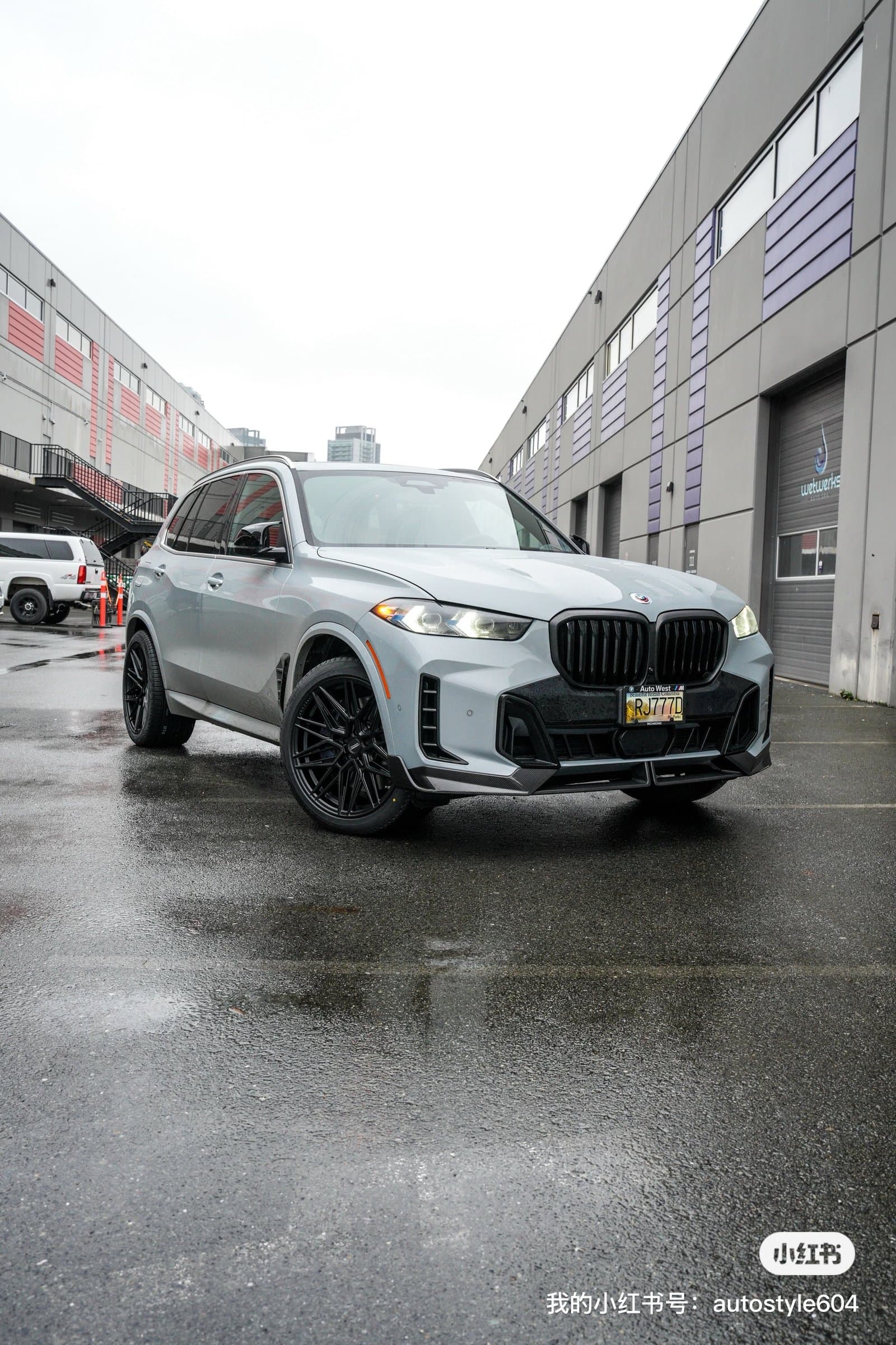
One practical approach that works well for Vancouver drivers is a two-wheel strategy: a set of winter tires mounted on a second set of wheels for the cold months, and a set of all-season or performance tires on the primary wheels for the rest of the year. This avoids the tyre shop swap labour cost twice a year and means you are not mounting and balancing every spring and fall. JRS Auto Customs handles wheel and tire packages including mounting and balancing — find out more on their tires service page.
The Bottom Line
For most Metro Vancouver drivers who do not regularly drive the mountain passes, a quality all-season tire with the Three-Peak Mountain Snowflake symbol is sufficient for the local climate. For drivers who regularly use Highway 1 through the interior, the Sea to Sky corridor, or the eastern Fraser Valley, a set of dedicated winter tires is a genuine safety investment. Performance tires are appropriate for sports and performance vehicles in warm months only — they are not a year-round option in Vancouver. Whatever tire type you run, checking tyre pressure monthly through the winter is the single most effective maintenance action you can take: tyre pressure drops roughly 1 psi for every 5 degrees C of temperature decrease, and underinflated tyres are significantly more dangerous in wet conditions than correctly inflated ones.
Related project: BMW X5 Vossen HF7 Wheel Upgrade