Brake and Suspension Maintenance for Vancouver Roads
Published
Why Brake and Suspension Maintenance Matters More in Vancouver
Vancouver's road conditions create specific and measurable stress on brake and suspension components. The combination of rutted arterial roads, steep grades, stop-and-go traffic on the bridges, and the winter road salt season means that components which might last longer in drier or flatter cities wear faster here. Understanding what to monitor — and when to act — is the difference between routine maintenance and a failure that interrupts your week.
Brake Pads: What to Watch For
Brake pads have a predictable wear pattern on Vancouver roads. The heavy stop-and-go traffic on the Ironworkers Memorial Bridge and similar crossings accelerates pad wear compared to steady highway driving. In the city, you are braking more frequently and at lower speeds — the pattern that wears pads fastest.
Most modern brake pads have a physical wear indicator — a metal tab that contacts the rotor when the pad material is nearly worn out, producing a distinctive high-pitched squeal. If you hear that sound, book an inspection immediately. Waiting creates risk of the metal backing plate contacting the rotor, which damages the rotor surface and turns a pad replacement into a pad and rotor replacement.
Check your brake pad thickness through the wheel opening using a torch. Pads with 3mm of material or less should be assessed at the next service appointment. Pads at 1mm or less should be addressed before a long drive or road trip.
Brake Rotors: Warping and Surface Condition
Brake rotors can develop uneven wear patterns — commonly called warping — from repeated heavy braking followed by cooling. In Vancouver's traffic, this is a common issue. A rotor with uneven surface wear will produce a brake pedal pulsation or a steering wheel vibration under braking that feels different from suspension play.
Not all rotor wear requires replacement. A rotor that is within spec for minimum thickness can often be machined flat (turned) rather than replaced outright. Your mechanic will measure the rotor with a micrometer and compare against the minimum specification stamped on the hub.
Brake Fluid and the Moisture Problem
Brake fluid is hygroscopic — it absorbs moisture from the air over time. This is particularly relevant in a humid coastal climate like Vancouver. Moisture in brake fluid lowers its boiling point, which reduces braking performance under heavy use, and accelerates corrosion of internal brake components including the master cylinder and calliper seals.
The practical indicator is the brake fluid boiling point, which a specialist can test. A brake fluid that was rated for 230 degrees Celsius when new might perform at 180 degrees or lower after two years of moisture absorption. In heavy braking on a long downhill grade, lower boiling point means the fluid can vapour-lock and lose braking effectiveness.
A brake fluid flush and replacement every two years is a practical maintenance interval for Vancouver conditions — regardless of what the owner's manual says about longer intervals.
Suspension: Bushings and Mounts
The Lower Mainland's frost-thaw cycle is one of the main drivers of suspension bushing wear. When water freezes in a cracked bushing or mount, it expands and widens the crack. Each freeze-thaw cycle through a Vancouver winter progressively weakens rubber suspension components.
The first sign of bushing wear is usually a knock or clunk from the front end over sharp bumps — a speed bump or a pothole. This is distinct from a strut top bearing noise (which typically sounds like a grunt or groan when the suspension is compressed with the steering wound lock-to-lock). If you hear a knock on sharp impacts, have the bushings inspected.
Control arm bushings and sway bar end link bushings are the most commonly worn items on Vancouver roads. Strut mount and spring perch bushings also deteriorate with age and road salt exposure.
When to Bring the Car In
Any of the following signs warrant an inspection:
Brake pedal pulsation or steering wheel vibration under braking — get this assessed before highway driving
Squeal or grinding sound from the brakes — have pads and rotors inspected within days, not weeks
Knock or clunk from the front suspension on sharp bumps
Brake pedal that feels lower or softer than usual — brake fluid or pad issue
Uneven tyre wear — could indicate suspension alignment or bushing issue
JRS Auto Customs works with trusted mechanic partners for brake and suspension work. If your car has a combination of cosmetic detailing needs and mechanical inspection on the horizon, book a maintenance appointment to discuss what makes sense to address together.
Summary
Stop-and-go bridge traffic accelerates brake pad wear; check thickness through the wheel opening regularly.
Brake squeal is a wear indicator, not just a noise — address it before rotor damage occurs.
Brake rotors can often be machined rather than replaced if within minimum thickness spec.
Brake fluid absorbs moisture in Vancouver's humidity; replace every two years regardless of the manual schedule.
Frost-thaw cycles through a Vancouver winter progressively weaken suspension bushings.
A knock on sharp bumps is the first sign of bushing wear — catch it early.
If your car is showing any of these signs before the winter season, book an inspection with JRS Auto Customs.
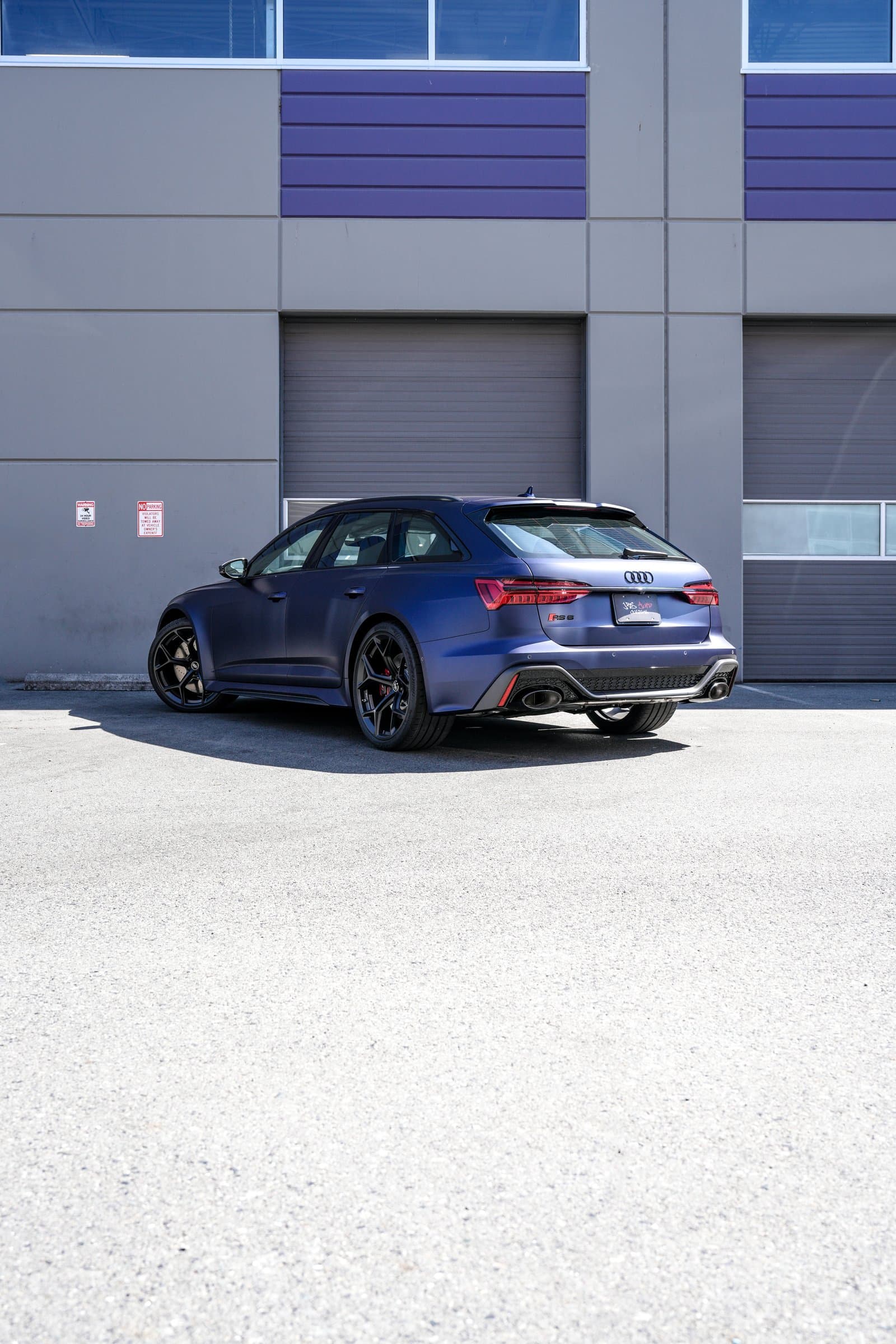
Related project: Audi RS6 Avant Matte Blue PPF