
How Often Should You Fully Detail Your Car in Vancouver
Published
One of the most common questions detailers get is also one of the hardest to answer generally: how often should I fully detail my car? The honest answer depends on how the car is used, where it is parked, what protections are already on the paint, and what the owner's standards are. This guide lays out the practical factors so you can work out the right schedule for your situation.
It is worth being precise about what a full detail means here: a complete exterior wash, decontamination, paint correction if needed, and protection application, plus a full interior clean including carpet extraction, leather conditioning, and console detail. A quick wash-and-vacuum is not a full detail.
The Four Factors That Determine Frequency
Parking environment is the first factor. A car parked outdoors in Vancouver takes a very different path from one kept in an underground parkade. Outdoor parking means exposure to bird droppings, tree sap, UV exposure, road salt, and the full range of weather. A car in an underground parkade still accumulates interior contaminants — dust, food, skin oils, and grime from the driver's hands — but the exterior degrades more slowly.
Driving frequency is the second factor. A car driven daily accumulates contamination faster than a weekend car. A daily driver in Vancouver is exposed to highway traffic film, urban pollution, and road salt throughout the week. A car driven twice a week will maintain its condition for longer between details.
Paint protection is the third factor. A ceramic-coated car or one with PPF maintains its finish far better between details than an uncoated car. With a ceramic coating, a full exterior detail every 12 months, combined with quarterly washes, keeps the coating in good condition. Without any protection, the same level of condition requires a full detail every 6 months or more.
The owner's standard is the fourth factor, and it is the most subjective. Some owners are comfortable with a car that looks clean from a distance. Others notice any swirl in the paint or any dust on the dashboard. There is no right or wrong answer here, but being honest about your own standard helps you resist both under-detailing and over-spending.
Schedules by Vehicle Type
Daily driver, outdoor parking, no protection: Full detail every 4 to 6 months. The combination of daily use and no paint protection means contamination accumulates quickly. Interior also needs more frequent attention in this scenario.
Daily driver, outdoor parking, ceramic coating or PPF: Full detail every 9 to 12 months. The protection film or coating keeps the paint in good condition between details. Quarterly washes with a pH-neutral shampoo maintain the surface; the annual detail handles any accumulated contamination the washes cannot shift.
Daily driver, parkade parking, with or without protection: Full detail every 9 to 12 months. Parkade cars degrade more slowly on the exterior but still accumulate interior grime at a similar rate to outdoor cars. Interior detail is the primary driver of frequency here.
Weekend car, garage stored: Full detail once a year, usually before spring or before a major event. Weekend cars accumulate contamination slowly; an annual detail is usually sufficient to maintain condition.
Collector or enthusiast car, stored long-term: Full detail before storage and when returning to use, plus an inspection detail every 6 months in storage. Long-term storage vehicles need specific preparation that differs from regular detailing.
What Happens If You Detail Less Often
The risk of under-detailing depends on what is allowed to accumulate. Surface contamination — dust, light dirt, fingerprints — is mostly cosmetic. Bonded contamination — iron particles from brake dust, industrial fallout, tree sap — is more serious. If iron particles are left on the paint for months, they bond permanently and require more aggressive correction to remove, which removes more clear coat. The longer the interval between details, the more correction the paint needs when it eventually happens, shortening the overall lifespan of the paint.
Interior neglect is less reversible than exterior neglect. Carpet fibres, leather, and plastic trim absorb oils and grime over time. Once the fibres are saturated, a standard clean may not fully restore them. This is especially relevant for Vancouver families with children, pets, or regular food in the car.
What Happens If You Detail More Often Than Needed
Over-detailing is less harmful than under-detailing but wastes money. A full detail more than every 4 months on a coated car in a parkade is generally not necessary. More frequent washing with the right products is more valuable than more frequent full details. The key maintenance work between full details — regular washing, interior wipe-down, glass cleaning — costs very little and keeps the car in good condition between professional attention.
Between Full Details: Low-Effort Maintenance
The most valuable maintenance habit between full details is a weekly or bi-weekly wash with a pH-neutral shampoo and a microfibre wash mitt. This prevents the accumulation of bonded contamination and keeps the hydrophobic properties of any coating working. A monthly interior wipe-down with a non-toxic interior cleaner — dashboard, centre console, steering wheel, and door panels — prevents the buildup of oils and grime that eventually requires deep extraction.
Glass cleaning with a dedicated glass cleaner and microfibre cloth every couple of weeks keeps the windscreen and windows clear without streaks. Leaving it for months makes the cleaning harder and increases the risk of scratching the glass with an abrasive cloth.
JRS Auto Customs provides full detailing services in Vancouver. If you want to discuss a detailing schedule or package for your car, visit the maintenance service page or get in touch to talk through your vehicle.
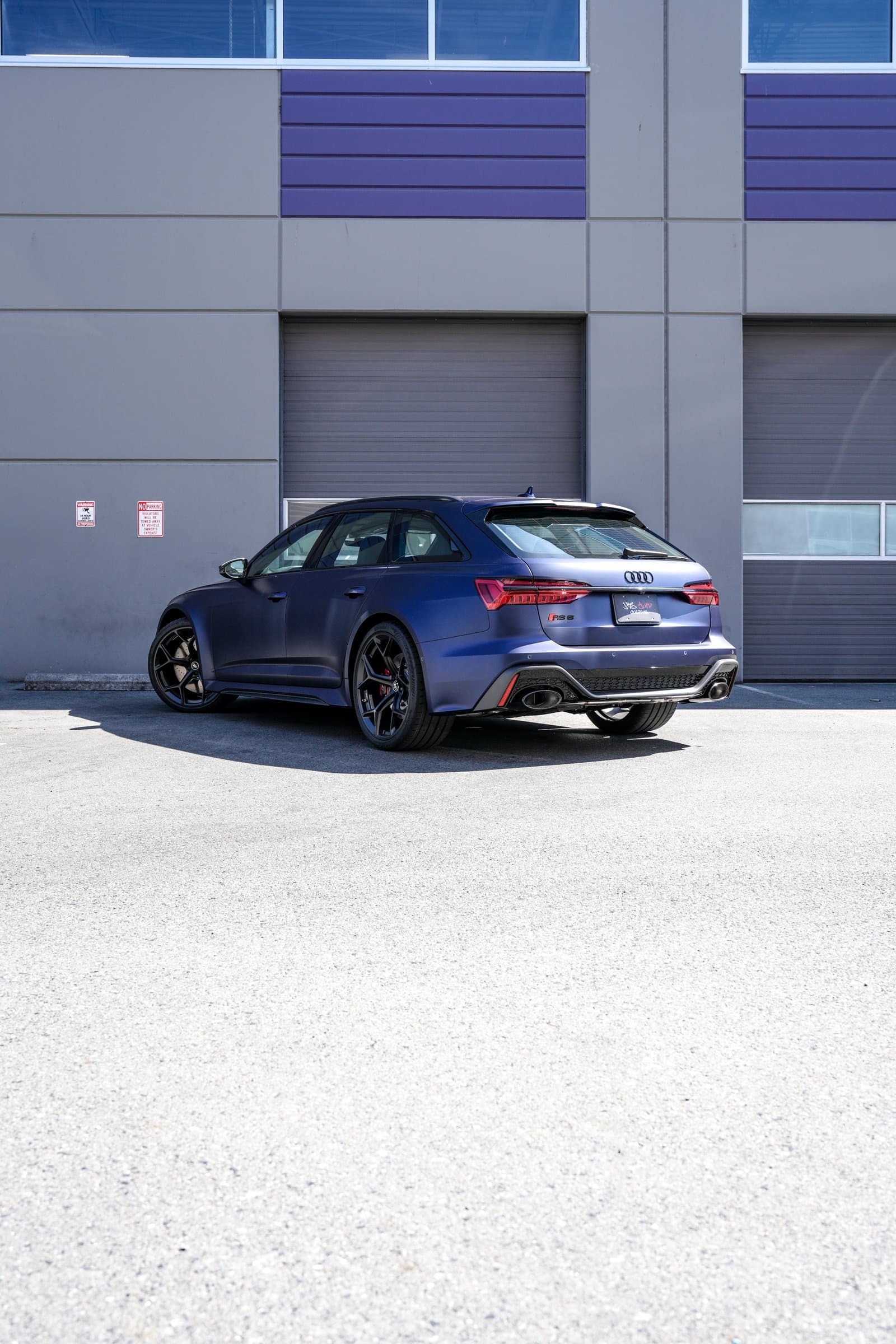
Related project: Audi RS6 Avant Matte Blue PPF