Why Water Spots Are Damaging Your Car's Paint Right Now
Published
What Is Happening to Your Car Every Time It Rains
After it rains in Vancouver — or after you wash your car at home — you probably see streaks and spots appear as the water dries. That isn't just drying residue. Vancouver's tap water contains high levels of dissolved minerals, primarily calcium and magnesium. When water evaporates from your car's surface, those minerals are left behind as concentrated deposits.
At first, these look like ordinary spots you can wipe away. But if they sit on an unprotected surface through even a single wet Vancouver afternoon, those mineral crystals can begin to etch microscopically into the clear coat. Over time, repeated cycles of wetting and drying turn faint spotting into permanent marks that no amount of washing removes.
Why Vancouver Drivers See This Worse Than Other Cities
The Lower Mainland draws much of its water from mountain-fed sources. The result is water that is moderately to heavily hard. Depending on your neighbourhood, your tap water may leave significantly more mineral residue than the Canadian average. When you wash your car in a driveway or parking lot and let it air-dry, you are essentially giving those minerals an extended window to bond with your paint.
The problem compounds in autumn and winter. Shorter days, overcast skies, and rain that keeps surfaces damp for hours mean water does not evaporate quickly. The longer mineral deposits sit wet, the greater the etching risk.
Which Parts of Your Car Are Most at Risk
Any horizontal surface is most vulnerable because water pools and evaporates slowly there. This includes:
The hood — especially the forward section that catches rain directly
The roof
The trunk lid
Side mirrors and glass surfaces
Any exposed trim near the hood edge
A car that is parked outside through a multi-day rain event, or one that gets washed at home and left in a covered carport to dry slowly, is at the highest risk of developing visible etching.
How to Prevent Water Spot Damage at Home
Prevention is genuinely more effective than cure here. Once mineral etching has progressed past a certain depth, only a paint correction detail can restore the surface — and heavy correction removes clear coat, which has its own limits.
Rinse before drying. Even if you only have time for a quick rinse, flushing loose minerals off the surface before wiping reduces the concentration of deposits being dragged across the paint.
Use a clean, soft drying towel. A gritty or contaminated towel will grind minerals into the surface. Dedicated microfibre waffle-weave towels are designed to absorb water without introducing abrasion.
Dry the car fully, not just the visible panels. Door shuts, boot lips, and the underside of mirrors are often missed. Mineral deposits form there too.
Avoid air-drying completely. If you cannot dry the car properly after washing, it is better to drive it for ten minutes with the heater on to evaporate water from glass, then finish the body with a towel.
Professional Protection: Ceramic Coating and PPF
If you want genuine long-term protection against water spot etching, two options at JRS Auto Customs address the problem differently:
Ceramic Coating
A ceramic coating bonds with your car's paint at a molecular level and creates a hydrophobic surface. Water beads and slides off rather than pooling and evaporating slowly. This dramatically reduces the window of time minerals have to sit on the paint. Ceramic coatings also add a measurable layer of chemical resistance that makes it harder for mineral crystals to bond with the clear coat in the first place.
JRS Auto Customs installs ceramic coatings for vehicles across Vancouver and the Lower Mainland. If you are interested in ceramic protection for your car, view the ceramic coating service page for full details.
Paint Protection Film (PPF)
PPF is a thicker, physically durable layer applied directly over the paint. Where ceramic coating provides chemical and hydrophobic protection, PPF adds a sacrificial barrier that absorbs stone chips, road debris, and — crucially — absorbs the physical impact of mineral crystal formation on its surface rather than on your factory clear coat. If you are looking for maximum protection for high-value or performance vehicles, explore the PPF options at JRS Auto Customs.
When to Bring Your Car In for a Detail
If you are already seeing spots that will not wash off, the etching may be at a surface level that a standard wash cannot fix. A decontamination wash followed by a light paint correction can often restore the finish if the damage is not deep. A JRS detailer can assess whether your paint has surface etching or deeper clear-coat damage and recommend the appropriate correction level.
JRS Auto Customs has been protecting and correcting car paint in Vancouver since 2010. Whether you need a one-off decontamination detail or are ready to invest in ceramic coating or PPF, book a consultation online or call the shop to discuss what your car needs before autumn sets in.
The Short Version
Vancouver water is hard. Mineral deposits etch paint every time water evaporates on an unprotected surface.
Horizontal surfaces — hood, roof, trunk — are most at risk.
Air-drying after washing or rain is the single biggest contributor to visible etching.
Ceramic coating prevents mineral bonding and speeds water runoff.
PPF adds a physical barrier that protects the factory clear coat from all surface damage.
Once etching is visible and won't wash off, professional correction is needed.
The best time to protect your car's paint was when you bought it. The second-best time is before autumn and winter do their worst. If you have questions about ceramic coating, PPF, or paint correction for your vehicle, reach out to JRS Auto Customs in Vancouver.
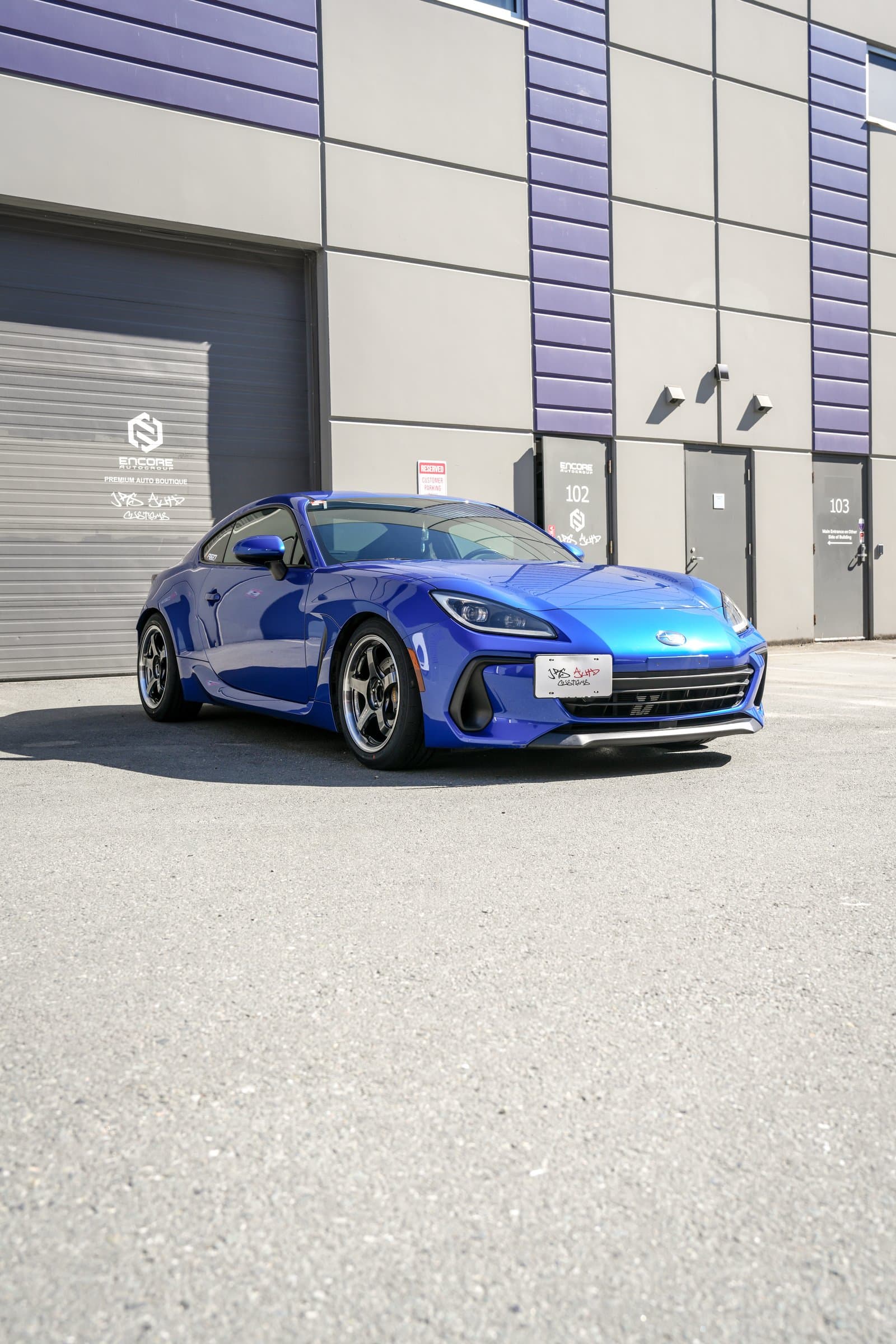
Related project: Subaru BRZ — Full Gloss Clear PPF