
Why Your Car's Paint Looks Dull by Late Summer in Vancouver
Published
Walk through any Vancouver parkade in August and you will notice something: a lot of cars that looked clean and vibrant in April now look flat, chalky, and lifeless. The cause is not accumulated grime. It is oxidation — and Vancouver's climate creates the conditions for it faster than most Canadian cities.
What Paint Oxidation Actually Is
Automotive paint has three layers: an electrocoated primer, a basecoat that carries the colour, and a clear coat on top. The clear coat is a hard, transparent layer of lacquer that protects the colour layer and gives paint its gloss. Oxidation is the gradual chemical breakdown of that clear coat. Ultraviolet radiation from sunlight breaks chemical bonds in the lacquer, making it thinner, cloudier, and less able to reflect light evenly.
The process is gradual at first. You may notice the paint no longer beads water the way it used to, or that it feels slightly rough even after a wash. Over months and years, the surface goes from glossy to matte, from uniform to uneven. Dark colours — black, deep blue, dark red — show the effects fastest because oxidation directly diminishes the colour depth that gives those paints their richness.
Why Vancouver Makes It Worse
Vancouver receives among the highest annual rainfall in Canada — roughly 1,200 millimetres — but the bigger problem for paint is not the rain itself. It is the humidity. Relative humidity above 70 percent keeps moisture in contact with the clear coat surface for extended periods, which accelerates the oxidation reaction. The marine environment adds salt aerosol to the equation: chlorides from sea air settle on the paint surface and work into clear coat micro-pores, increasing conductivity and accelerating degradation.
Temperature extremes between seasons compound the problem. A winter below freezing followed by a hot, sunny July causes the clear coat to expand and contract at a different rate than the base layer beneath it. That differential stress creates micro-cracks in the clear coat — invisible at first, but each crack is a path for moisture and oxygen to reach the colour layer underneath.
What Oxidation Looks Like on Dark-Coloured Cars
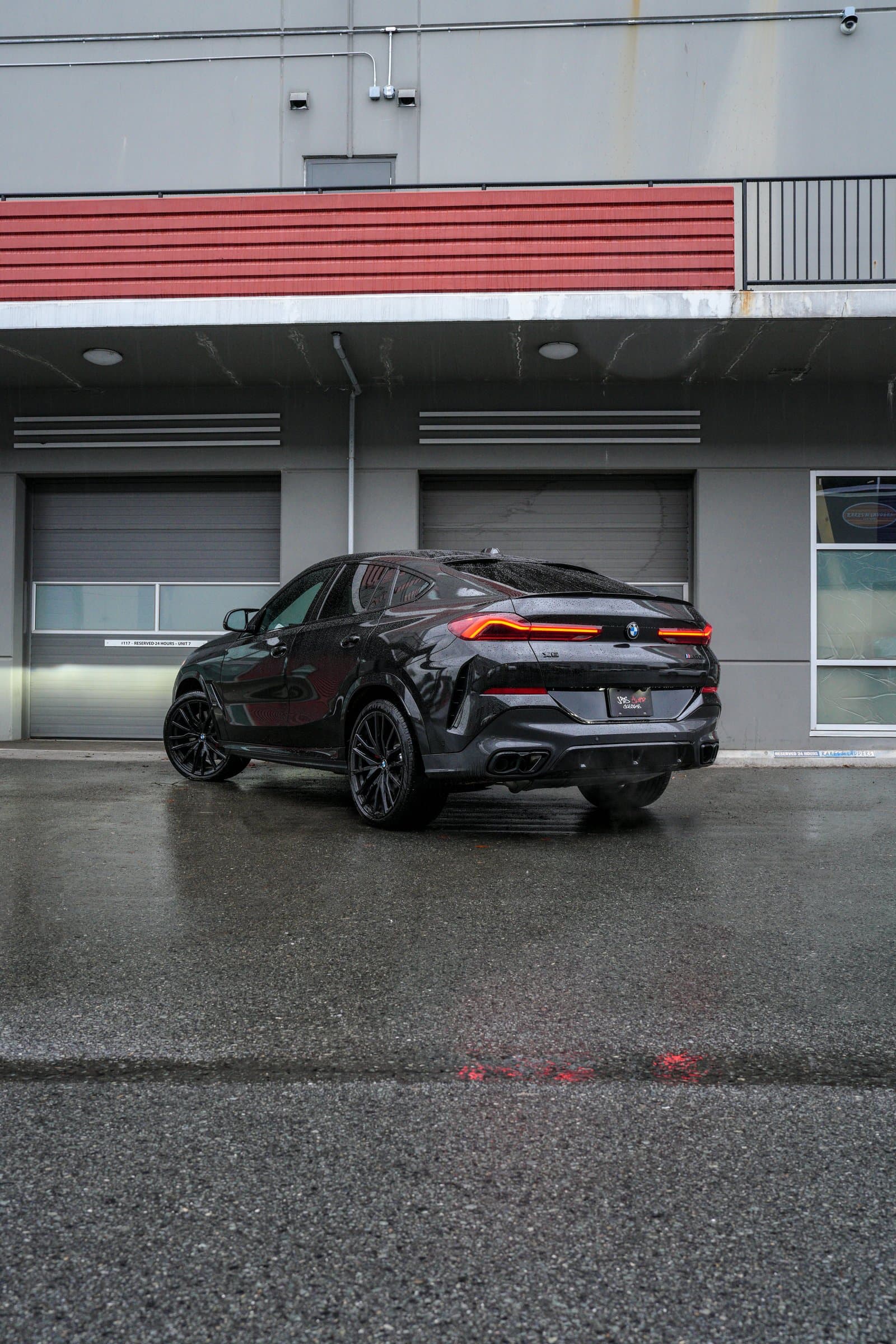
Oxidation is most visible on dark finishes. A black car that was a mirror in April may look like a chalkboard by August. Deep blue turns greyish and loses depth. The pattern is consistent: the clear coat loses transparency first, then the colour layer fades. On light-coloured cars, oxidation is harder to see but it is still happening — clear coat degradation reduces UV protection for the colour layer underneath.
Faded paint is not only a cosmetic problem. A compromised clear coat means the colour layer is now exposed directly to oxygen and moisture. Oxidation will accelerate, colour will continue to fade, and eventually the base coat itself may need repainting. Once the clear coat is gone, the cost of repair rises significantly.
How to Prevent and Treat Oxidation
Regular washing is the first line of defence. Iron fallout from brakes and rail transport, industrial particulate, and organic material like bird droppings all contain compounds that react with clear coat. Removing them before they sit on the paint for days prevents the chemical reactions that accelerate surface degradation. Use a pH-neutral car shampoo and a clean microfibre cloth.
If oxidation has already started, paint correction restores the surface by removing the degraded clear coat layer and polishing the remaining intact layer below it. A single-stage correction addresses surface oxidation; a two-stage correction goes deeper for moderate oxidation damage. The window for correction depends on how far the oxidation has progressed — if it has reached the base coat, a repaint becomes the only option.
The most effective long-term protection against oxidation is a coating applied over the clear coat. Ceramic coatings chemically bond with the clear coat, fill micro-pores, and provide a hard UV-resistant surface that significantly slows oxidation. Paint protection film acts as a physical barrier, stopping oxidation from ever reaching the clear coat layer. Both options add years to a paint finish that would otherwise degrade in two to four years in Vancouver conditions.
Get Your Paint Assessed Before Summer Ends
Late summer is the right time to assess oxidation damage. The paint has been through the worst of the UV season and any damage that was going to happen this year is now visible. A detailer can tell you whether paint correction is still a viable option, or whether the damage has progressed to the point where repainting is the only solution.
JRS Auto Customs offers paint correction, ceramic coating, and PPF — all of which address oxidation and prevent it from returning. Book a paint assessment and we will tell you exactly what your car needs before you head into the wet season. Explore our protection work in the portfolio.