
How to Protect Your Car from Parking Damage in Vancouver
Published
Vancouver has one of the highest rates of parking-related vehicle damage in Canada. Tight parkades, street parking on narrow side streets, and the sheer density of traffic mean that a door ding or a dent from a shopping trolley is not an if — it is a when. The question is not whether your car will be hit, but how much damage you will accumulate before you sell it.
Why Vancouver Parking Is Harder on Your Car Than Most Cities
The Lower Mainland presents particular challenges. Narrow parkades in apartment buildings and shopping centres are built to maximise the number of vehicles, not to give drivers room to open their doors safely. Street parking on streets like Commercial Drive or Main Street means parallel parking in tight spaces shared with cyclists, delivery vans, and other cars whose drivers may not be paying attention. Even at home, a strata or condo parkade means sharing close quarters with dozens of neighbours who may not have the same care for your paint.
Beyond other drivers, there are shopping trolleys in mall parking lots, bicycle racks leaning against cars in bike-friendly areas, and the ever-present possibility of a careless passenger door swing in a busy loading zone. Most of these impacts cause cosmetic damage only — but cosmetic damage that is expensive to repair and that accumulates silently over years of ownership.
Prevention: The Things You Can Control
Park at the edges of parking lots: spaces near trolley bays, delivery zones, and cart corrals attract more foot and vehicle traffic. The spots closest to the entrance look convenient but concentrate the most activity around them. Parking further away, near a pillar or at the end of a row, statistically reduces your exposure.
When parallel parking on the street, try to leave space on both sides. A car parked between two others has two neighbours who might open their doors against your paint. A car at the end of a row, with only one neighbour and a curb, is at lower risk.
Install door edge guards if you have passengers who regularly use your car: children, elderly relatives, or anyone unfamiliar with the vehicle. These are inexpensive rubber or silicone strips that attach to the door edge and absorb the impact of an overconfident swing.
Driveways matter too. If you park on a slope, make sure your neighbours vehicle is parked appropriately — and check your own parking habits if you share a driveway with others.
Paint Protection: What Helps if Contact Happens
For owners who park in high-risk environments regularly — strata parkades, busy street zones, or shared parking at work — paint protection film is worth serious consideration. PPF is a clear urethane film applied to high-impact zones: doors, fenders, boot lid, and rear quarter panels. It does not prevent dents, but it prevents the scratches, chips, and paint transfer that come with door impacts and trolley collisions.
The self-healing properties in modern PPF mean that light scratches from minor contact often recover on their own, particularly in warmer weather. This does not eliminate all damage — a hard impact will still cause structural dents that PPF cannot prevent — but the film absorbs the scratch energy and keeps the paint underneath intact.
For a full vehicle, PPF coverage across all painted panels provides the most complete protection. For a more targeted approach, the front end and door panels are the highest-risk zones and can be covered selectively.
What to Do When Damage Happens
If your car has been hit and you have a dent without paint damage, paintless dent repair is often the fastest and most cost-effective solution. A qualified technician uses specialised tools to push the dent out from behind the panel, without repainting. It works best on smaller dents on steel panels, and results depend on the dent size, location, and whether the paint has been stretched or cracked.
If paint has been scratched or transferred, the repair approach depends on depth. Surface scratches can often be corrected with a single-stage machine polish. Deeper scratches that have removed clear coat require a panel repaint before the polish. Either way, the longer you wait, the more the damage accumulates as further contact happens in the same spot.
When Protection Makes Financial Sense
The calculation is straightforward: compare the cost of PPF coverage against the cost of repairs over the period you plan to own the vehicle. A single door repaint in Vancouver can cost several hundred dollars. Full PPF on the door panels of most vehicles costs less than three or four such repairs. If you park in a busy parkade daily, the math frequently favours protection.
JRS Auto Customs installs paint protection film and offers paintless dent repair assessments. If you want to understand what PPF coverage makes sense for your vehicle and parking situation, book a consultation and we will walk through the options.
To find out what protection is right for your car and parking situation, book a consultation at JRS Auto Customs on Terminal Avenue in Vancouver.
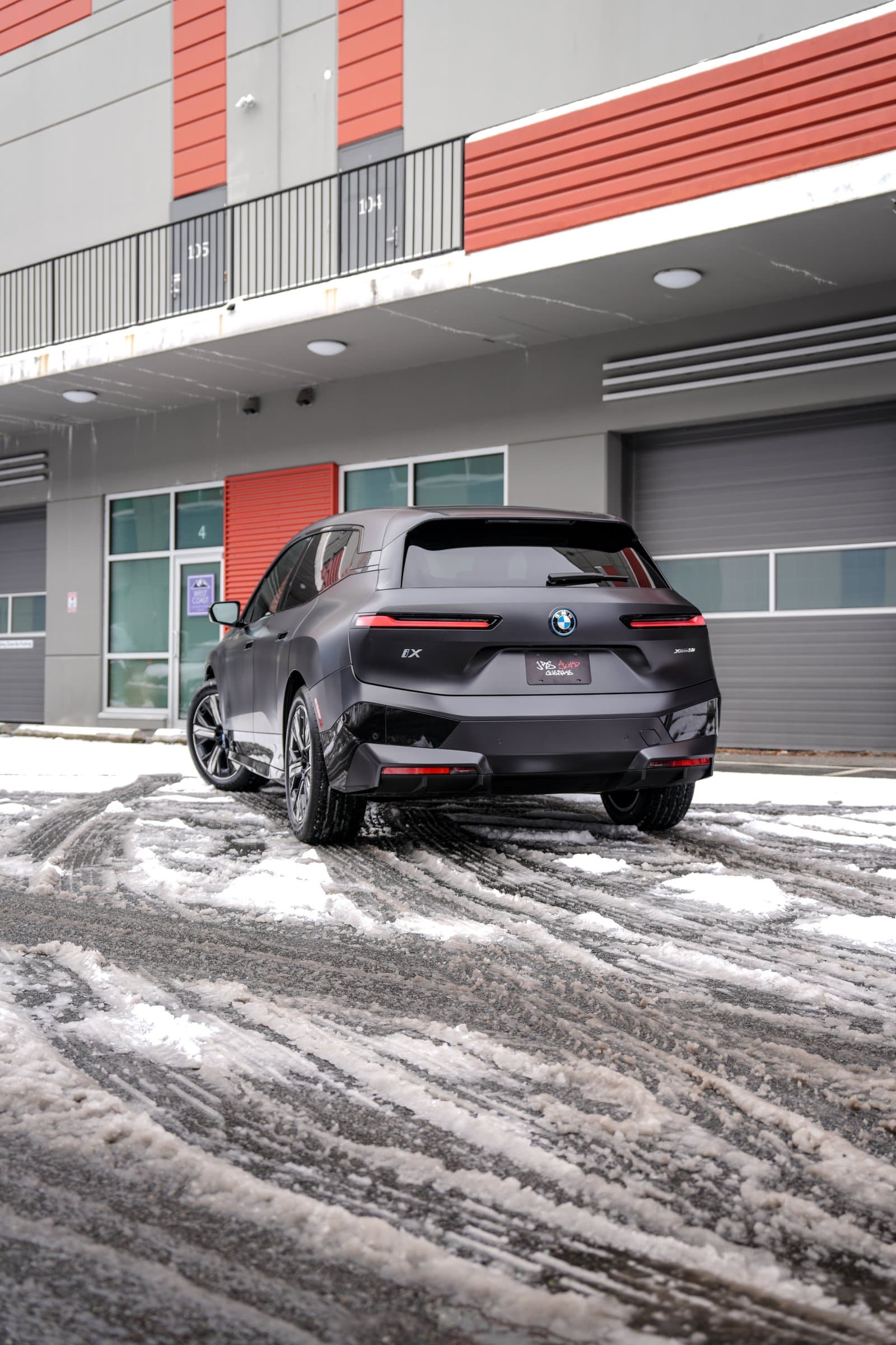
Related project: BMW iX Matte PPF