
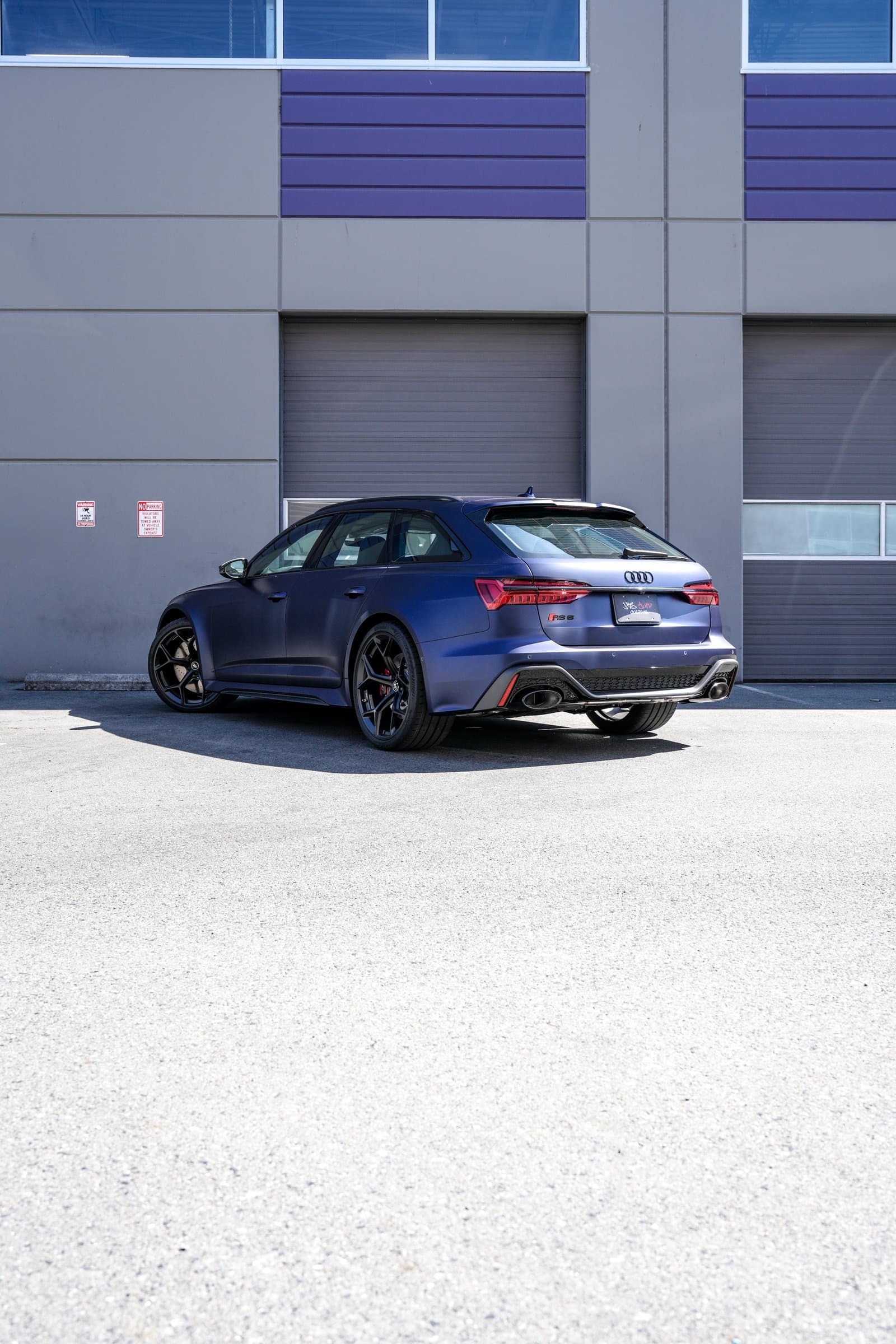
How to Wash a Car With PPF Without Damaging the Film
Published
Paint protection film does not make a car wash-proof. It makes the paint underneath easier to clean — but washing a car with PPF still requires the right technique. The film is durable and resistant, but it can still be scratched, contaminated, and degraded by the wrong wash process. Understanding what PPF can handle and what damages it is the difference between a car that looks good for years and one where the film needs early replacement.
What PPF Can Handle and What Damages It
PPF is resistant to most things that damage bare paint — acid rain, bird droppings, tree sap, and UV exposure all affect the film less than they affect paint. But PPF has a weak point that paint does not: the adhesive layer. High-pressure water forced under the edge of the film — from a pressure washer held too close or aimed at panel edges — can lift the film from the paint. Once the edge lifts, water gets underneath, the adhesive fails, and the panel needs reapplication.
Abrasive contamination on the film surface is the other risk. Road grit, brake dust, and industrial fall-out bond to the film surface chemically. If you wipe the film with a dirty mitt or a contaminated towel, those particles drag across the surface and create fine scratches in the film's top coat. The scratches are not visible immediately but accumulate over washes and become apparent as a reduction in gloss.
The Two-Bucket Method for PPF
The two-bucket method is the foundation of any safe wash on PPF. One bucket holds clean wash solution; the other holds clean water for rinsing the mitt between passes. The rinse bucket is what prevents contamination from the mitt being carried back onto the paint. A grit guard in the bottom of each bucket — the ribbed plastic insert designed to trap heavy particles below the mitt — is a low-cost addition that makes a meaningful difference.
Pre-rinse is critical. Rinse the car thoroughly with a pressure washer on a fan nozzle from a distance of at least a metre before any mitt touches the paint. This removes the loose contamination — road grit, pollen, dust — that would otherwise be dragged across the film surface by the wash mitt. The pre-rinse is not optional; it is the step that prevents the most scratches.
What to Avoid When Washing PPF
Automatic car washes are the single most damaging wash method for PPF, for the same reason they are damaging for paint: the brushes carry contamination from every car that has gone through before. The pre-soak in an automatic wash may be acidic or alkaline depending on the facility, and neither is a neutral environment for the film's adhesive or top coat. Touchless car washes are less damaging but still use high-pressure chemistry that can stress film edges over time.
Abrasive compounds and polishing compounds should not be used on PPF. These products are designed to cut into the surface — which is exactly what you do not want on a film that has its own top coat designed for a specific thickness. Compounds designed for paint removal will reduce film thickness and may expose the underlying adhesive layer. If the film needs correction, consult the shop that installed it before applying any abrasive product.
Pressure washers are useful for pre-rinsing and final rinsing, but should be kept at a safe distance — at least 30 centimetres from the film surface — and should never be directed at film edges, seams, or the perimeter of any panel. The gun should be set to a fan nozzle rather than a pinpoint jet.
Drying and Maintenance Products
Drying with a dirty chamois or a low-quality microfibre towel drags contamination across the film. Use a clean, high-pile microfibre drying towel that has been stored free of debris. Work from the top down — roof, bonnet, boot, sides — and do not press hard; let the towel's absorbency do the work.
PPF-safe maintenance products exist specifically for this purpose. pH-neutral wash formulas designed for PPF clean the film without degrading the top coat. Spray sealants formulated for PPF add a hydrophobic layer that makes subsequent washes easier and extends the film's appearance. These products are not required for the film to function — PPF does not need to be sealed — but they improve the maintenance wash experience and keep the film looking glossier between deeper cleans.
JRS Auto Customs can advise on wash products and maintenance schedules for PPF. The team also handles PPF inspection and maintenance if the film shows edge lifting, contamination build-up, or surface degradation. Browse the PPF service page to see what the maintenance programme covers.
Related project: Audi RS6 Avant Matte Blue PPF