
Front-End Ceramic Coating for Vancouver's Winter
Published
The front of your car takes the most consistent abuse of any panel on the vehicle. Every highway kilometre sends a stream of gravel, sand, and road salt directly at the hood and front bumper. Every automatic car wash pushes brushes across the leading edge first. And in Vancouver, every wet month deposits a fresh layer of road grime that sits on the paint until you wash it off. Ceramic coating on the front end is one of the highest-value applications of that treatment — here is why, and what to think through.
Why the Front End Takes the Most Damage
The hood and front bumper are the first surfaces to encounter airflow at speed. That airflow carries everything that has been kicked up from the road surface — fine gravel from recent resurfacing work, larger stones from truck tyres on the highway, sand spread on icy roads. The leading edge of the hood and the top surface of the front bumper accumulate more impact damage over time than any other panel on the car.
The other factor is chemical exposure. In Vancouver's wet months, the lower edge of the hood sits in the spray zone from the tyres — a mix of road salt, water, and brake dust that settles and dries on the paint surface. This combination is abrasive and mildly acidic, and it accelerates both clear coat oxidation and the formation of micro-scratches from particles that have been dragged across the surface.
The result is that a hood on a daily-driven vehicle in Vancouver can show visibly more weathering than the doors, roof, or rear panels — sometimes within a single season if the car is not washed regularly. By the end of winter, the difference between the hood and the rear quarter panels is often stark.
What Ceramic Coating Does on the Hood That Wax or Sealant Does Not
Traditional paint protection — wax, paint sealants, spray-on coatings — sits on top of the paint surface as a sacrificial layer. It wears off over weeks or months and needs to be reapplied regularly to maintain its effect. It repels water, which helps with some ease of cleaning, but it does not chemically bond to the paint surface in the way that a proper ceramic coating does.
Ceramic coating bonds at a molecular level with the factory clear coat, creating a semi-permanent layer that is harder than the original clear surface. This hardness matters most on the hood because it provides genuine resistance to the light scratching that comes from washing and from the fine particles that land on the paint surface. A ceramic-coated hood develops these micro-scratches more slowly than an uncoated one.
The hydrophobic effect — where water beads and rolls off the surface — also means that the road grime and salt mix that settles on the hood between washes has less opportunity to bond to the paint. When you do wash the car, the contamination comes off more easily. Over a Vancouver winter, this difference in cleanability is significant.
Front-End Only vs Full-Car Ceramic Coating
Full-car ceramic coating is a complete protection strategy — all painted surfaces benefit from the hydrophobic properties, the chemical resistance, and the hardness layer. For many owners, this is the right approach.
Front-end ceramic coating — applying the treatment to the hood, front bumper, fender leading edges, and side mirrors — is a targeted option for vehicles where budget or the car's planned ownership period does not support a full-car coating. It concentrates the protection where the need is greatest and leaves the remainder of the paint surface to be maintained with conventional methods.
The two strategies are not mutually exclusive. Starting with front-end coating and adding full-car ceramic at a later service visit is a practical way to spread the investment over time. The front end is protected from day one, and the rest of the car is brought into the programme at a pace that suits the owner.
Combining Ceramic Coating with PPF on the Most Vulnerable Areas
For vehicles where the front-end vulnerability is highest — high-performance cars driven on the highway, vehicles with soft paint finishes, or cars that will be used on gravel roads regularly — combining ceramic coating with PPF on the leading edges makes sense. The PPF absorbs stone chips and physical impacts. The ceramic coating applied over the PPF adds the hydrophobic surface and chemical resistance, and it makes the PPF itself easier to clean.
This combination is particularly worth considering for vehicles where the front hood panel has already accumulated some stone chips. Paint correction to restore the surface, followed by PPF on the most vulnerable zones and ceramic coating across the full front end, is the sequence that gives the most durable result.
Timing: Why Late Summer or Early Autumn Is the Right Window
Applying ceramic coating before winter puts the vehicle in the best position for the wet months ahead. The coating has time to fully cure in dry, warm conditions before it is first exposed to road salt and heavy rain. A vehicle that goes into November with a fresh ceramic coating on the hood is measurably easier to keep clean through the winter, and the paint surface underneath is protected from the moment the first salt spray lands.
JRS Auto Customs applies ceramic coating across the full vehicle or as a targeted front-end treatment. Ceramic coating services has details on options, and maintenance services is where paint correction and assessment before coating can be arranged. Book a consultation to find out which approach suits your vehicle and how you use it.
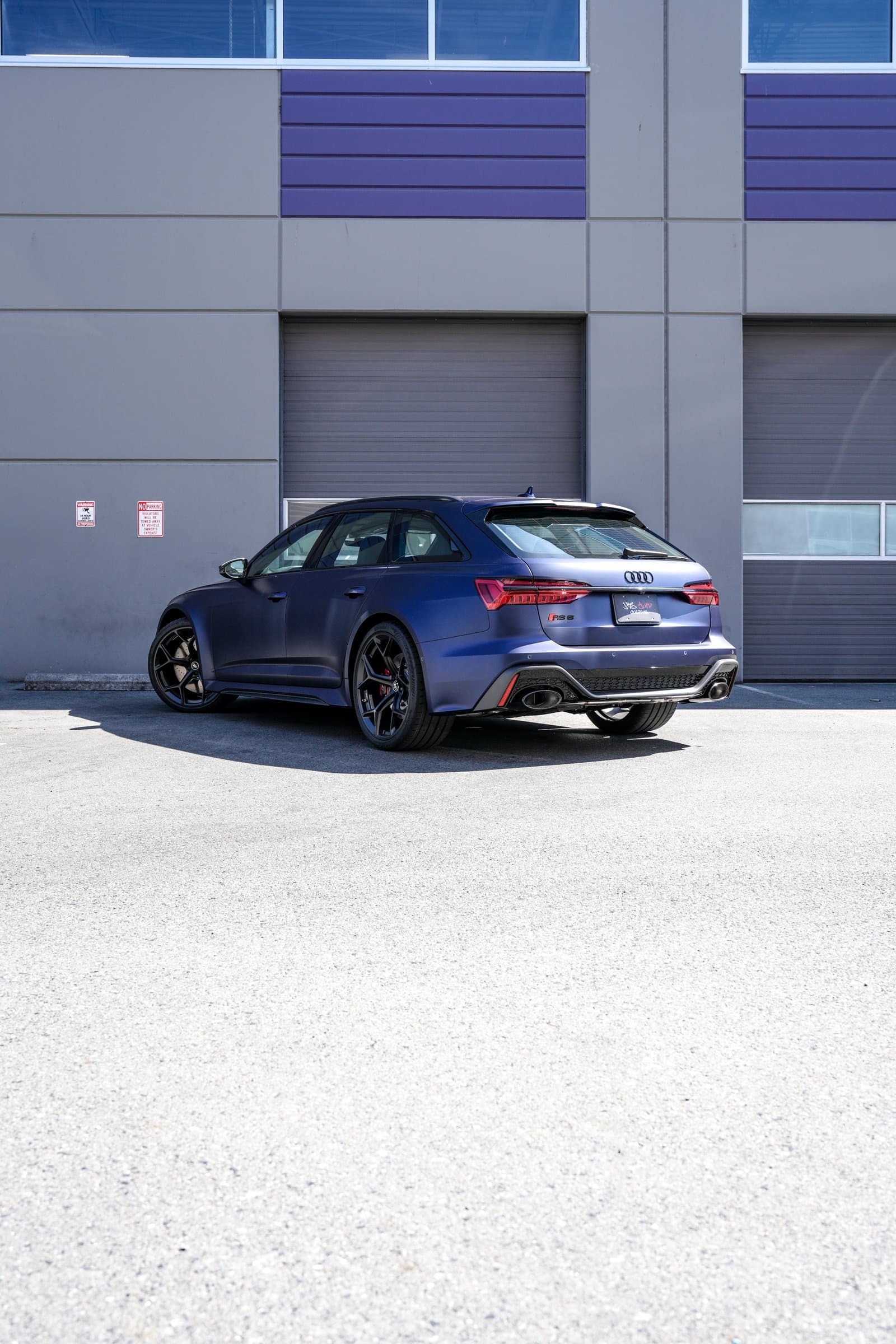
Related project: Audi RS6 Avant Matte Blue PPF