
Ceramic Coating vs PPF: Right for Your Vancouver Car?
Published
If you have been researching ways to protect your car paint in Vancouver, you have probably run into two terms that sound like they should mean the same thing: ceramic coating and paint protection film (PPF). They both shield your paint, they both make your car easier to clean, and a lot of shops offer both — but that is where the similarities end. Knowing which one is actually right for your car comes down to understanding what each one does and does not do, and that depends heavily on how you drive, where you park, and what you want to protect.
This guide breaks it down plainly, based on what we see every day in our North Vancouver shop.
How Ceramic Coating Works
A ceramic coating is a liquid polymer that bonds chemically with your factory paint, creating a semi-permanent hydrophobic layer across the entire surface. Once cured, water beads off it, dirt slides off more easily, and the gloss deepens noticeably — often described as the paint looking wetter and deeper than it did from the factory.
The key thing ceramic coating does well is chemical resistance. It protects against acid rain, bird droppings, road salt, and UV oxidation that are all part of life for a car in the Lower Mainland. It also keeps your car cleaner between washes and makes washing faster when you do get around to it. For Vancouver drivers, that hydrophobic effect is genuinely useful during the wet seasons when your car is constantly damp and road film builds up quickly.
What ceramic coating does not do is resist physical impacts. Rock chips, keys, shopping carts, and road debris will still damage your paint through a ceramic coating. The film is thin — typically just a few microns — so it has no meaningful impact-absorption capability. If you park on the street or drive Highway 1 regularly, that is a real limitation to understand.
How Paint Protection Film (PPF) Works
Paint protection film is a thick, urethane or TPU-based material applied directly over your paint. Modern high-quality films are optically clear and self-healing — minor scratches disappear when the car is left in the sun or hit with a heat gun. Older films used to yellow and peel; that is a solved problem with the current generation of products.
PPF’s strength is physical impact resistance. It absorbs rock chips, sandblasting from highway driving, and the inevitable parking lot scuffs that come with city life. Front-end PPF coverage — sometimes called a stone guard — is one of the most common upgrades we install, because that is where the majority of physical damage happens first on a daily-driven car.
PPF also has hydrophobic properties, though generally less pronounced than a dedicated ceramic coating top layer. It protects against UV and chemical staining, and unlike early-generation films, modern products do not discolour or peel at the edges over time.
Ceramic Coating vs PPF: Head-to-Head
Here is how the two options compare on the factors that matter most to Vancouver car owners:
Factor | Ceramic Coating | PPF |
Rock chip protection | None | Strong |
Chemical / UV resistance | Excellent | Excellent |
Gloss / appearance | Deep gloss, colour pop | Glossy, nearly invisible |
Self-healing | No | Yes (with heat) |
Typical lifespan | 2-5 years | 7-10 years |
Full-vehicle cost | Lower | Higher |
Which Should You Choose?
Most of our clients in Vancouver fall into one of three situations. Your situation determines which product makes sense — or whether you need both.
If your car is your daily driver and you cover motorway kilometres regularly, front-end PPF is the practical minimum. Rock chips on the front bumper and hood will happen — PPF stops them. Add a ceramic coating on top of that, and you get the best of both worlds: physical protection underneath, and a slick, glossy, chemical-resistant surface on top. This combination is what most of our daily-driver clients end up choosing.
If you have a weekend car or a garage-kept vehicle that does not see heavy highway use, a standalone ceramic coating may be all you need. It will keep the paint looking new, resist the BC UV and rain exposure, and make washing easy. Weekend cars and garage-kept vehicles rarely pick up rock chips, so the physical protection of PPF is less critical.
If you are protecting a high-value or performance vehicle, we almost always recommend the combination approach. Start with a full-body PPF install, then top it with ceramic coating. The cost is higher upfront, but it protects the entire vehicle — not just the front — for a decade or more. For a car you plan to keep and preserve, that long-term protection is hard to put a price on.
Why Vancouver Makes This Choice More Important
Vancouver’s climate creates a specific combination of threats that many other cities do not face year-round. The coastal humidity and mild temperatures encourage rust and oxidation even on cars that are not driven in winter conditions. Road salt, gravel, and de-icing chemicals appear on North Shore and mountain roads well before the official winter season — often by October. And the BC summer sun, while pleasant for us, delivers enough UV to fade unprotected paint over just a couple of seasons.
These are not minor concerns. A car that goes five years without paint protection in Vancouver will visibly show it: faded hood and roof, salt oxidation on lower panels, rock chips that have started to rust. A quality ceramic coating or PPF is not a luxury for Vancouver cars — it is a practical investment in keeping your vehicle value and appearance intact.
Get a Custom Assessment at JRS Auto Customs
Every car is different, and so is every driver’s situation. At our North Vancouver shop, we assess each vehicle individually before recommending either product or a combination of both. We will look at your specific vehicle, your parking situation, your mileage, and your goals before suggesting anything.
If you are not sure where to start, bring your car by or book a consultation online — we will walk you through the options and give you a clear, no-pressure quote. There is no obligation, and most clients find that a 15-minute conversation clears up far more than any article can.
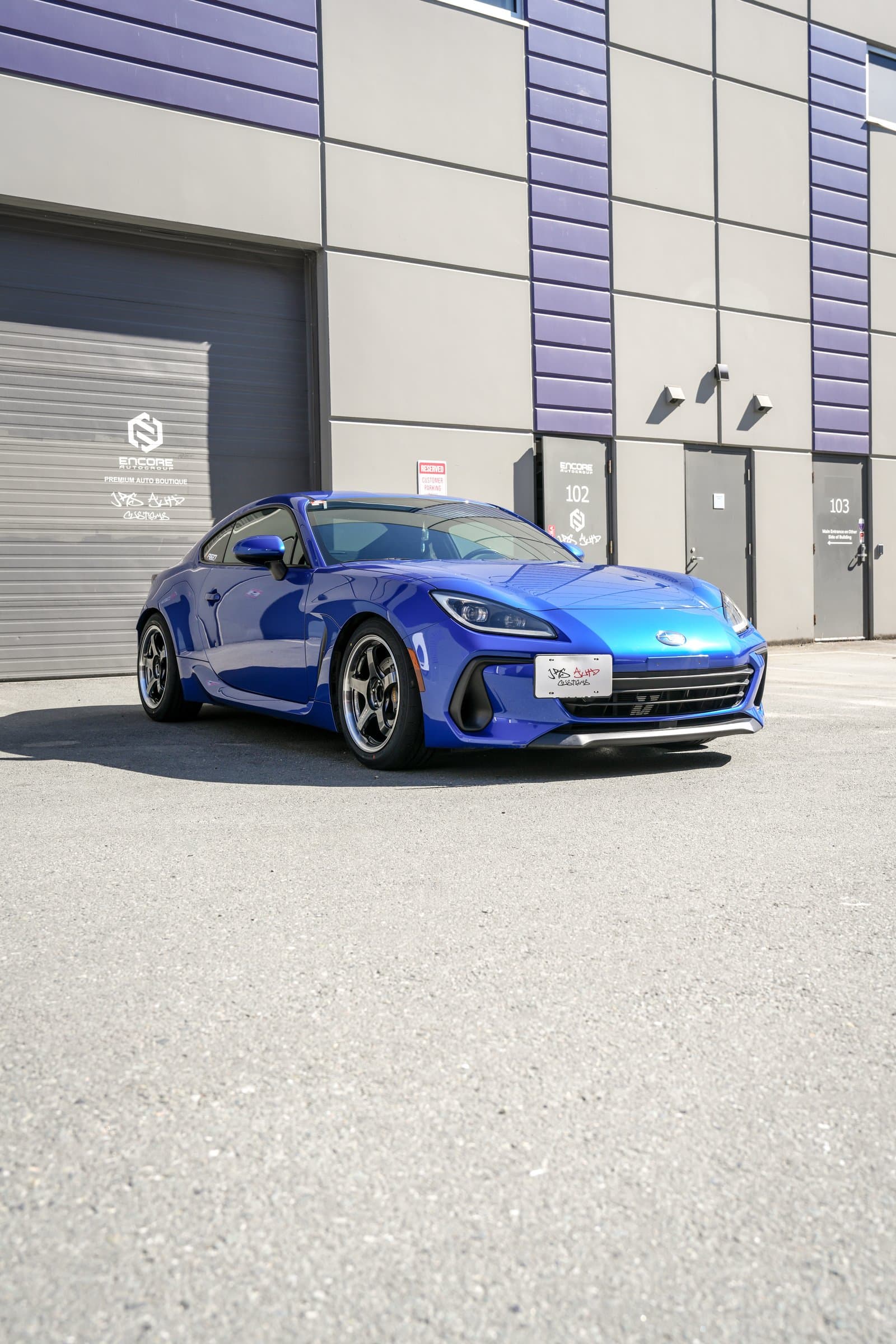
Related project: Subaru BRZ — Full Gloss Clear PPF