
What Clear PPF Is and What It Protects
Published
If you have been researching paint protection for your car, you have probably encountered the term PPF — paint protection film. It comes up in conversations about ceramic coating, in discussions about rock chip protection, and as an option offered by detailers and body shops. Here is a straightforward explanation of what it is, what it does, and what it cannot do.
What Clear PPF Actually Is
Clear PPF is a urethane film — a thin, optically clear, flexible plastic material — applied directly to the surface of a vehicle paint. It was originally developed for military applications to protect helicopter blades and aircraft surfaces from debris damage, and made its way into automotive through motorsport in the 1980s.
Modern automotive clear PPF is typically a multi-layer construction: a top coat that provides UV resistance and self-healing properties, a polyurethane layer that absorbs impact energy, an acrylic adhesive layer that bonds to the paint, and a release liner removed during installation. The total film thickness is usually between 6 and 8 mils — thin enough to be invisible on the painted surface when applied correctly, thick enough to absorb and disperse the energy from a rock strike or road debris before it reaches the paint.
The self-healing top coat is one of the most significant advances in modern PPF. Minor scratches and swirl marks in the film itself will heal when the vehicle is parked in sunlight or exposed to heat — the top coat reverts to its original state and the blemish disappears. This works through thermal relaxation of the polymer layer, not marketing language.
What Clear PPF Protects Against — and What It Does Not
Clear PPF protects against physical impact damage to the paint surface: rock chips on the hood and front fascia, road gravel flicked up by other vehicles, shopping trolley damage in car parks, and the sand and salt abrasion common on Vancouver roads in winter. These are kinetic energy events that the film absorbs and disperses before reaching the paint.
Where PPF genuinely excels is on the leading edges of a vehicle — the front bumper, leading edge of the hood, front fenders, mirrors, and door edges. These are the areas that receive the most stone impact and show the most damage over time.
What PPF does not do is protect against chemical damage — acid rain, bird droppings left to etch, tree sap, and UV oxidation. These are chemical or photochemical processes that affect the paint itself, not physical impacts. This is the fundamental distinction between PPF and ceramic coating, which is a chemical protection system rather than a physical barrier.
Clear PPF vs. Ceramic Coating — Understanding the Difference
Ceramic coating bonds to the paint surface at a molecular level and creates a hard, hydrophobic layer that repels water, prevents contamination from bonding, and makes the surface easier to clean. It does not add a physical layer — coated paint is still exposed to the same stone chip and scratch hazards as uncoated paint.
Clear PPF adds a physical sacrificial layer that absorbs impacts before they reach the paint. Modern PPF products often incorporate a ceramic-like top coating for hydrophobic properties. But PPF alone cannot prevent chemical etching or UV oxidation of the paint underneath.
In practice, most vehicles that receive both treatments use PPF on the high-impact leading edges and ceramic coating everywhere else. PPF protects against rock chips and abrasion; ceramic coating keeps the paint clean, glossy, and resistant to chemical damage. This reflects the genuine physical differences between the two technologies.
How Long Clear PPF Lasts and What Maintenance It Needs
A professionally installed clear PPF, properly maintained, typically lasts five to ten years. Lifespan depends on film quality, installation quality, how the vehicle is used, and whether it is maintained with appropriate products. Harsh chemical cleaners, abrasive wash tools, and automatic car washes with stiff brushes will degrade the top coat faster.
PPF maintenance is similar to a well-maintained ceramic coating: regular washing with pH-neutral shampoo, immediate removal of bird droppings and tree sap, and periodic inspection of edges for lifting — particularly on the front fascia and hood edges where road debris can catch and lift the film.
If the film is damaged in a rock strike, the damaged section can be removed and replaced without repainting the car. Because PPF is a film, not paint, the repair does not require colour matching and the surrounding paint is unaffected.
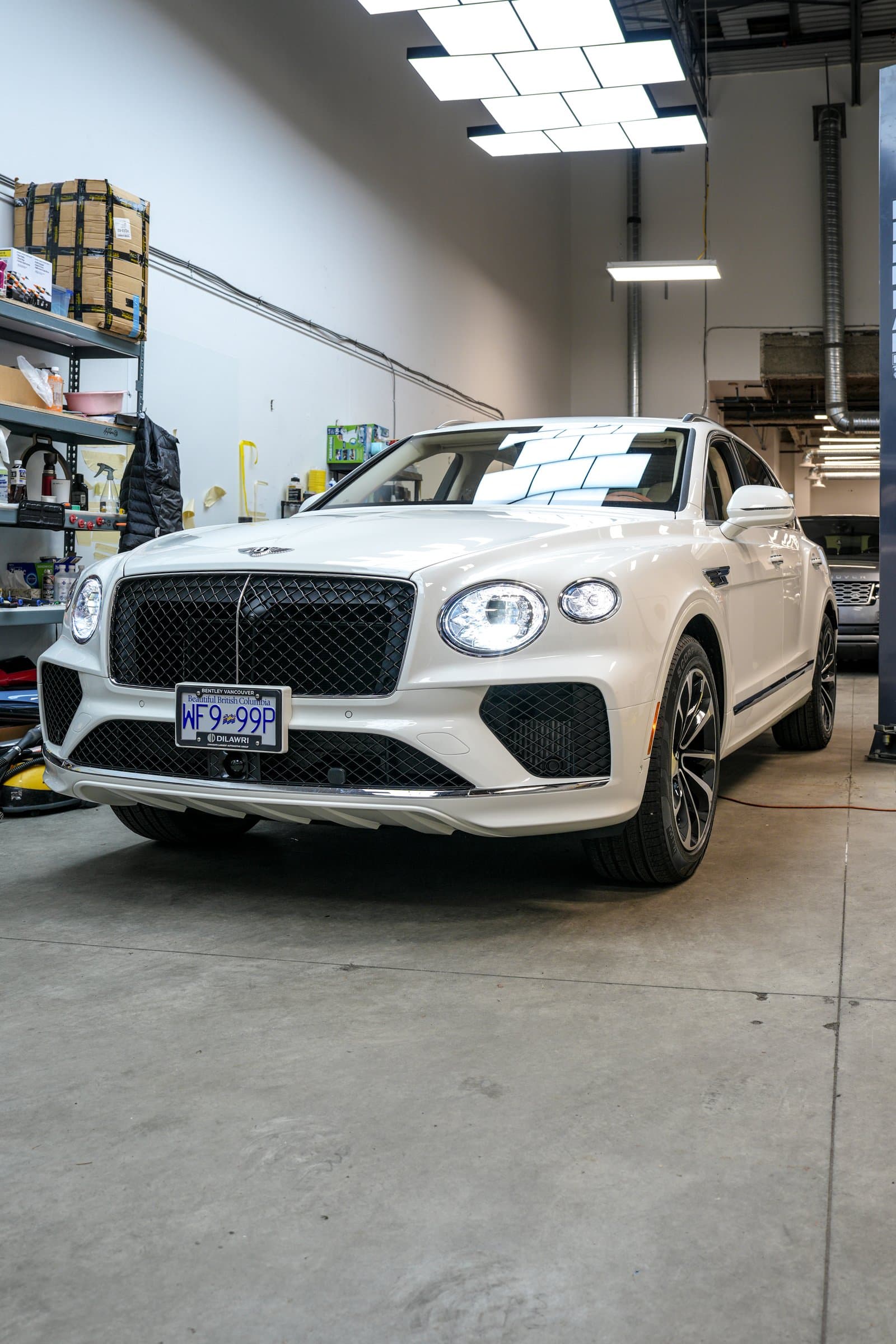
Explore JRS Auto Customs PPF work, including a Bentley Bentayga full-body installation, in our portfolio. Or book a PPF consultation to discuss what coverage makes sense for your vehicle and driving patterns.
Related project: Bentley Bentayga — Full Clear PPF