Color Change Wraps in Vancouver: What to Know
Published
A color change wrap is a sheet of vinyl film applied directly over your factory paint. That is the simple version. What it means in practice — what changes and what does not, how long it lasts, and whether it is the right move for your car — is worth understanding before you book. Vancouver owners choose wraps for a range of reasons: a temporary look without commitment, protection for a factory finish, or a colour that is simply not available from the factory on a particular model. The reasons are varied; the mechanics are consistent.
What happens during a color change wrap installation
The process starts with surface preparation. The vehicle is washed, decontaminated, and inspected for paint defects — chips, scratches, and stone damage that are invisible under the factory colour become visible under the harsh lighting of a prep bay and will show through the new film. Any surface defects are addressed or documented before the wrap goes on. The wrap then adheres to the paint surface over every body panel, with edges tucked into panel gaps and seams so the result is seamless from most viewing angles.
A full-body color change on a sedan or coupe takes three to five days of shop time. A partial wrap — hood, roof, and mirrors — takes less time but requires careful colour-matching decisions about where the wrap terminates against the factory paint. The vehicle is not drivable during installation; it needs to stay in the shop until the film has fully cured.
Cast vinyl vs TPU: what the material difference means
Most color change wraps are made from cast vinyl — a calendared film that conforms to complex body curves through heat application and holds its colour and finish consistently over its service life. Cast vinyl wraps are available in gloss, matte, satin, metallic, and colour-shift finishes. They are removable: when the film comes off, the factory paint underneath is intact, assuming the installation and removal were done professionally.
TPU — thermoplastic polyurethane — is a softer, more impact-resistant material most commonly associated with paint protection film. TPU color change wraps offer a level of physical protection that cast vinyl does not, alongside self-healing properties where light surface scratches warm out of the film. The trade-off is cost: TPU color change wraps are meaningfully more expensive than cast vinyl equivalents. For a vehicle where both appearance change and impact protection are priorities, TPU makes that combination practical.
What a wrap does not do
A color change wrap is not paint protection film, unless it is a TPU product. Standard cast vinyl wrap offers limited resistance to stone chips and provides no meaningful protection against physical impact. It will guard against light scratches from washing and minor contact, but a significant stone chip or parking contact will go through the vinyl and affect the paint underneath. If stone chip protection is the priority, a clear PPF applied over the wrap or on its own is the appropriate product.
Vinyl also has lower chemical resistance than factory clear coat. Road salt, tree sap, bird droppings, and fuel spills should be cleaned off promptly — the same advice that applies to factory paint, but more urgently. Vinyl does not tolerate prolonged exposure to harsh chemicals the way a properly maintained ceramic coating on factory paint does.
Maintenance and how long a wrap lasts in Vancouver
A professionally installed cast vinyl wrap in Vancouver typically lasts three to five years with reasonable care. The coastal humidity, UV exposure, and road salt through the wet months all work against vinyl longevity, which means a vehicle parked outdoors through Vancouver winters will show wear faster than one kept in a garage. The edges are the first areas to degrade — slight lifting at panel joins where road film and moisture work underneath the film over time.
Washing a wrapped car follows similar principles to washing a ceramic coated car: pH-neutral wash product, soft microfibre mitt, two-bucket method. Abrasive compounds and rotary polishers are not appropriate on vinyl. Ceramic coating can be applied over a wrap to add UV protection and extend the film life — this is an increasingly common approach for owners who want the appearance benefit of a wrap with better durability through the wet season.
When the wrap comes off — whether after three years or five — the factory paint underneath is assessed. If the paint was in good condition when the wrap was applied and the vehicle was maintained while wrapped, the paint is typically in good condition underneath. The contrast between the protected and unprotected panels is often noticeable, particularly on lighter-coloured vehicles where UV yellowing on unprotected panels is more visible.
Is a wrap the right choice for your car
A color change wrap makes most sense when you want to change the appearance of a car you plan to keep for more than a year, and when you want that change to be reversible. For a vehicle being sold within a year, the cost of a wrap is harder to justify against the time the car will spend in your possession. For a car you are keeping, a wrap buys you a new look without the permanence or cost of a respray — and it protects the original paint underneath, which has value if the car is ever resold or if you want to return it to factory colour.
JRS Auto Customs handles full and partial color change wrap installations in both cast vinyl and TPU. Contact the team to discuss what finish and material makes sense for your vehicle and goals.
For full details on color change wrap services available at JRS Auto Customs, see the color change service page.
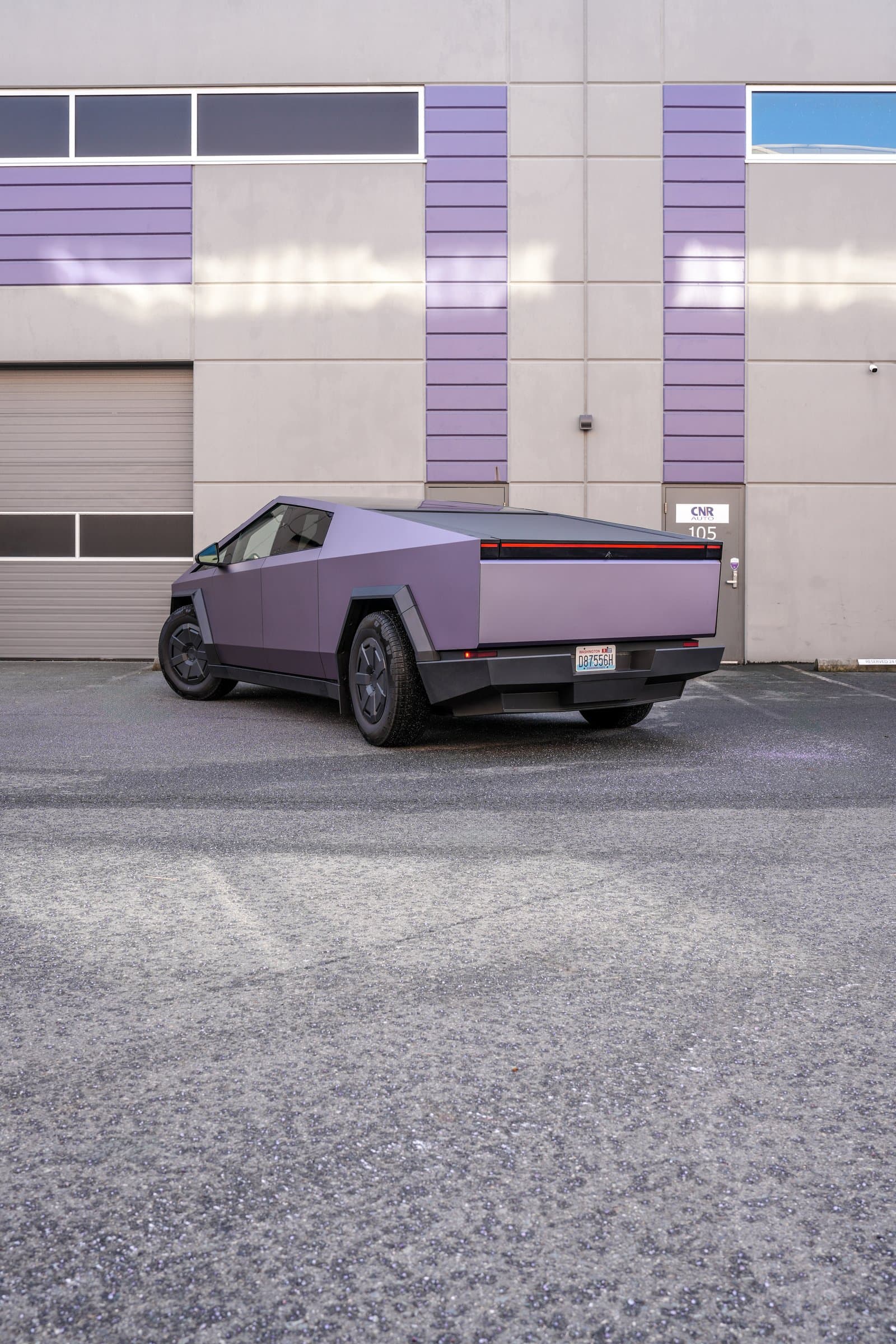
Related project: Tesla Cybertruck — Capri Grey Purple TPU Color Change