
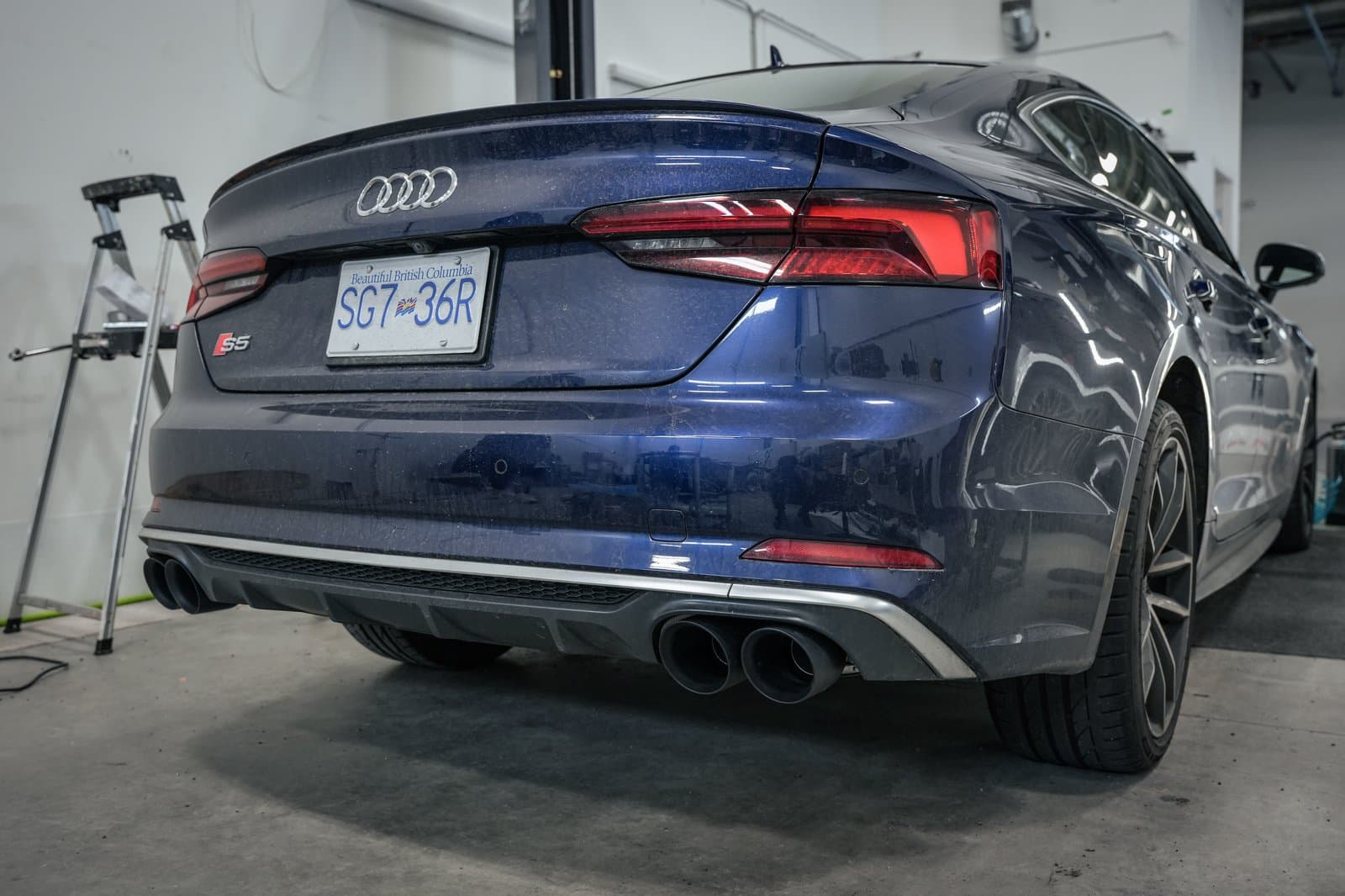
Vancouver Exhaust Check Before the Wet Season
Published
Vancouver winters do more damage to your car than most owners realise. Road salt, calcium chloride, and the extended moisture that hangs around a coastal city through March and April all work against your exhaust system. By the time summer arrives, a lot of that damage is already done — or it shows up exactly when you do not want it to, on a warm weekend drive with the windows down.
What Vancouver winter does to your exhaust
The exhaust system runs from the engine through the catalytic converter and muffler, ending at the tail pipes at the rear of the car. Every section is exposed to hot gases on the inside and cold, wet road conditions on the outside — a combination that creates condensation inside the pipes every time you park after a short trip. On a longer drive, the heat burns this off. On a short commute in February, it sits there.
Road salt accelerates corrosion from the outside. It does not just affect the undercarriage and wheel wells — it lands on the exhaust tips, clings to the pipe walls behind them, and eats into the bracket hardware that holds the system in place. Stainless steel systems hold up well in this climate; mild steel and chrome finishes do not. If your car spent last winter parked outside, the damage has a head start.
Signs your exhaust needs attention before the wet season
Most exhaust problems announce themselves before they leave you stranded. Paying attention to a few specific symptoms makes it easy to catch them early.
A change in exhaust note — a hollow, rattling quality that was not there before — usually means something has come loose inside the muffler or a heat shield has detached. Rattling from a cold start that quiets after a minute can indicate a broken internal baffle. Either way, it is worth investigating before the problem travels further down the system.
Visible surface rust on the exterior pipes, flanges, or hanger brackets is a clear signal. Surface rust on the outside almost always means there is corrosion on the inside sections you cannot see. Pitting on the interior wall of the pipe restricts flow, reduces efficiency, and changes the sound.
A smell of exhaust inside the cabin when the climate system is set to recirculate is not just unpleasant — it usually means a leaking gasket at the headers, a cracked downpipe, or a failing flex joint. These leaks can introduce carbon monoxide into the cabin in the right conditions. This is not a maintenance issue to defer.
What a professional exhaust inspection covers
When JRS Auto Customs inspects an exhaust system, the technician works through every connection point, from the headers to the tail pipe. The inspection checks gasket condition at each joint, looks for stress cracks at bends and welds, assesses hanger rubber health — the mounts that absorb vibration — and inspects the catalytic converter heat shields for detachment.
For cars running a performance exhaust, the inspection also reviews the fitment of any aftermarket downpipe or axle-back system. Many performance setups are louder than stock and can generate more vibration at mount points that were not designed for them. A proper inspection catches these stress points before they cause a leak or a broken weld.
Maintenance steps you can do yourself before the rain returns
Before the wet season arrives, take a walk around the back of the car and look at the tail pipes. If there is a buildup of road grime or salt residue on the pipe surface, wash it off with warm water and a non-abrasive brush. Do not use harsh chemical cleaners on stainless — mild dish soap and a soft brush are enough. Chrome tips respond well to a dedicated chrome polish applied after cleaning.
Check that all visible bolts at the muffler connections are still tight. If you hear any movement or ticking from the rear of the car when you tap the tail pipe with your hand, the clamps or hangers may have loosened. Getting this addressed before the rainy season means the issue does not get worse with increased moisture exposure.
If you use a pressure washer on your car, avoid directing the stream directly into the tail pipe — water pushed into the system can sit in the muffler and accelerate internal corrosion. Keep the spray at the exterior pipe surface.
For regular general maintenance that keeps your whole car in shape through Vancouver's seasons, visit our daily essentials pagedaily essentials page. You can also look at the For regular general maintenance that keeps your whole car in shape through Vancouver's seasons, visit our
JRS Auto Customs handles exhaust system inspections and upgrades from our Vancouver shop. Book any time.
Related project: Audi S5 — Milltek Exhaust Upgrade