
Exhaust Mods and BC Inspection: A Vancouver Driver's Guide
Published
If you are thinking about modifying your exhaust, the first question should not be how it sounds or how much power it adds. It should be: will it pass inspection? In British Columbia, the answer determines whether your modification stays on the road or gets flagged at your next insurance renewal. Here is what the inspection actually checks, and what you can and cannot do.
What BC Vehicle Inspection Actually Checks on an Exhaust
The BC vehicle inspection programme is not primarily an emissions test for most vehicles — it is a safety inspection. For exhaust systems, the inspection checks three things: whether the catalytic converter and oxygen sensors are present and functioning, whether the exhaust is structurally sound without leaks that could allow carbon monoxide into the cabin, and whether the noise level at the tailpipe meets the threshold for the vehicle class. A leaking exhaust that allows fumes into the passenger compartment is a fail regardless of what else is installed. A catalytic converter that has been removed or gutted is a fail. Noise levels above the threshold for the vehicle class are a fail.
Axle-Back vs Cat-Back vs Downpipe: What Changes Inspection Outcome
The most important distinction for inspection is what part of the exhaust you are modifying. An axle-back system replaces the muffler and rear piping only — it does not touch the catalytic converter or front exhaust. This configuration is generally inspection-friendly as long as the noise level stays within the vehicle class threshold and the catalytic converter remains intact and functional. A cat-back system adds the mid-pipe section and may include or exclude the catalytic converter depending on the design. A cat-back that maintains the OEM catalytic converter and lambda sensors is generally fine. A cat-back that removes or bypasses the catalytic converter will fail inspection.
The component that causes the most inspection failures is the downpipe — the section that connects the exhaust manifold to the rest of the system. A downpipe with a high-flow or sport catalytic converter that maintains the same mounting points and sensor bungs as the OEM unit may pass inspection if it is marketed as a direct-fit replacement. A downpipe that removes the catalytic converter entirely will fail, and the vehicle becomes non-road-legal at that point.
The Noise Threshold: What Actually Counts as Too Loud
BC sets noise thresholds by vehicle class, measured at the tailpipe with a specific microphone placement and engine rpm. The threshold varies depending on whether the vehicle is a passenger car, light truck, or motorcycle. In practice, most axle-back and cat-back systems that maintain a resonating chamber and do not increase exhaust flow beyond what the engine design supports will stay within the limit. Straight-through race mufflers without baffling, and systems that remove the resonator entirely, are the most common cause of noise-related inspection failures. If you are planning to install a louder system, it is worth confirming the specific decibel rating for your vehicle class before committing.
What This Means for Your Modification Budget
The practical implication is that the least expensive exhaust modification is not always the most cost-effective one when inspection is factored in. A direct-fit cat-back that maintains OEM catalytic converters may cost more upfront than a universal system that requires fabrication or modification to fit. But a universal system that requires cutting and welding the original exhaust, or that results in a check engine light from an upstream oxygen sensor reading that does not match the ECU map, will cost more to fix than the price difference. The inspection failure rate for poorly matched exhaust systems is significant enough that reputable installers factor it into their recommendations.
For drivers in Vancouver who use their vehicle for commuting and daily driving, the practical approach is to start with an axle-back if the goal is sound, and a cat-back with maintained OEM converters if the goal is flow and sound. For drivers building a performance car who are comfortable with the inspection implications of more aggressive modifications, that conversation should happen before purchase, not after.
JRS Auto Customs handles exhaust installations and modification consultations. If you are planning an exhaust modification and want to understand the inspection implications before you commit, see our exhaust and performance services and get in touch to discuss what works for your vehicle.
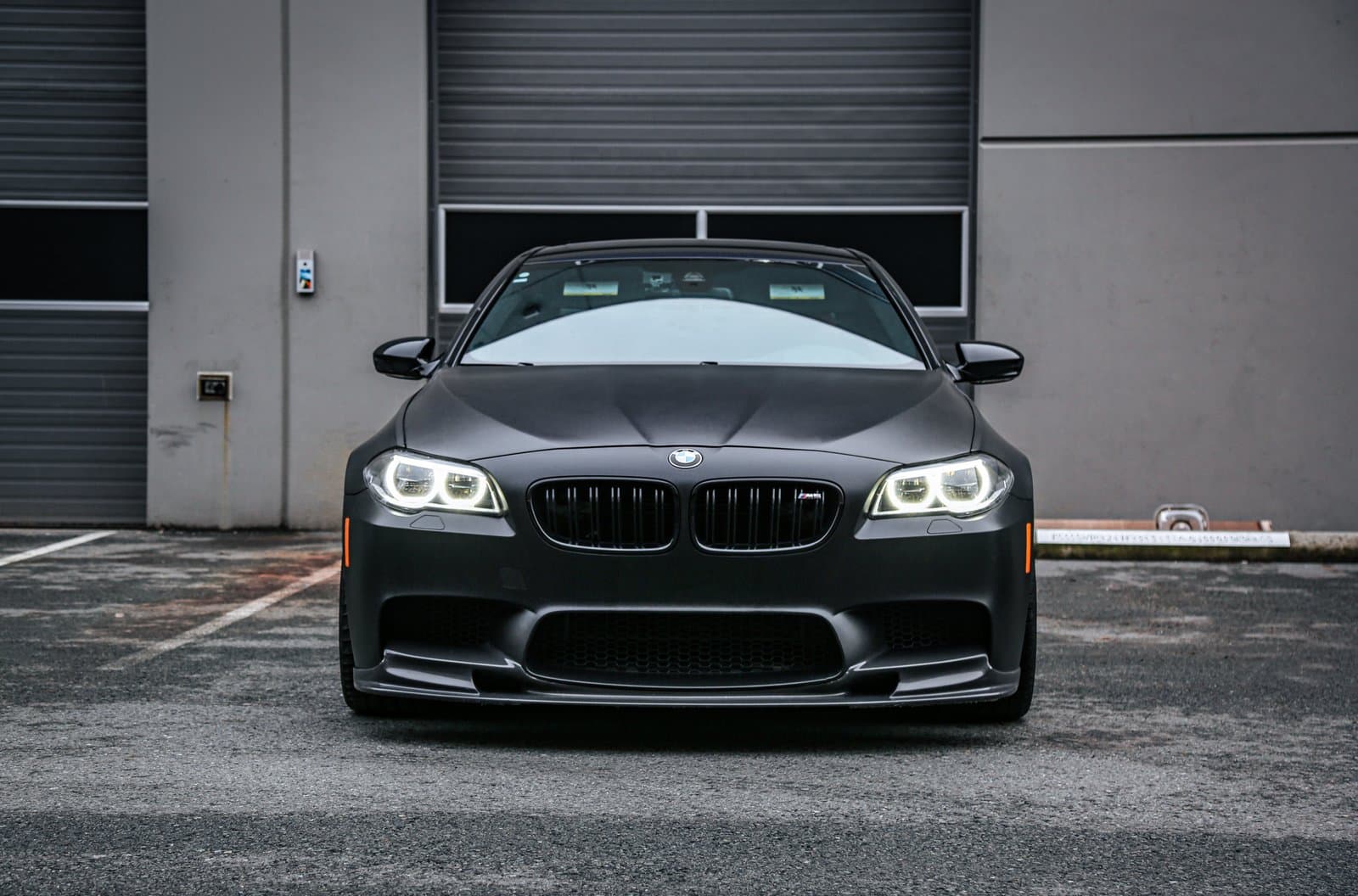
Related project: BMW M5 — 3DDesign Kit and Akrapovic Exhaust