
What an Exhaust Upgrade Actually Changes in Daily Driving
Published
An exhaust system upgrade is one of the most visible modifications in the car customisation world, and also one of the most misunderstood. The marketing around aftermarket exhausts emphasises sound — louder is treated as better. The reality for a car used as a daily driver in Vancouver is more nuanced. Here is what an exhaust system upgrade actually changes, and what it does not.
What the Exhaust System Actually Does
The exhaust system's primary function is to channel combustion gases away from the engine and passengers. It also manages backpressure — the resistance the engine faces when pushing exhaust gas out. Backpressure is not inherently bad; a correctly designed exhaust system maintains enough backpressure for the engine to operate efficiently. The debate around backpressure in enthusiast circles is largely about whether the factory system has too much or the right amount — and the answer depends on the specific engine design.
The secondary function is noise management. The muffler is a resonant chamber designed to cancel specific sound frequencies. A straight-through muffler — popular in aftermarket systems — reduces backpressure but also removes the noise-cancelling function, which is why it is louder. The third function is emissions control: the catalytic converter reduces harmful emissions before exhaust exits the vehicle.
What Changes on a Naturally Aspirated Engine
On a naturally aspirated engine — one without a turbocharger — reducing exhaust restriction can improve throttle response at mid-range RPM. The engine does not need to work as hard to push exhaust gas out, which reduces pumping losses. The improvement is most noticeable when you are already driving hard: on a mountain road or merging onto the highway, the engine feels more responsive. On a normally aspirated daily commute with gentle throttle inputs, the difference may not be perceptible at all.
The other noticeable change on a naturally aspirated engine is the change in sound character. A freer-flowing exhaust changes the note the engine produces at different RPM points. This is the primary reason many owners upgrade — the car sounds more engaging. Whether that sound is pleasant or intrusive depends on the system and the ear.
What Changes on a Turbo Engine
On a turbocharged engine, the exhaust flows through the turbocharger first, which imposes its own restriction. A less restrictive downpipe — the pipe between the turbo and the rest of the exhaust — can reduce turbo lag by allowing the turbo to spin up faster. On a daily-driven turbo car, this means the engine response between throttle input and boost building feels faster. The improvement is more measurable on a turbo engine than on a naturally aspirated engine.
A cat-back system — replacing everything from the catalytic converter back — on a turbo car does less for performance than a downpipe change, because the turbo already handles most of the flow restriction. The main benefit of a cat-back on a turbo car is the sound change.
What Does Not Change — and What Can Go Wrong
An exhaust system upgrade does not make a car significantly faster in a straight line unless it is paired with engine management changes. The factory tune is calibrated for the factory exhaust. Changing only the exhaust on a normally aspirated engine may yield a few horsepower at the top of the rev range — not at the speeds you use on a daily commute. On a turbo engine, the gains are more noticeable but still require a tune to realise fully.
An incorrectly installed exhaust can introduce leaks at the flanges, which allow exhaust gas to enter the cabin — a health and safety issue. A system that is too loud for the driver's preferences creates fatigue on long drives. And a downpipe delete that removes the catalytic converter without a proper replacement will cause a vehicle to fail BC emissions testing.
Making the Decision for a Daily Driver
The clearest case for an exhaust upgrade on a daily-driven car is sound. If you want the car to sound more engaging and you are comfortable with the volume level, a cat-back system from a quality manufacturer will give you that. The performance benefit on a daily drive is marginal — you are buying the sound experience, not a performance transformation.
Before an exhaust upgrade, check what BC emissions requirements apply to your vehicle. Our exhaust upgrade consultation covers system options, BC compliance, and what the upgrade will and will not change for your specific vehicle.
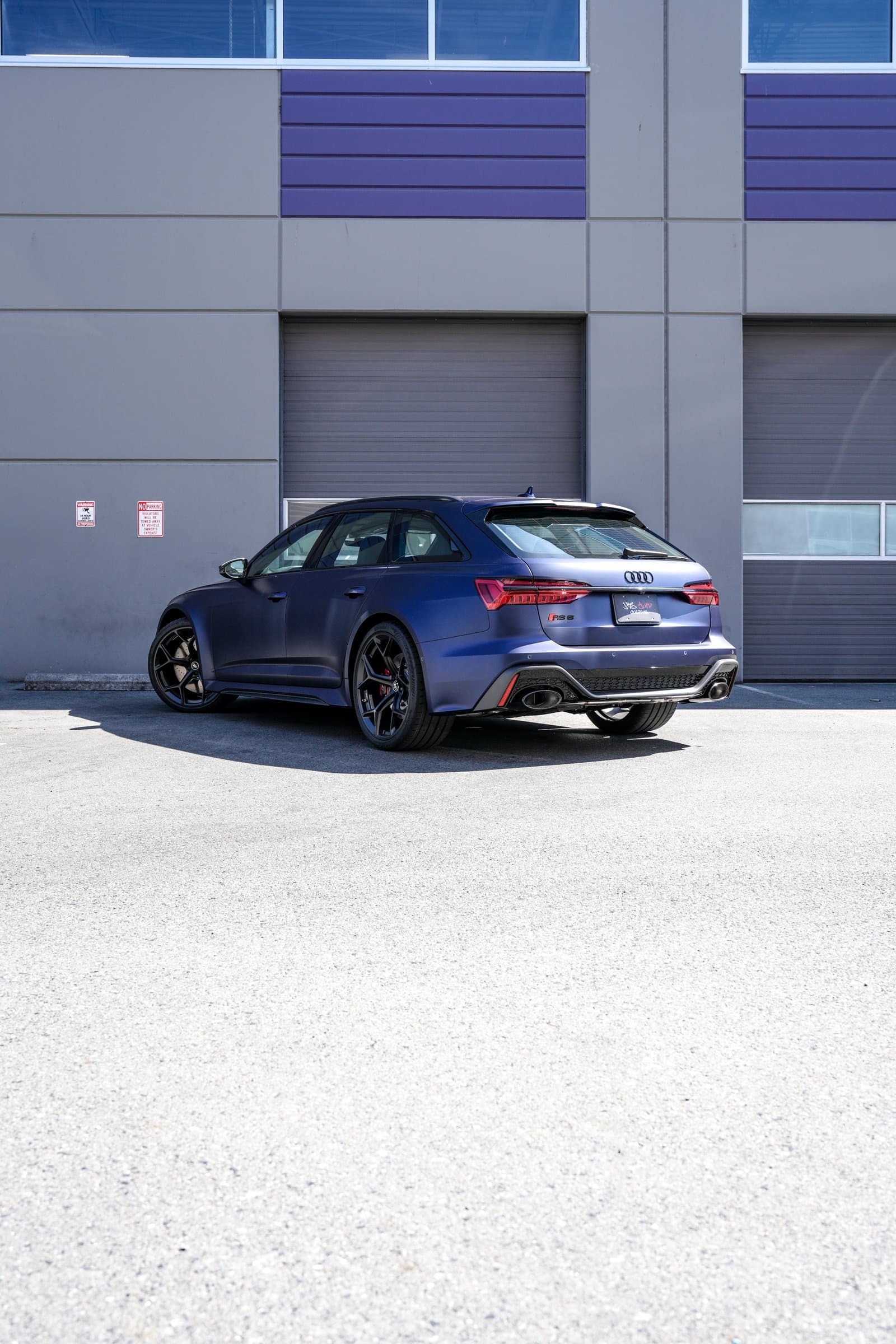
Related project: Audi RS6 Avant Matte Blue PPF