
Choosing the Right Exhaust for Your Car Type in Vancouver
Published
The exhaust upgrade market offers a wide range of options, and the differences between them matter more than the marketing suggests. A cat-back system on a naturally aspirated four-cylinder engine behaves differently from the same system on a turbocharged six. A louder exhaust on a car used daily for commuting is a different proposition from the same exhaust on a weekend driver. Understanding how exhaust upgrades interact with your specific engine type and driving pattern is the first step to making a choice you will not regret.
unknown node
A naturally aspirated engine — one without a turbo or supercharger — relies entirely on atmospheric pressure to draw air into the cylinders. The exhaust system backpressure has a direct effect on how efficiently the engine breathes. Reducing backpressure with an aftermarket exhaust can improve power delivery, particularly in the mid-range where street driving most often occurs.
On naturally aspirated engines, a cat-back system that reduces restriction after the catalytic converter is the most common upgrade. It allows the engine to exhale more freely without altering emissions compliance. An axle-back system — replacing only the rear muffler section — offers a sound change with minimal performance effect and is the more conservative choice.
unknown node
Turbocharged engines create their own scavenging effect and are less sensitive to exhaust backpressure than naturally aspirated engines. For a daily-driven turbo car, a cat-back or axle-back exhaust primarily changes the sound character rather than dramatically altering power output. The gains from exhaust modification on a modern turbo engine are typically modest.
For turbocharged engines, the downpipe is where the meaningful performance change happens. Replacing the downpipe — the section between the turbine and the catalytic converter — reduces turbo lag and improves spool response significantly. A downpipe replacement on a turbo car can produce a more noticeable improvement in driveability than a full cat-back system. However, downpipe modifications affect emissions systems and may have regulatory implications in British Columbia.
unknown node
BC's vehicle inspection requirements mean that any exhaust modification should be assessed against provincial noise and emissions standards. An excessively loud exhaust can result in a failed inspection, and modifications that remove or bypass emissions equipment can create complications for registration and insurance.
For Vancouver drivers who use their vehicles primarily for commuting on Main Street, Broadway, and other busy corridors, a loud exhaust is a daily practical problem — it attracts attention, can cause unnecessary noise complaints, and contributes to noise pollution in residential areas. A tasteful cat-back with a refined note is a better fit for urban Vancouver driving than a competition-style loud system.
unknown node
If your car is a daily driver in Vancouver's urban environment, an axle-back or cat-back system with a refined, non-resonant note is the most practical choice. It changes the character of the exhaust without making the car disruptive to drive in daily traffic.
If your car is used primarily on the highway or for spirited driving on the North Shore roads or Highway 99, a cat-back system with more aggressive tuning can improve the driving experience and add the sound character that makes those drives more enjoyable.
For performance-oriented vehicles used on mountain roads or track days, a full system replacement — including headers and downpipe — delivers the most significant improvement in exhaust flow and sound. This is the choice that makes the most sense for vehicles where performance is the primary use case.
unknown node
Stainless steel is the standard material for quality aftermarket exhausts. It resists corrosion from Vancouver's salt exposure better than mild steel, holds a better finish over time, and does not require the same level of maintenance. For any vehicle driven through Vancouver's wet season, stainless steel is worth the additional cost over mild steel systems.
Titanium exhaust systems are lighter and offer a distinctive sound character, but come at a significantly higher price point. They are most relevant for track-focused vehicles where weight reduction is a priority.
Book a consultation with JRS Auto Customs to discuss exhaust options for your specific vehicle and driving pattern. Getting the right exhaust for how you actually use the car prevents the expense and hassle of an upgrade that does not suit your needs.
unknown nodeexhaust upgrade optionsunknown node
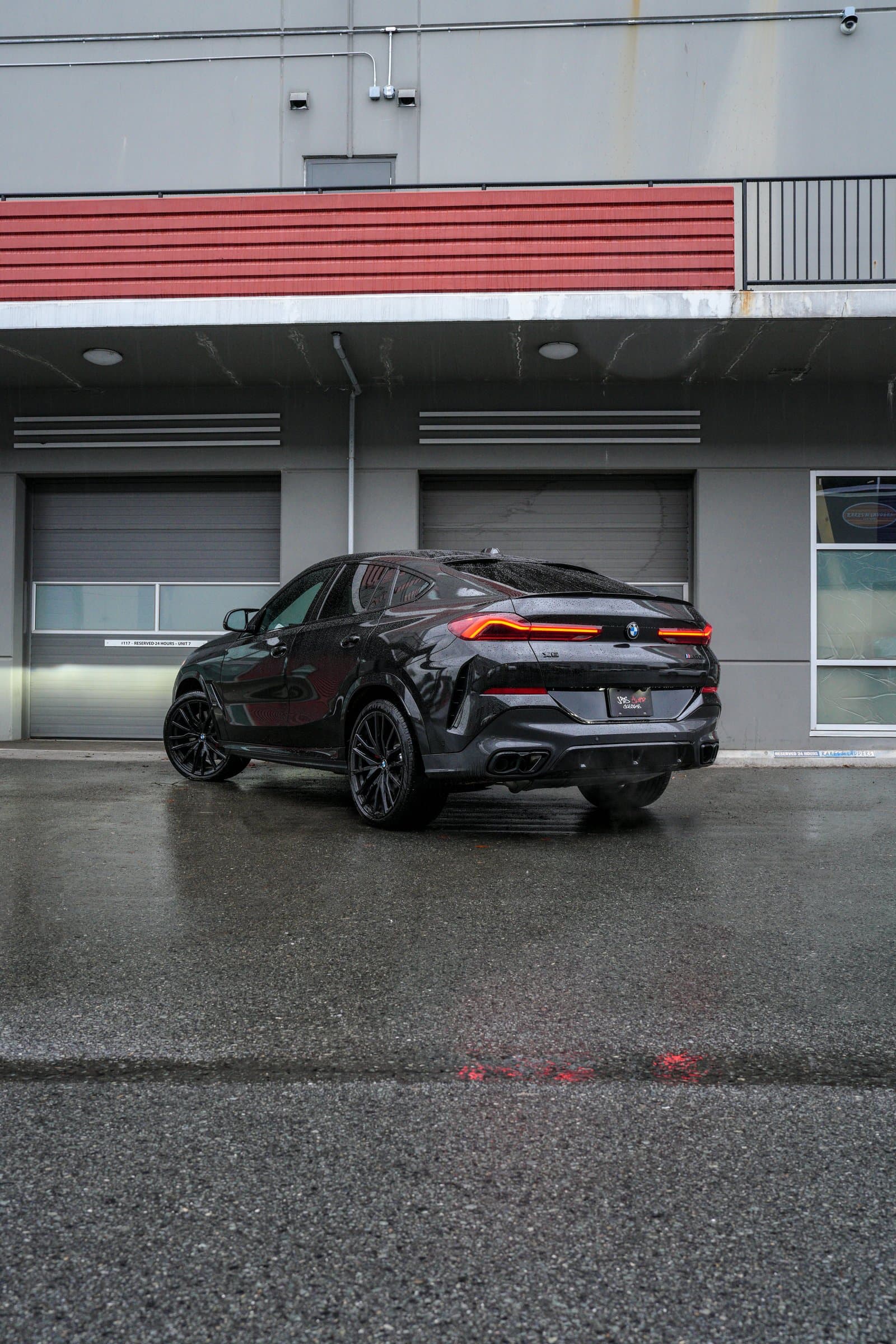
Related project: BMW X6 M60i — Metallic Black 3M Wrap