
Headlight PPF: Why Your Headlights Need Protection
Published
Headlight lenses are one of the most exposed parts of any car, and one of the least considered for protection. They sit at the front of the vehicle, take every stone chip from the road, and over time accumulate the kind of damage that reduces night visibility and makes the car look older than it is. Paint protection film on headlights is one of the most cost-effective PPF applications available. Here is why.
Why Headlights Are Particularly Vulnerable
Modern headlight lenses are made from polycarbonate, the same material used in helmet visors. It is optically clear, lightweight, and shatter-resistant, but it is soft and scratches easily. Unlike body panels, which sit behind the bumper structure and benefit from the bumper absorbing the first impact, headlight lenses are the frontmost surface of the car in a side-on collision and are fully exposed to road debris at the height where gravel and stones are thrown by other vehicles. A stone that would merely pit a bumper will crack or chip a headlight lens.
In Vancouver, where highway driving on Routes 1 and 99 exposes vehicles to gravel and sand, headlight chips accumulate faster than most owners realise. A single highway trip can deliver multiple impacts to the lens surface.
What Damage Does to Headlights
Physical damage to headlight lenses goes beyond aesthetics. Surface scratches and chips scatter the light output from the bulb, reducing effective illumination on the road. The headlight appears dimmer even though the bulb is operating at full strength. More significantly, any crack that penetrates the lens seal allows moisture to enter the housing. Moisture inside the headlight housing causes the reflector to corrode -- and a corroded reflector cannot be restored. The entire headlight assembly must be replaced, which on many modern vehicles runs to thousands of dollars.
UV oxidation is the other main failure mode. Polycarbonate yellows and hazes under UV exposure. On horizontal lens surfaces, which receive direct sunlight, oxidation progresses fastest. A hazy headlight can reduce light output by thirty percent or more.
What PPF Protects on Headlights
Clear PPF on headlights absorbs stone chip impacts and prevents them from reaching the lens surface. The film takes the scratch, not the lens. Because PPF is optically clear, it does not affect light output. The protection is invisible. On premium films with a ceramic top coat, the film also adds a layer of UV protection that slows the oxidation process.
Tinted or smoke-coloured headlight PPF is available for owners who want a custom look. This is a stylistic choice, but it is worth noting that any tinting reduces light output marginally. For most drivers, clear film is the better practical choice.
When PPF on Headlights Makes Most Sense
New vehicles benefit most from headlight PPF applied at delivery, before the first chip occurs. Once the lens has accumulated damage, film applied over it seals in that damage and does not restore lost clarity. For a new car or a car with undamaged headlights, headlight PPF is a modest cost that preserves the original lens for the life of the car.
If you are getting a full-body PPF installation, adding headlight protection is a small incremental cost. The labour to mask and wrap the headlight lenses is already part of the preparation work. For a standalone headlight PPF job, budget for two to four hours of installation time on most vehicles.
JRS Auto Customs can quote on headlight PPF as a standalone service or as part of a full exterior protection package. Discuss your driving patterns and vehicle use with the team to decide whether headlights are a priority area for your car.
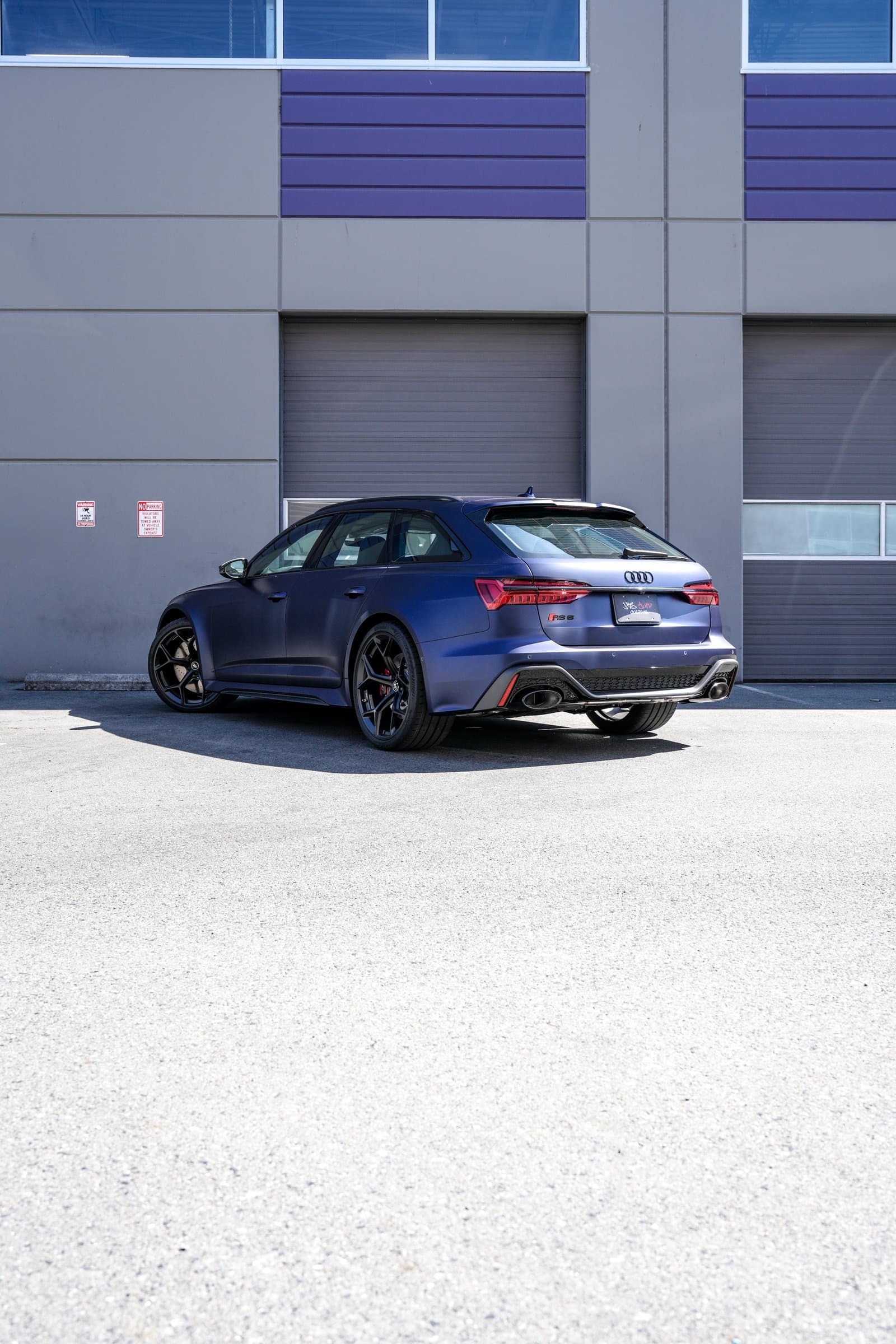
Related project: Audi RS6 Avant Matte Blue PPF