
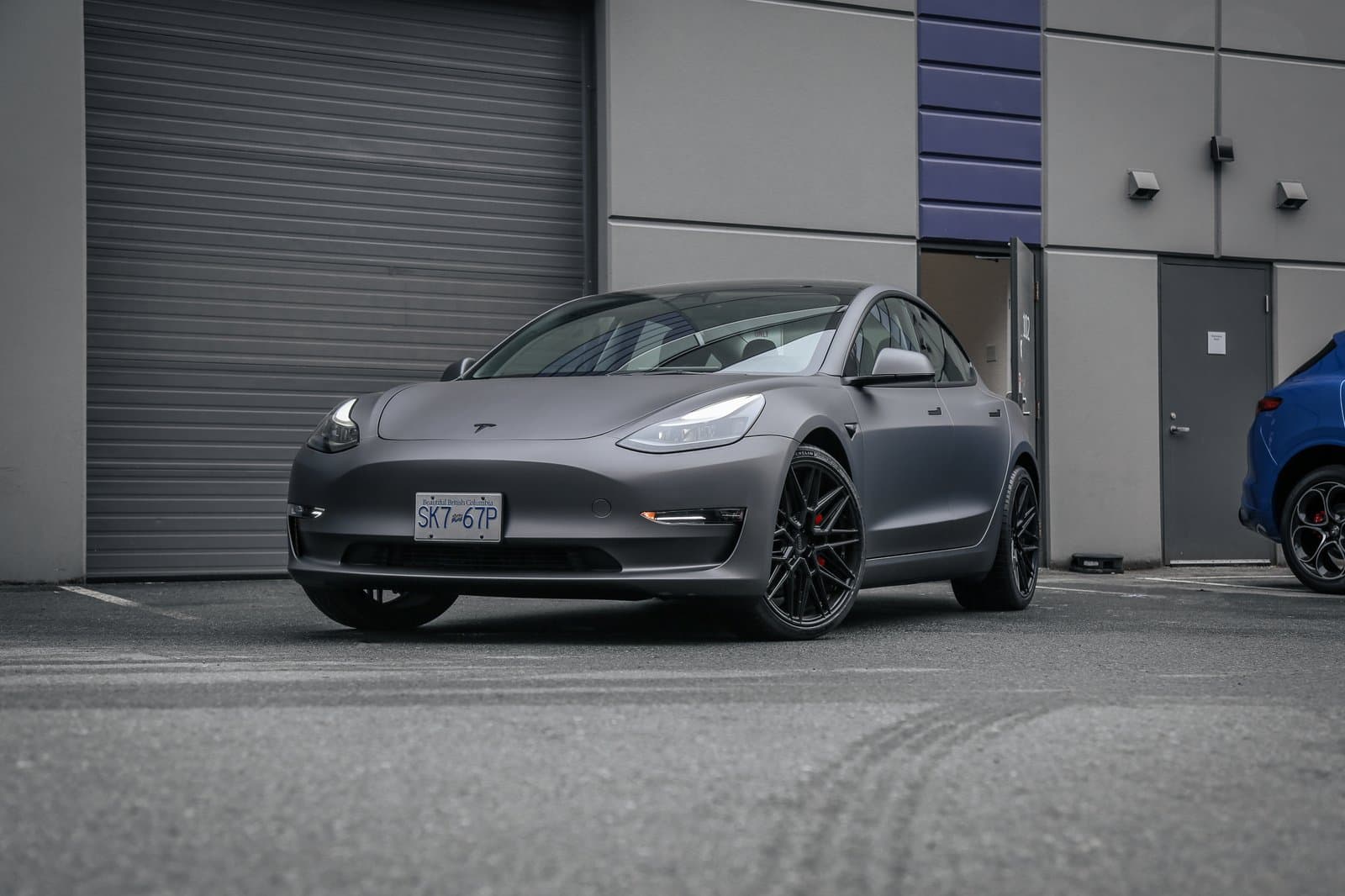
Driving in Heavy Rain: A Vancouver Owner's Practical Guide
Published
Most drivers slow down when it rains heavily. Fewer know why stopping distances change so dramatically, or what to do when the car starts hydroplaning. Here is what actually happens to your car in heavy rain on Vancouver roads, and how to handle it.
Stopping Distances in the Rain
On a dry road at 50 km/h, a typical car needs about 35 to 40 metres to stop from the point where the brakes are first applied. On a wet road at the same speed, that distance roughly doubles. The water on the road surface means your tyres cannot maintain the same contact with the asphalt — there is a film of water between the rubber and the road, and friction drops accordingly. The more water, the less grip.
This is why increasing following distance in the rain is not just cautious driving — it is physics. At 50 km/h in wet conditions, leave at least three to four seconds of gap between you and the vehicle ahead. At 90 km/h on the highway in heavy rain, that gap needs to be longer. The car ahead may brake suddenly; if you cannot stop in time, you will hit them.
Hydroplaning: What It Feels Like and What to Do
Hydroplaning occurs when the tyre's tread cannot channel water away quickly enough and the tyre literally floats on top of the water film. At this point you have no steering and no braking traction. It feels like the steering going light and the car drifting sideways even though the wheel is straight. It most commonly happens at speed on standing water — puddles in the outside lane of a highway, water pooling at low points on the road.
If it starts to happen, do not brake hard — braking reduces the contact the front tyres have with the road further. Ease off the throttle smoothly and keep the steering wheel straight. The car will slow naturally as the tyres regain traction. Do not counter-steer aggressively — the car will stabilise on its own if you give it the chance. Wider tyres are more prone to hydroplaning than narrower ones, which is one of the hidden costs of fitting significantly wider wheels.
Visibility in Heavy Rain
In heavy rain, your windscreen wipers are doing the most important job on the car. They need to be in good condition — and more importantly, the windscreen washer fluid needs to be topped up with a proper winter-grade fluid that does not freeze in cold conditions. In heavy rain, you will use more washer fluid than you expect as road film builds up on the windscreen from passing traffic.
Use the recirculate function sparingly in heavy rain. It keeps the interior warm but pulls humid air from inside the car, which fogs the windscreen. Mix recirculate with fresh air to keep the glass clear without steaming it up.
In very heavy rain, dipped headlights are not just about seeing — they are about being seen. British Columbia law requires headlights on whenever visibility is significantly reduced. More importantly, your rear lights make you visible to the car behind you. If you cannot see clearly through the windscreen, the driver behind you likely cannot see you either.
Braking Technique on Wet Roads
Threshold braking — applying the brakes at the limit of tyre grip without locking the wheels — is more effective in wet conditions than fully locking the wheels. Locked wheels slide, and sliding tyres have less steering control than rolling tyres. If your car has ABS, press the brake firmly and let the system pulse the brakes faster than you can. ABS prevents the wheels from locking and allows you to steer while braking hard. If the car does not have ABS, cadence braking — pumping the brakes — mimics what ABS does automatically.
On wet roads, brake before corners, not through them. Heavy braking in a corner transfers weight forward and reduces grip at the rear, increasing the chance of the rear axle breaking traction. Ease off the throttle before the corner, brake in a straight line, then accelerate gently out.
Puddles and Standing Water
Large puddles in the outside lane of a highway are common on the Lower Mainland. Hitting one at speed can cause the car to hydroplane and pull to one side. More seriously, a deep puddle can cause temporary loss of control and in extreme cases damage the car's underside. If you see a large area of standing water, slow down before you reach it and ease through it at a steady speed — do not brake in the middle of the water.
If you drive through a deep puddle and the brakes feel different afterward — spongy or less responsive — the brake components are wet. Dry them by lightly applying the brakes a few times at low speed. If the feel does not return to normal, have the car checked before driving at speed.
Prepare Your Car Before the Wet Season
The best time to prepare for wet-weather driving is before the conditions arrive. Wiper condition, tyre tread depth, tyre pressures, and brake function all affect how the car handles in heavy rain. Tyre tread below 3 mm provides significantly reduced wet-road grip. Have these items checked before autumn.
JRS Auto Customs in North Vancouver can run through the checks that matter before the wet season — wipers, tyres, brakes, and washer fluid — and flag anything that needs attention before you need it in difficult conditions.
Find out more about ceramic coating and paint protection at JRS Auto Customs — which also makes the glass easier to keep clear in wet weather.
Related project: Tesla Model 3 Vossen HF7 Wheel Upgrade