
Home EV Charging Setup for Vancouver Drivers
Published
Vancouver has one of the highest rates of electric vehicle ownership in Canada, driven partly by BC's EV incentives and partly by the practicality of EV ownership for daily commuting. For most EV owners, home charging is the primary way they recharge. Setting up home charging correctly matters for safety, charging speed and the longevity of your vehicle's battery. Here is what Vancouver drivers need to know.
Level 1 vs Level 2 Charging
Level 1 charging uses a standard 120V household outlet. It adds roughly 8-12 km of range per hour of charging. For a typical EV with a 400km battery, a full charge from empty would take over 30 hours. Level 1 is practical only for drivers who travel under 30km per day and have access to unlimited overnight charging time.
Level 2 charging uses a 240V outlet, similar to what an electric dryer or oven uses. A Level 2 charger adds roughly 30-50km of range per hour, meaning most EVs fully charge overnight in 6-10 hours. For Vancouver drivers who commute 40-60km per day, Level 2 charging at home is sufficient to start each day with a full or near-full charge.
Installation Requirements
Installing a Level 2 charger requires a dedicated 240V circuit, which most older Vancouver homes were not wired for. The installation involves running a new circuit from the electrical panel to the desired charging location — typically a garage or carport. This is not a DIY project. A licensed electrician must perform the installation, and a permit is typically required in the City of Vancouver.
The electrical panel capacity matters. Many older Vancouver homes — particularly character homes in Kitsilano, Mount Pleasant and the West Side with original electrical panels rated at 100 amps — may need a panel upgrade to accommodate a new 240V circuit alongside existing loads. An electrician can assess whether your panel has capacity or needs upgrading.
Charging Speed and Your Vehicle
The charging speed your vehicle accepts depends on the vehicle's onboard charger capacity, not just the charger output. A vehicle with a 7kW onboard charger will not charge faster than 7kW even on a 22kW charger. Most standard-range EVs sold in Canada have a 7-11kW onboard charger. Longer-range variants often have 16kW or higher.
For most Vancouver commuters who drive under 80km per day, a 7kW home charger is more than sufficient. The car charges faster than you use it overnight, and you start every morning with a full battery.
Outdoor Installation and Weather
Many Vancouver homes — particularly on the West Side and in North Vancouver — do not have attached garages, meaning the EV charger is installed outdoors. Outdoor-rated chargers are designed for this: they are rated to function in rain, cold and the salt air common in coastal neighbourhoods.
In cold Vancouver winters, charging speed is reduced compared to moderate temperatures. Lithium-ion batteries charge more slowly when cold. Parking in a garage or carport, where the battery stays warmer, can improve cold-weather charging speed. Most EVs with active thermal management will precondition the battery while still plugged in, which uses some of the charging power — this is normal.
BC Hydro and Utility Considerations
BC Hydro offers time-of-use pricing in parts of Metro Vancouver, which means electricity is cheaper during off-peak hours, typically overnight. Charging your EV during off-peak hours reduces charging costs significantly compared to daytime rates. Many Level 2 chargers can be scheduled to charge automatically during off-peak windows.
BC Hydro also has programs and rebates for home charging equipment installation. Checking current provincial and utility incentives before installing is worth doing — programs change and what was available when your neighbour installed may not be current.
Charging at Strata Properties
Many Vancouver residents live in strata properties, where the parking is shared or the electrical infrastructure is shared. Strata approval is required before installing EV charging in most condo and townhouse complexes. The Strata Property Act in BC has been amended to make it easier for owners to request EV charging infrastructure, but the process still requires approval and cost-sharing agreements in some cases.
If you live in a strata property and are considering an EV, understanding the strata charging policy before purchase is worth doing. Some newer strata buildings have EV-ready parking stalls; others require a formal application process.
Getting It Done
The practical steps are: check your electrical panel capacity, decide on a charger location, hire a licensed electrician for the installation, and apply for any applicable permits and utility rebates. The total cost of a Level 2 installation in Vancouver typically runs from a few hundred dollars for a simple circuit to over two thousand dollars if a panel upgrade is needed.
JRS Auto Customs can advise on EV charging accessories and setup for your specific vehicle. For your next daily driving maintenance needs, book a visit to discuss what your EV needs.
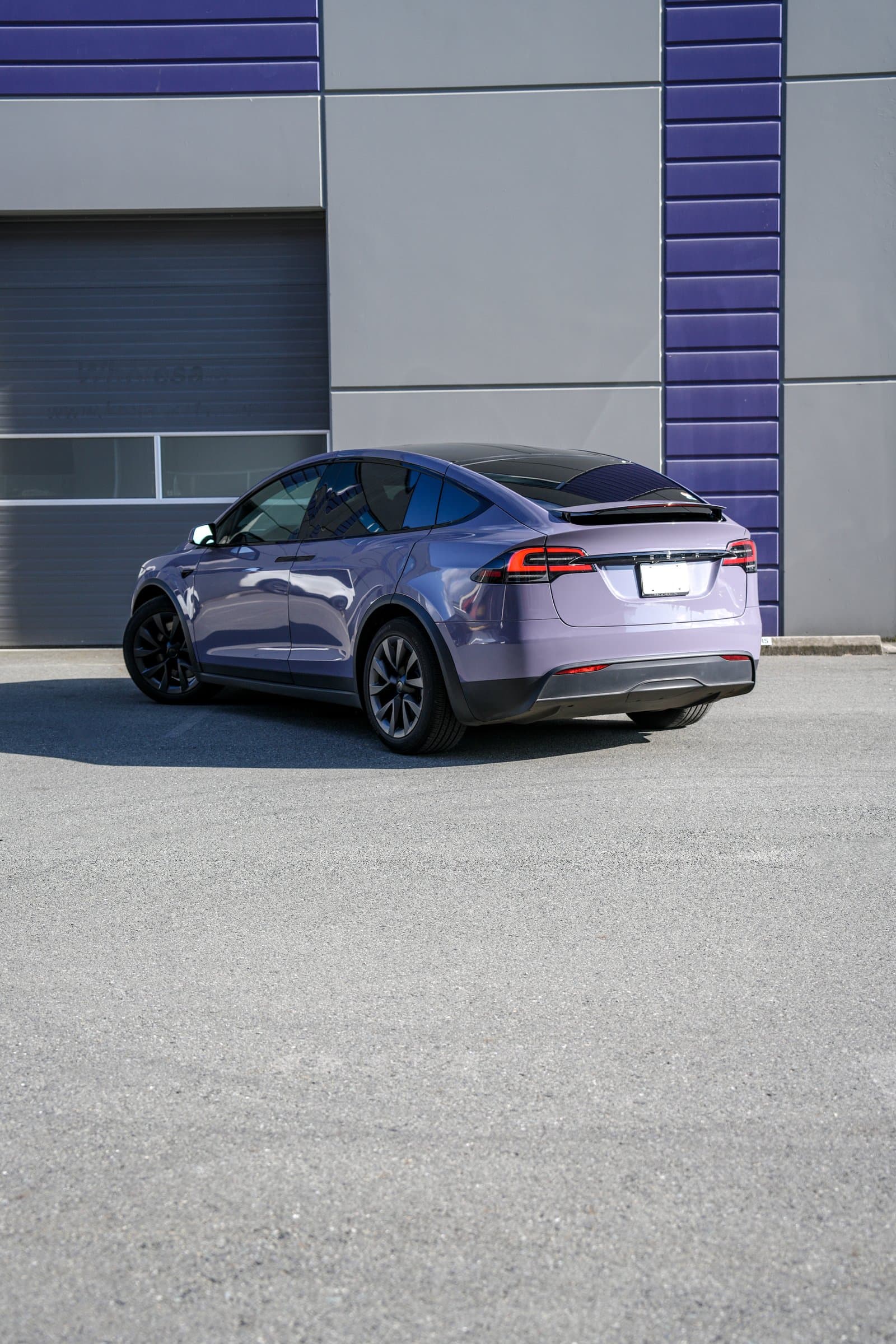
Related project: Tesla Model X — Provence Purple Color Change