
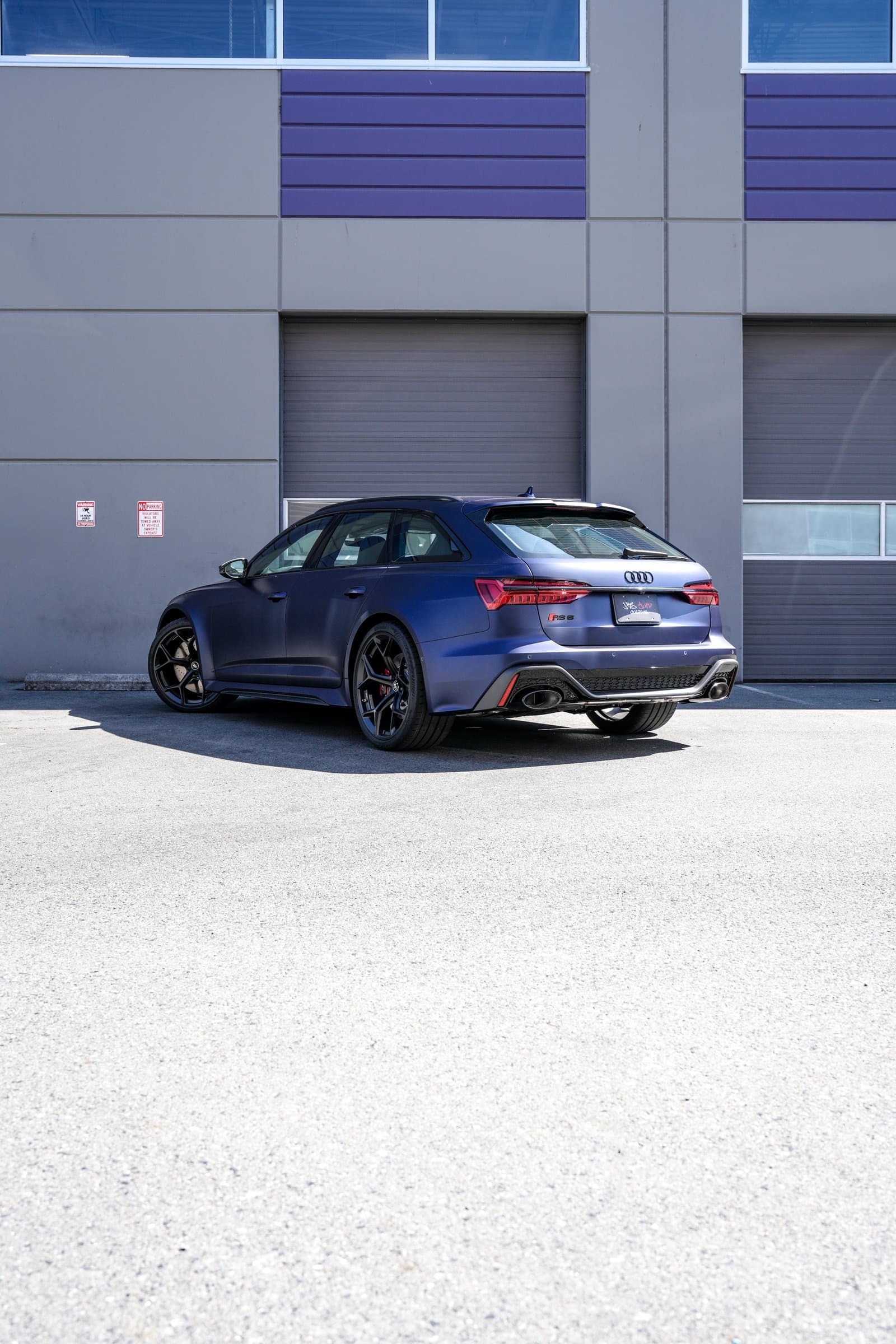
Matte Paint Care in Vancouver: A No-Gloss Guide
Published
Matte paint has gone from a motorsport niche to a mainstream finish. Walk through any Vancouver car meet and you will see multiple matte-black SUVs, satin-finish sports cars, and factory-matte sedans — and within a few years, the difference in condition between the ones that have been cared for and the ones that have not is striking.
The appeal of matte paint is precisely the absence of shine — the flat, even surface that absorbs light rather than reflecting it. That same quality is what makes it unforgiving of the wrong care products. A single wax application can permanently change the texture of a matte finish, and some detailers still do not understand this. This guide covers what actually works.
What Makes Matte Paint Different to Care For
Factory matte finishes — whether clear satin over paint or a matte lacquer applied directly — have one defining characteristic: they have no surface gloss to fill or enhance. Traditional car care products assume a glossy surface. Waxes, polishes, and glaze products work by filling micro-scratches and adding a chemical or physical shine layer. Applied to matte paint, they do exactly what you do not want: they add gloss. Once a glossing product has been worked into the surface, the matte look is altered and is very difficult to restore without a full repaint.
Matte finishes are also more porous than glossy surfaces at a microscopic level. That porosity means they absorb contaminants more readily — road grime, bird droppings, tree sap, and road salt all penetrate the surface more aggressively. They also hold onto these contaminants rather than beading them off, which is why a matte car that has been driven through a salted road looks dirtier for longer than the same car in gloss finish.
Why Vancouver Is Particularly Hard on Matte Finishes
Vancouver's climate compounds every matte paint challenge. The coastal humidity means moisture is almost always present on the car surface, keeping contaminants active rather than allowing them to dry and blow off. The winter road salt season — roughly November through March — applies a salt film to every road surface, and that film transfers directly to the lower body panels. For matte finishes, which absorb rather than repel, the salt film stays bonded to the surface through repeated wet-dry cycles.
Tree sap and pollen are also more active in the Vancouver environment. Spring brings high pollen counts from the surrounding forest, and the same coastal moisture that keeps roads damp also keeps organic contaminants sticky rather than allowing them to dry crusty and brush off. A matte car parked under a tree in East Vancouver for a week in April can develop bonded sap spots that require specialist removal.
What You Can Do at Home — and What to Avoid
The single most important rule for matte paint care: never use a wax, polish, or any product containing filling or glossing agents. This includes virtually all products marketed as quick detailer sprays, many all-purpose cleaners, and almost every product designed to make your car shine. Check the label before using anything new — if it promises a shine boost or a gloss finish, it is not for matte paint.
What does work for home maintenance: a dedicated matte-paint-safe wash product, used with a clean microfibre wash mitt, rinsed using the two-bucket method. Dry with a microfibre drying towel. For bonded contaminants — sap, tar, or stubborn road film — use a matte-specific surface cleaner applied with a microfibre cloth, not a clay bar or any abrasive product.
When Matte Paint Needs Professional Attention
Matte paint protection film is a different proposition from PPF on gloss paint. Because the film surface on a matte car should itself be matte, a poorly installed or low-quality film can look wrong even if it is technically protecting the paint beneath. The film should blend invisibly with the surrounding matte surface — if you can see a film edge or seam on a matte car, it has been done incorrectly.
If your matte car has developed surface contamination that home care cannot resolve — iron fallout bonding to the film surface, discolouration from a product that was not matte-safe, or physical damage to a matte clear coat — bring it to a detailer who specifically works with matte finishes. Matte PPF installation by JRS Auto Customs uses film specifically selected for matte-compatible surface finish.
If you are considering a matte finish on your next car, speak to JRS Auto Customs before you commit. The choice between a factory matte finish, a matte clear bra, and a matte wrap each has different care requirements and different implications for long-term maintenance. Browse our full range of PPF and paint protection services to understand your options.
Related project: Audi RS6 Avant Matte Blue PPF