
Why Paint Correction Matters After a Vancouver Summer
Published
Vancouver's summer is harder on car paint than most owners realise. By late August, the combination of heat, UV exposure, insect residue, tree sap, industrial fallout and road film has chemically bonded to your clear coat in ways a regular wash simply cannot undo. Left untreated, this contamination accelerates oxidation and dulls the finish through the wet months ahead. This guide explains what has happened to your paint over the season, how professional correction addresses it, and why protecting the result before autumn rain arrives is the logical next step.
What Summer Contamination Actually Does to Clear Coat
The contaminants that accumulate over a Vancouver summer are not just sitting on the surface — they are bonded to it. Bug splatter from evening Highway 1 drives contains acidic proteins that etch into the clear coat given time and heat. Tree sap from parks and tree-lined streets is chemically reactive with UV and bakes into a glossy film. Industrial fallout from Port activity and road film from stop-and-go traffic create a grimy layer that swirls and scratches form on top of when you wash with the wrong technique.
You can usually feel it before you can see it. Run your fingertips across a washed panel. If the surface feels rough or gritty, contamination is bonded to the clear coat. In direct light you may notice dull patches, water spots that will not bead off, or swirls that appeared over months of washing. Dark-coloured cars show this most clearly — the paint looks flat rather than deep and reflective.
The Correction Process: What Actually Happens
Paint correction removes a controlled, microscopic layer of clear coat to eliminate surface defects and restore a flat, light-reflective finish. It is done in stages with machine polishers and different grades of abrasive compounds and pads.
Every correction begins with chemical decontamination. An iron remover is applied to dissolve bonded ferrous particles from brake dust and industrial fallout. A clay bar or clay mitt then lifts the remaining surface contamination. This step is not optional — compounding over bonded contamination simply grinds those particles deeper into the paint and makes the damage worse.
After decontamination, the detailer assesses paint thickness with a gauge before any machine work begins. Then correction proceeds in stages based on the condition found: a single-stage polish for moderate paint with light oxidation; a two-stage cut-and-refinement for paint with swirl marks and moderate scratches; and for cars left outdoors all summer with severe oxidation, a wet-sanding stage before compounding.
Protecting Your Paint After Correction
A corrected surface without protection begins to degrade the moment you drive it outside. Rain, road film and salt will re-contaminate the fresh clear coat within weeks. The good news is that Vancouver's two main protection options — ceramic coating and paint protection film — are both highly effective in this climate and address different risks.
Ceramic coating bonds to the corrected paint at a molecular level and creates a hydrophobic surface that repels water, road salt and contaminants. It maintains gloss between washes and significantly reduces the effort required to keep the car clean through autumn and winter.
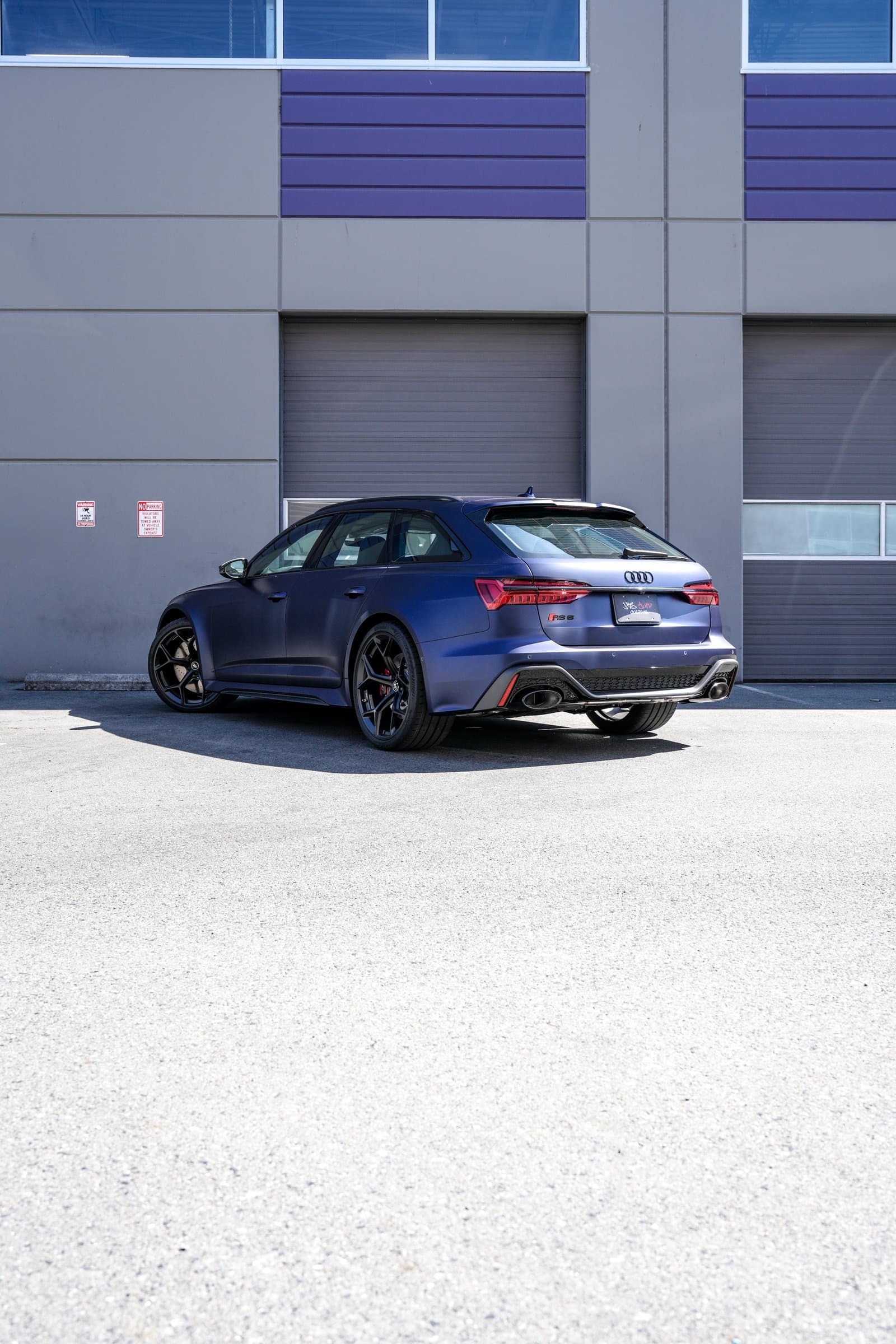
Paint protection film (PPF) adds a physical sacrificial layer over the areas most exposed to impact damage — the front bumper, hood, fenders and mirror caps. It absorbs rock chips, road gravel and salt abrasion that ceramic coating cannot prevent. See our work on an Audi RS6 Avant protected with matte blue PPF as a reference for what this looks like on a daily-driven vehicle.
Many owners use both — PPF on the high-impact areas and ceramic coating everywhere else. Book a ceramic coating consultation to discuss which approach fits your car and how you use it.
Related project: Audi RS6 Avant Matte Blue PPF