Why Paint-Correct Before Autumn Rain Hits Vancouver
Published
Vancouver's summer does more to your car's paint than most owners realise. By late August, as the city shifts from peak sunshine into the damp shoulder season, that damage has had weeks to settle in — and September is the ideal window to address it before autumn rain and shortened daylight make it harder to see and correct.
What Summer Actually Does to Your Car's Paint
The damage isn't just aesthetic. Summer in Vancouver creates a specific set of conditions that chemically bond contaminants to your clear coat. Bug splatter from evening drives on Highway 1, tree sap from Stanley Park routes, industrial fallout drifting from the Port, and road film from stop-and-go traffic — all of it bakes together under UV radiation into a single dulling layer. Detailers call this bonded contamination. A normal wash won't touch it.
How do you know if your car has it? Run your fingertips across a washed panel. If it feels rough or gritty despite being clean, contamination has bonded to the surface. In direct sunlight, you may also see hazing or dull patches — particularly across the hood and roof. Swirl marks accumulated over months of washing become more visible on darker cars as the paint loses its reflective clarity.
What Paint Correction Involves — and What It Removes
Professional paint correction is a multi-stage machine-polishing process that removes a controlled layer of clear coat to eliminate surface defects. Think of it as resurfacing — it restores the flat, smooth base that light needs to reflect off cleanly, returning depth and gloss to the paint.
The process always begins with a thorough wash and chemical decontamination — iron remover breaks down bonded ferrous particles, and a clay bar or clay mitt lifts the remaining surface contamination. This step is essential before any machine work, because compounding over contamination will simply carve those defects deeper into the paint.
The actual correction then follows stages based on the condition of the paint: a single-stage polish removes oxidation and light contamination for moderate condition paint; a two-stage correction (cut followed by refinement) is needed where swirl marks, hologramming, and moderate scratches are present; and for cars left outside all summer with severe oxidation, a wet-sanding stage precedes compounding and polishing.
Protecting Your Paint After Correction
Correction without protection is a wasted investment — UV, road grime, and acid rain will begin re-damaging the fresh surface within weeks. Vancouver drivers have two strong protection options that work in this climate:
Ceramic coating bonds to the corrected surface at a molecular level, creating a semi-permanent hydrophobic barrier that repels water, road salt, and contaminants. It makes the car significantly easier to wash through the wet season and maintains gloss between details.
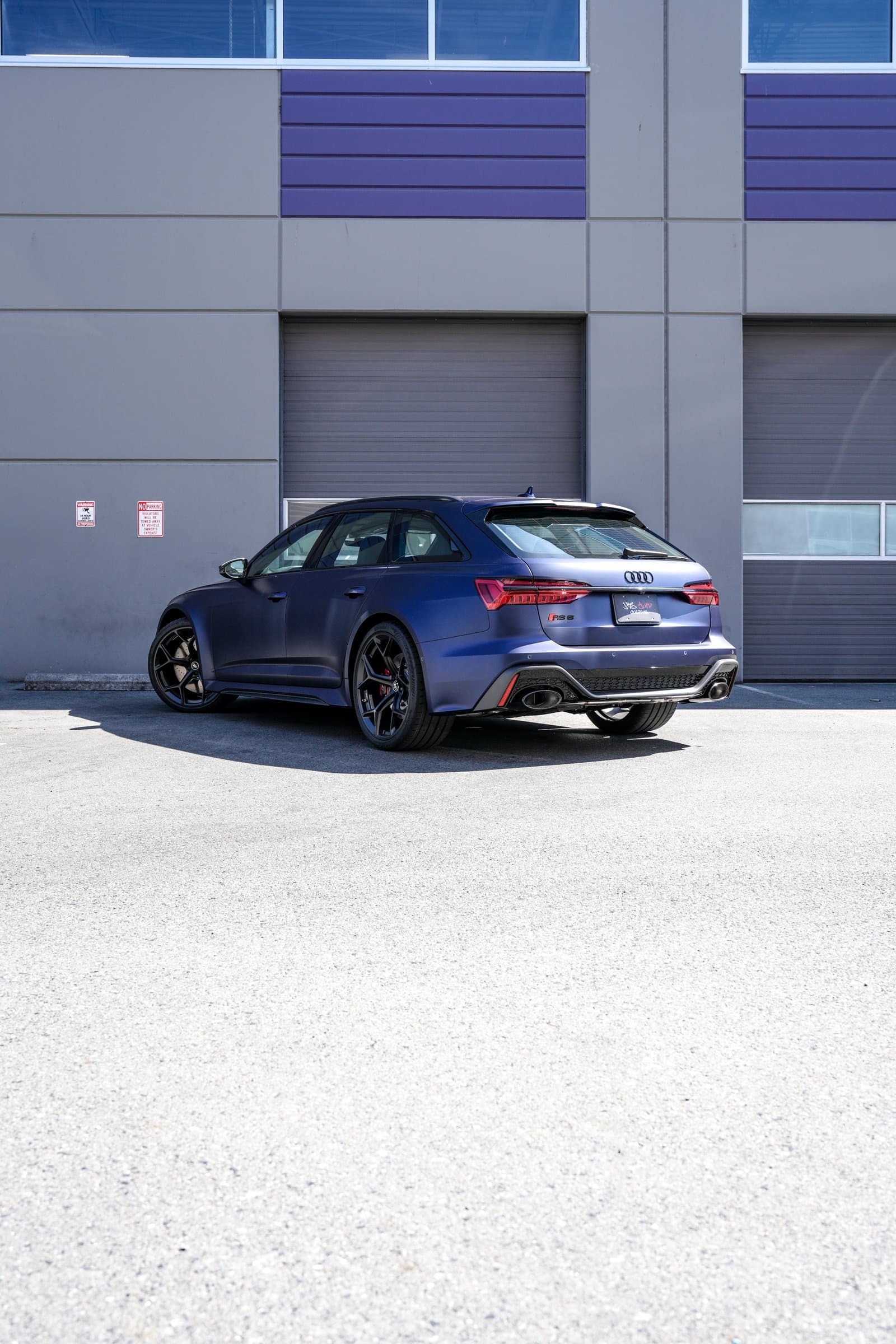
Paint protection film (PPF) adds a sacrificial urethane layer over high-impact areas — front bumper, hood, fenders, and mirrors — that absorbs rock chips, road debris, and salt abrasion through a Vancouver winter. See our work on an Audi RS6 Avant finished in matte blue PPF for a visual reference of what the finished result looks like.
Many owners opt for both: PPF on high-impact panels and ceramic coating everywhere else. Book a ceramic coating consultation to assess your car and get a tailored recommendation for the season ahead.
Timing Your Correction Before the Wet Season
September is an underrated window for correction work in Vancouver. The weather is typically dry and warm, which gives compounds and coatings the best conditions to perform and cure properly. Once October arrives with heavy rain and shortened daylight, washing, polishing, and coating all become more dependent on indoor space — and shop availability tightens as other drivers have the same idea.
Before booking, ask the detailer what they find during the decontamination stage — a quality shop will show you the contamination lifted from the paint surface and explain the correction stages needed based on what they find. If your car has had prior repainting or touch-ups, a paint depth gauge reading is essential before any machine work begins.
If your car is already protected with ceramic coating or PPF, a maintenance detail with decontamination wash will restore the beading and gloss without full correction. Either way, the goal is the same: head into autumn with paint that is clean, protected, and ready for whatever the North Shore roads and Highway 1 throw at it.
Related project: Audi RS6 Avant Matte Blue PPF