The Hidden Contaminants Bonded to Your Car Paint
Published
After a Vancouver winter, most car owners know their paint looks tired. What many do not realise is that what they are seeing is not just accumulated road film — it is a layer of chemically bonded contaminants that a standard wash does not remove. Understanding what is on your paint is the first step to getting it off properly.
What Vancouver's Climate Actually Deposits on Your Paint
Vancouver's environment produces several distinct types of paint contamination that are worth understanding individually. The most damaging is iron fallout — particulate from brake pads and railway brakes — which is particularly prevalent near the SkyTrain lines, on buses and taxis with heavy braking patterns, and on any vehicle that parks regularly near transit infrastructure. Iron particles are sharp and ferrous; they embed in the paint surface and oxidise, creating small rust spots that show as tiny orange or brown dots across light-coloured paint.
Industrial and traffic fallout is the second category. Combustion byproducts, particularly from older diesel vehicles and commercial traffic, deposit a mix of metallic and carbon particulate on all vehicle surfaces. In areas like the Port of Vancouver, near the rail yards in Coquitlam, or along the highways with heavy truck traffic, this deposition is measurably heavier than in lower-traffic residential neighbourhoods.
Biological contaminants — tree sap, bird droppings, and pollen — are the third category, and Vancouver's tree canopy and bird population make them unavoidable for any car parked outdoors. Tree sap is particularly damaging because it is acidic and bonds to the clear coat through a chemical reaction that intensifies in sunlight and heat. Bird droppings are similarly caustic and can etch the clear coat within hours in warm conditions. Both are invisible when fresh and become visible only after they have bonded and dried.
Why a Regular Wash Does Not Remove These Contaminants
A standard car wash — even a thorough two-bucket hand wash — removes surface dirt and road film. It does not remove chemically bonded iron particles, industrial fallout, or dried tree sap because these contaminants have formed a chemical or mechanical bond with the clear coat surface. The only way to break these bonds is through a dedicated decontamination process.
The other reason contaminated paint feels rough to the touch even after washing is that these particles sit proud of the surface. When you run your clean hand over the paint after washing and it feels gritty or sandy, that texture is the contamination layer. No amount of washing will smooth it — it requires a physical or chemical removal step.
What the Decontamination Process Actually Involves
Paint decontamination is a multi-step process. The first step is an iron remover — a chemical treatment that reacts with ferrous iron particles and turns the contaminated surface purple or black as it dissolves the iron. This step targets brake dust, rail dust, and other metallic fallout. It is applied to the paint surface, allowed to react for the specified dwell time, and then rinsed thoroughly.
The second step is a clay bar treatment — a lubricated clay compound that is worked across the paint surface and physically picks up bonded contaminants that survived the iron remover. A clay bar of the right grade will glide smoothly over clean paint and drag visibly loaded debris from contaminated paint. After the clay bar pass, the surface should feel completely smooth to the touch.
The third step — often skipped but worth doing — is a panel wipe or IPA wipe to remove any residual lubricants or chemicals from the previous steps, leaving the paint surface completely clean and ready for any surface protection such as wax, sealant, or ceramic coating. If you are planning to apply any protection after decontamination, a clean and dry surface is essential for proper bonding.
If you are wondering whether your car's paint needs decontamination, run your fingertips across the paint surface after a thorough wash. If it feels rough, gritty, or sandy, decontamination will restore a smooth surface. Bring the car in and we can assess the contamination level, perform the full decontamination process, and advise on whether a ceramic coating or paint protection is worth applying on top. See our maintenance detailing services.
Decontamination is also a preparatory step before applying any paint protection — ceramic coating, PPF, or even a quality wax. A contaminated surface will not bond properly with protection products, which means the protection wears unevenly and fails sooner than it should. Coming in for a decontamination before any protection work is one of the best things you can do for the longevity of the coating or film on your car.
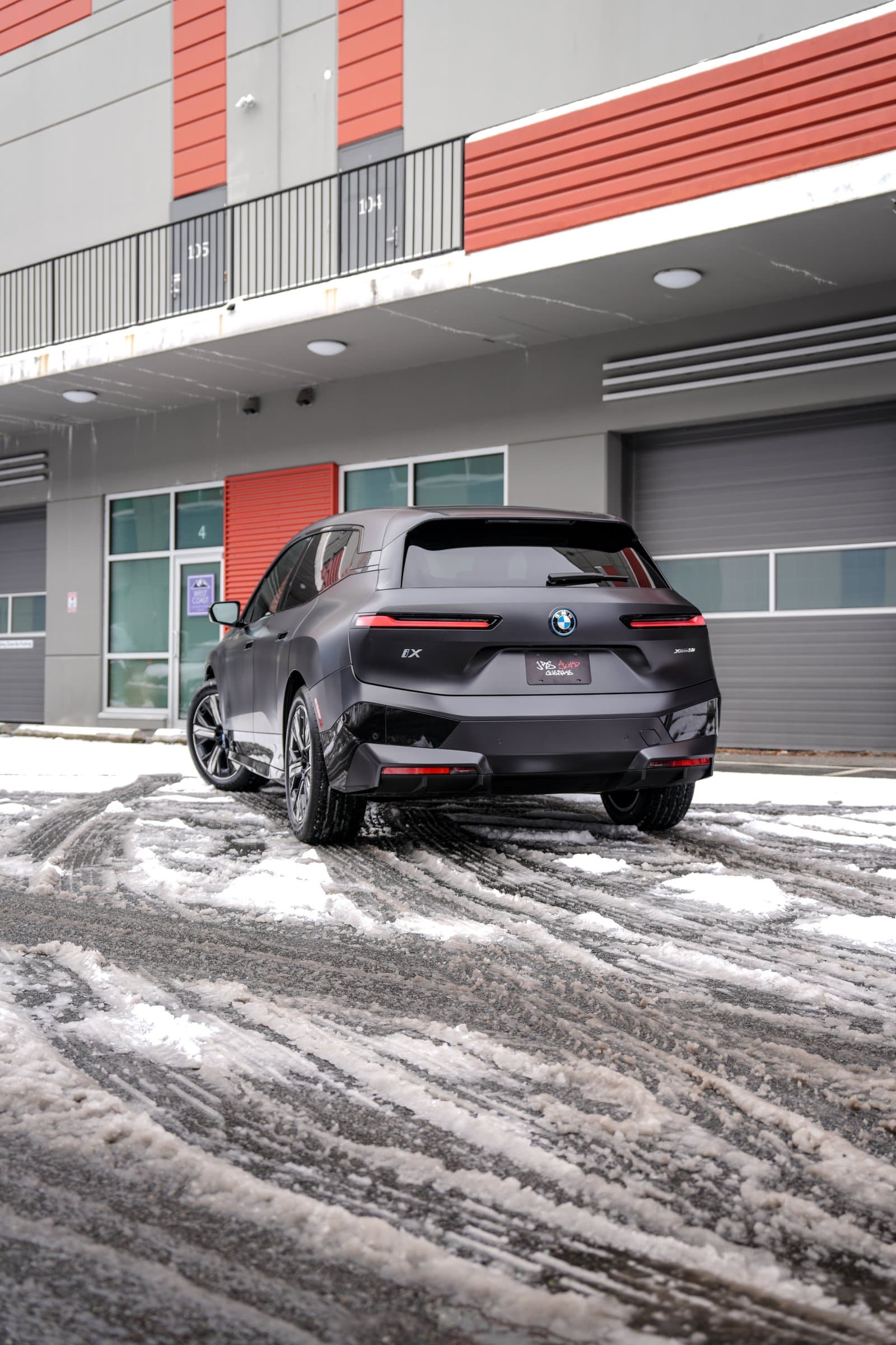
Related project: BMW iX Matte PPF