
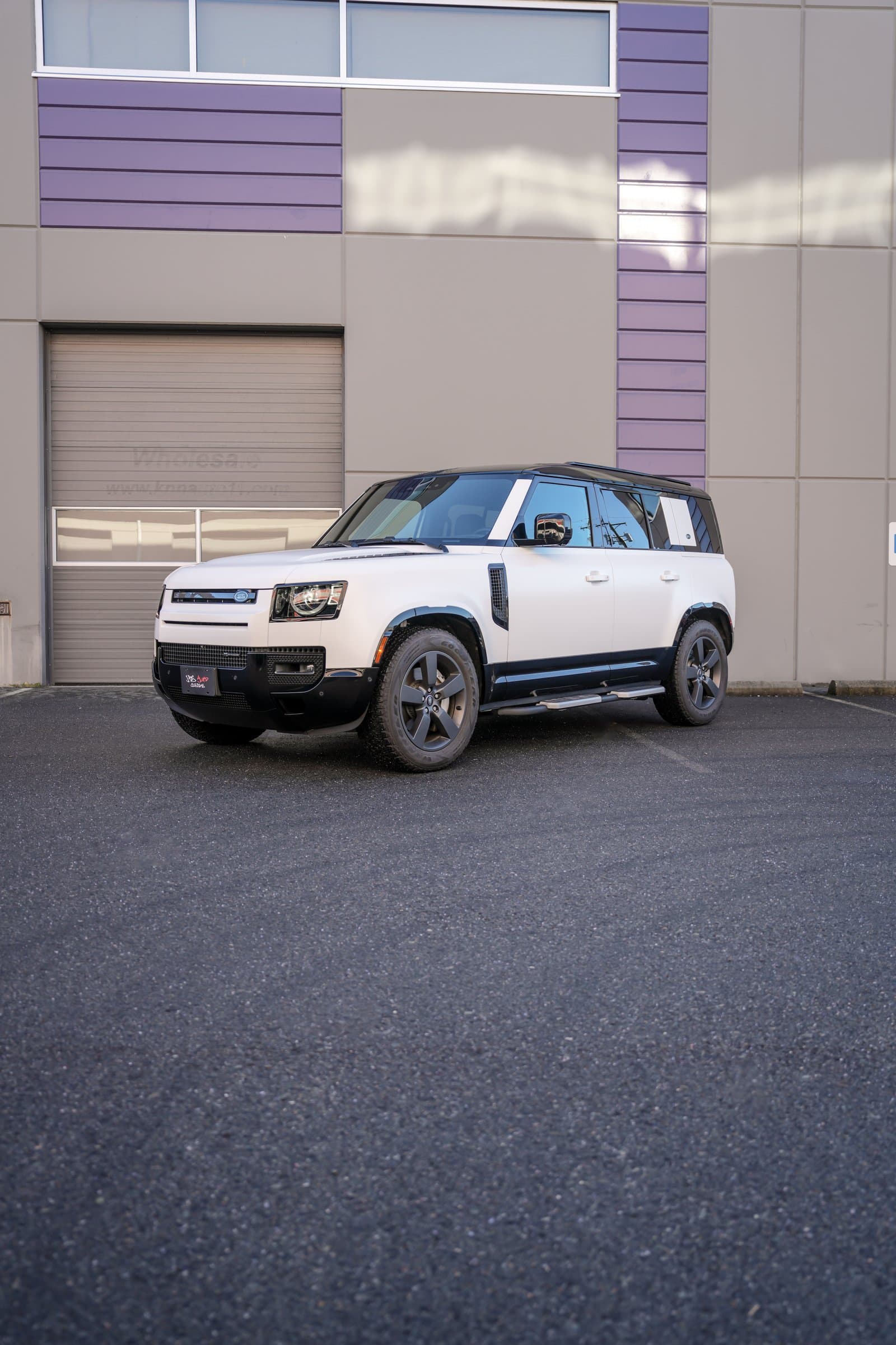
Why October Is the Best Time to Get PPF in Vancouver
Published
October in Vancouver means fewer daylight hours, more rain, and the first visible road grime on your front bumper. It also means the start of the window where PPF installers get booked out for weeks. If you have been thinking about paint protection film for your daily driver, this is the season to make the call — and here is why.
What Winter Actually Does to Unprotected Paint
Road salt is the main culprit. Applied liberally on Highway 1, Marine Drive, and most Lower Mainland arterials from roughly November through March, salt dissolves into a brine that sits on your lower panels and wheel arches. Brine is hygroscopic — it stays wet longer than plain water, keeping salt in contact with your paint finish for hours after a drive. On unprotected paint, this extended contact accelerates oxidation and starts the pitting process that eventually requires paint correction to reverse.
Sea-salt air compounds the issue for anyone driving near the water. Vancouver's marine climate means salt aerosols are present even on dry days, depositing fine salt particles on body panels that bond to the surface when the next rain arrives. The combination of road salt and marine salt on a daily commute is something most paint finishes were not designed to handle indefinitely without protection.
Why the Front End Takes the Most Damage
On a daily driver, the front bumper, leading edge of the hood, and the forward half of each fender are the zones that see the highest rate of damage. This is where road film deposits first, where stone chips arrive from other vehicles, and where salt brine pools in panel recesses. By March, an unprotected daily driver in Vancouver typically shows front-end paint degradation that was not visible in October.
Front-end PPF — covering the hood, fenders, bumper, and mirror caps — addresses this exactly. The film takes the stone chips and salt exposure that would otherwise land on your factory paint. It does not eliminate the need to wash your car, but it eliminates the part of the damage that washing cannot reverse.
Partial vs. Full-Body Coverage for a Daily Driver
Most daily drivers benefit most from front-end coverage. That single investment protects the area that accumulates damage fastest and where damage is most visible from a conversational distance. Side skirts, door panels, and rear quarter sections are worth adding if you frequently park in tight spaces or drive on roads with loose gravel surfaces, but they are not the priority for a first PPF installation.
Full-body coverage makes more sense for vehicles that will be kept long-term, higher-value cars where the protection cost is a smaller fraction of the asset value, or vehicles with matte or satin factory finishes where even paint correction requires a respray. For the practical daily-driver calculation, front-end coverage is the first step.
What to Do Before the Season Changes
Book early. PPF installers in Vancouver tend to get booked out four to six weeks ahead during the October-to-December window, when every car owner who had a stone chip or winter-salt scare from the previous season is making their booking. Calling now — in September or early October — means a shorter wait and installation before the worst of the salt season begins.
Before installation, have the vehicle decontaminated. Any existing iron deposits, road film, or tar need to be removed before the film goes on, or they will be sealed under the adhesive. JRS includes a full decontamination prep step as standard before every PPF installation. Book a PPF consultation with JRS Auto Customs.
Caring for PPF Through a Vancouver Winter
PPF does not require special care in winter, but a few habits help. Hand washing with a pH-neutral shampoo every two weeks through the rainy season removes salt deposits before they sit long enough to affect the adhesive around film edges. Avoid pressure-washing within approximately five centimetres of film edges for the first month after installation. If the film does pick up a minor cut or edge lift during winter, addressing it early prevents it from spreading — a small repair is far less costly than a full panel re-wrap.
Related project: Land Rover Defender Matte White PPF