
PPF or Ceramic Coating Aftercare: Your First 30 Days
Published
You have just picked up your car from the shop. The finish looks incredible — deeper gloss, smoother surface, and that quiet confidence that comes from knowing the paint is protected. Whether you went with paint protection film, ceramic coating, or both, the investment is real and so is the need to look after it properly in the weeks that follow. Most of the mistakes Vancouver owners make after a protection service are avoidable, and they tend to happen in the first 30 days.
Why the First 30 Days Are Different
Both PPF and ceramic coating need time to fully cure and bond to the surface. With ceramic coatings, that cure period can range from a few days to two weeks depending on the product and the shop conditions. During that window, the coating is still settling — exposure to harsh chemicals, automated car washes, or high-pressure rinses with aggressive soaps can disrupt the bond before it locks in. PPF uses adhesive to cling to the paint, and that adhesive continues to cure around the edges and in the seams for up to 30 days. Pulling at a loose edge too early can lift the film.
What to Avoid in the First Month
Automated car washes are the most common culprit. The brushes and pre-soak chemicals used at many tunnel washes are too abrasive for a curing coating and can introduce micro-scratches to a film that has not fully settled. Touchless washes are gentler but still worth avoiding for the first two weeks if the soap is acidic or contains harsh detergents.
Vancouver road crews use calcium chloride and magnesium chloride de-icers through the winter months. These chemicals are highly corrosive and will sit on the lower panels and wheel arches of your car if they are not rinsed off regularly. After a protection service is when your car is most vulnerable if you skip that rinse — the film or coating is still curing and the chemical bond can be compromised by prolonged salt exposure.
Avoid waxes, sealants, and any aftermarket spray-on products for at least the first 30 days. These can interfere with the curing process of the ceramic coating and may cause hazing or spotting under the film edge of the PPF. If you want to add a topper product after the cure period, ask the shop what they recommend for your specific coating or film. Learn more about our ceramic coating services and PPF services at JRS Auto Customs.
Do not pressure-wash the edges of PPF in the first few weeks. The jet of water forced under a not-yet-cured seam can lift the film. Keep the pressure low and the nozzle at least a foot away from the edges if you are rinsing salt off.
What to Do Instead
Rinse the car with plain water after heavy rain or when salt is visible on the roads. A simple garden hose is enough — no soap needed for routine salt removal. If you do wash it, use a pH-neutral car shampoo and a soft microfibre wash mitt. Two buckets if you can manage it. Dry with a clean microfibre towel or a forced-air blower to avoid water spots.
Book a quick follow-up inspection at the shop around the three-to-four-week mark. This is standard practice at JRS Auto Customs and it gives the technician a chance to check for any lifting edges, contamination caught under the film, or areas where the ceramic coating may have flashed unevenly. Catching these early means they get corrected at no extra cost.
Park indoors if you can, particularly in the first two weeks. This is not always practical in Vancouver, but a covered carport or parkade dramatically reduces exposure to bird droppings, tree sap, and road grime while the coating is curing.
When to Call the Shop
If a loose edge appears on the PPF, do not try to press it back down yourself. Bring it in — the shop can re-stretch and re-seat that section cleanly. Trying to fix it with aftermarket adhesives or tape usually makes it worse. If water has pooled under the film in a panel, that also needs professional attention within a few days before it leaves a permanent watermark on the paint.
For Vancouver drivers who use their car daily through all seasons, the first 30 days of aftercare set the tone for how well the protection performs over the next several years. A little patience and a garden hose go a long way.
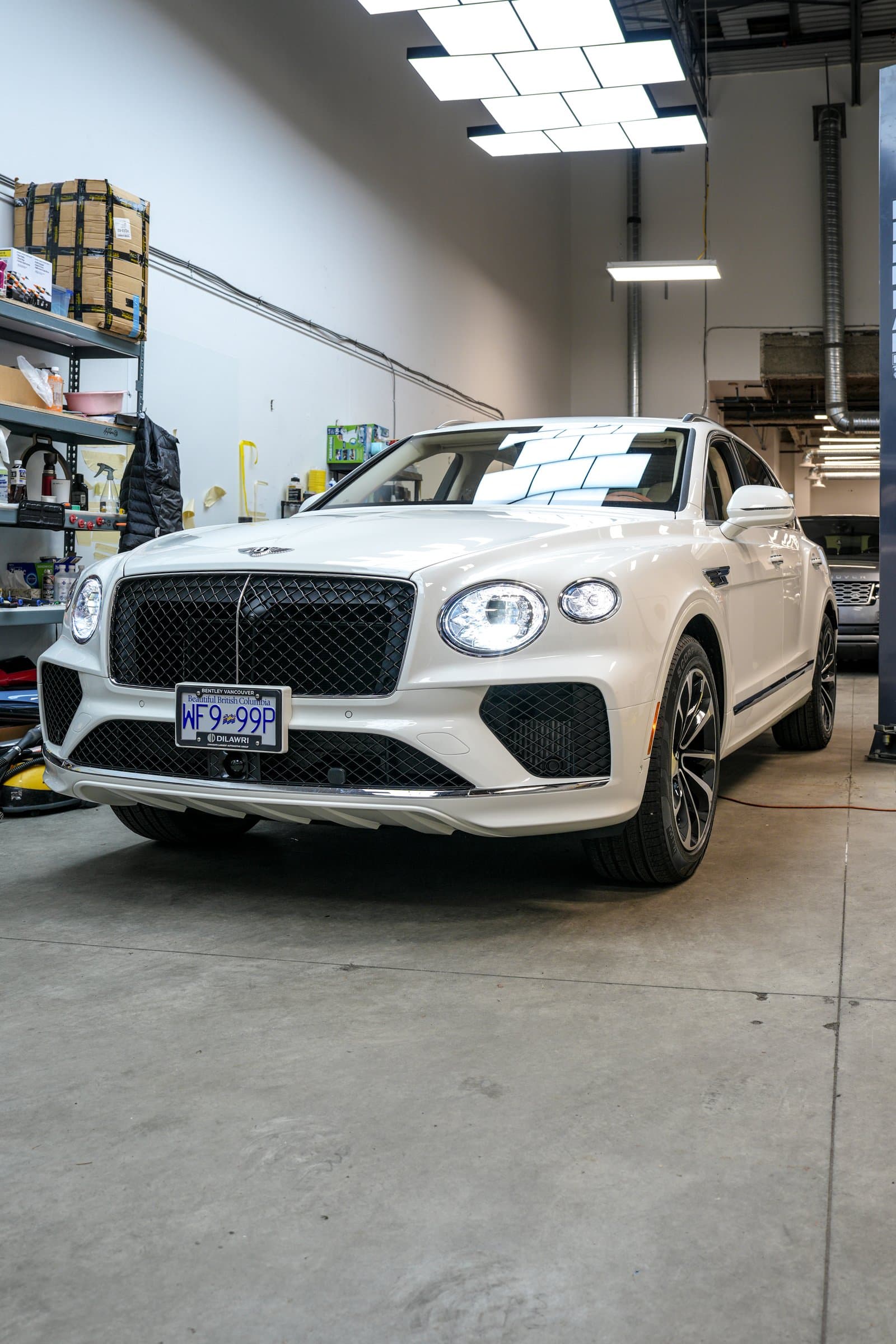
Related project: Bentley Bentayga — Full Clear PPF