
TPMS After Tyre Work: What Vancouver Drivers Need to Know
Published
The amber tyre pressure warning light on your dashboard is one of the most commonly ignored warnings in Vancouver. Drivers assume it means the tyre is simply low — and it might. But if you have just had your tyres rotated, a new set of sensors installed, or winter tyres fitted onto rims, the light may be telling you that the tyre pressure monitoring system needs to be recalibrated, not that your tyre is going flat. Understanding the difference saves you an unnecessary trip to the pump and, more importantly, ensures your TPMS is doing its job when you need it.
What TPMS Is and Why It Matters in Vancouver
The Tyre Pressure Monitoring System uses sensors inside each tyre to measure air pressure in real time and alert the driver if pressure drops below a set threshold — typically 25% below the vehicle's recommended pressure. In Vancouver's climate, where autumn temperature swings can shift tyre pressure by several PSI over days, TPMS is a genuine safety system, not a dashboard novelty. A tyre that loses pressure progressively is harder to detect by eye, and underinflation is one of the leading causes of tyre blowouts on the highway. If your system is giving incorrect readings after a tyre service, it cannot protect you.
Direct vs. Indirect TPMS: Why It Matters for Your Service
Most modern vehicles sold in Canada use direct TPMS: a battery-powered sensor inside each tyre valve stem transmits pressure data to the car's computer. When you change a sensor — for example when upgrading to a set of sensors with better battery life, or when switching to winter tyre rims with a dedicated sensor set — the new sensors need to be registered in the vehicle's system. Failure to register new sensors leaves the car listening to the old, removed sensors and ignoring the new ones entirely.
Indirect TPMS, found on some older and certain European models, works differently: it uses the wheel speed sensors from the anti-lock braking system to detect when a tyre is spinning at a slightly different speed — a proxy for lower pressure. Indirect systems require recalibration after a tyre rotation to re-map which sensor corresponds to which corner of the car. If the system is not relearned after a rotation, it will monitor the wrong positions and flag errors incorrectly.
When TPMS Recalibration Is Needed
The TPMS light coming on after any of the following situations means a recalibration or sensor registration is likely needed, not a slow leak: a tyre rotation (especially on an AWD or 4WD vehicle where tyre rotation position matters for the drivetrain), installation of new TPMS sensors, swapping from summer tyres on bare rims to winter tyres on separate rims, adding air to a tyre after a pressure adjustment, or resetting the system after a tyre repair. On vehicles with direct TPMS, simply driving for a few minutes after adjusting tyre pressure will often allow the system to re-learn the new pressure. On vehicles with indirect TPMS, or after a full sensor replacement, a diagnostic tool is required.
AWD and 4WD Vehicles: An Extra Consideration
If you drive an Audi, BMW, Mercedes, or any vehicle with all-wheel drive in Vancouver, a tyre rotation requires more than just TPMS recalibration. AWD vehicles are sensitive to tyre circumference differences between corners — if the four tyres are not all at the same pressure and close to the same level of wear, the centre differential can experience additional stress. After any tyre service on an AWD vehicle, it is worth confirming that the tyre pressures are balanced across all four corners and that the TPMS system has correctly registered each sensor position.
What a Shop Does That You Cannot Do at Home
Most vehicles have a TPMS reset procedure accessible through the dashboard menu — but a reset does not register new sensors or diagnose a faulty one. A diagnostic TPMS tool can read the unique ID of each sensor, confirm battery levels, identify which sensor has failed, and register replacement sensors to the vehicle's computer. This is particularly relevant for owners who have purchased a second set of winter rims with a separate set of sensors: the sensors need to be registered to the vehicle separately from any winter tyre swap. If you are unsure whether your system has been correctly reset after any tyre work, come by JRS Auto Customs and we can check it with our TPMS diagnostic equipment. We also handle full services and can advise on whether your sensors need replacement.
Book TPMS Service in Vancouver
If your TPMS light is on and you have had tyre work recently, do not ignore it. A quick diagnostic check will tell you whether the system is registering all sensors correctly, whether the batteries in your sensors are running low, and whether a full recalibration is needed. Contact JRS Auto Customs in Vancouver to book a TPMS service appointment.
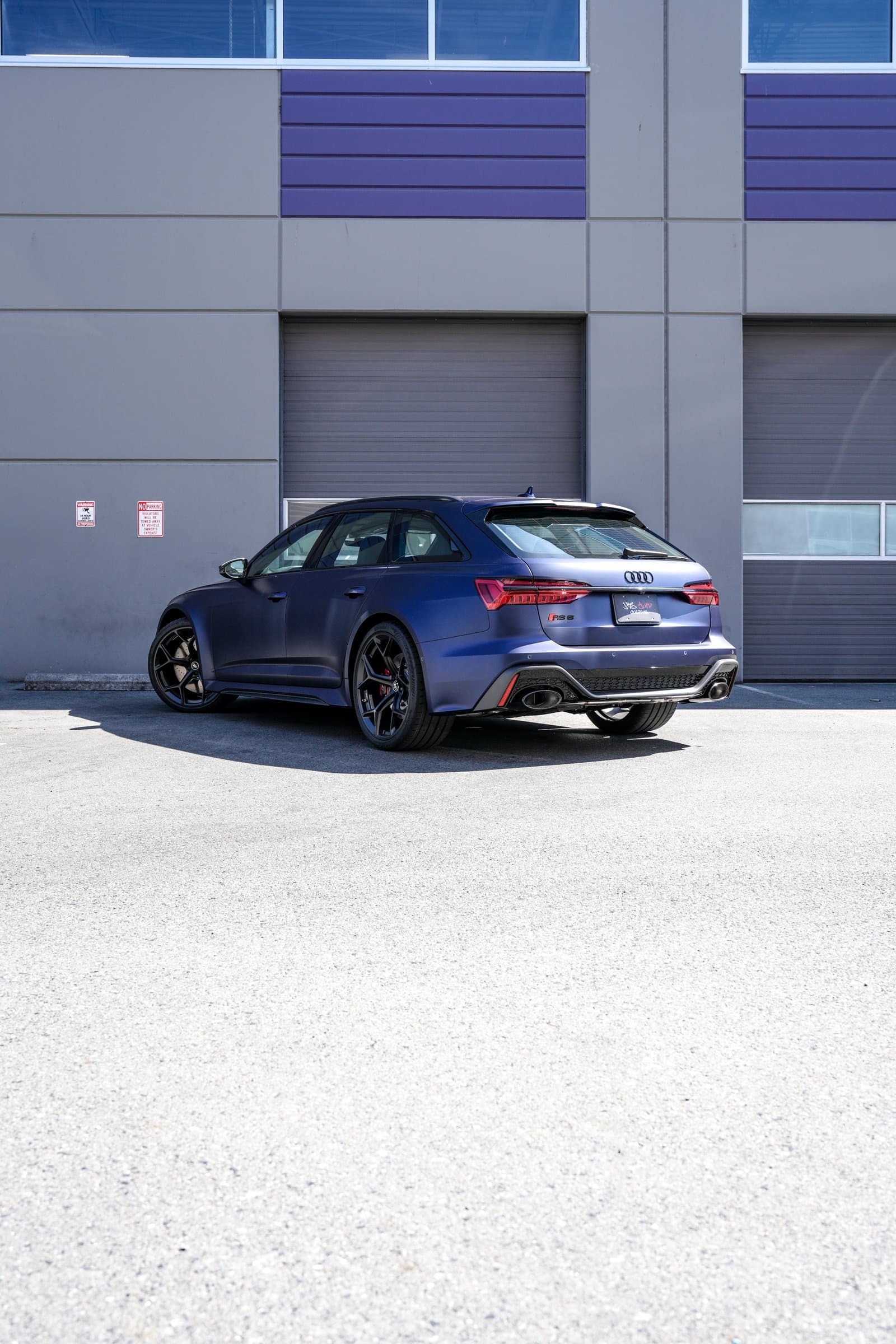
Related project: Audi RS6 Avant Matte Blue PPF