
What Tyre Age Actually Means for Safety in Vancouver
Published
Tyre age is one of those things that does not announce itself. A tyre that is six years old and has plenty of tread depth can look adequate on a visual check and still be a safety risk. Rubber degrades over time even when the tyre is not being used, and in Vancouver's climate — where temperature swings between mild winters and hot summers accelerate the chemical breakdown of the rubber compound — age is a more significant factor than most drivers realise.
How Tyre Age Actually Works
The tyre date code — a four-digit DOT code on the sidewall indicating the week and year of manufacture — is the most reliable way to determine age. A tyre marked DOT 0222 was manufactured in the second week of 2022. That tyre is now four years old. Four-year-old tyres with good tread depth still show measurable oxidation in the rubber compound, reduced flex recovery after compression, and harder behaviour in cold temperatures compared to new tyres of the same model.
The BC provincial guideline is a maximum of 10 years from manufacture date regardless of tread depth. Transport Canada and most tyre manufacturers recommend replacement at six to 10 years. In Vancouver's climate, where the thermal cycling between seasons is significant, the six-year mark is the more appropriate target for replacement on performance and all-season tyres.
What Degraded Rubber Means in Practice
On dry summer roads, an older tyre with adequate tread depth handles acceptably. The performance difference between a new tyre and a five-year-old tyre of the same model is most apparent under hard braking, in emergency lane-change maneouvres, and in wet conditions. The older tyre's reduced flex recovery and compromised compound hardness mean it aquaplanes earlier, takes longer to stop, and provides less grip at the limit than the new tyre.
In winter conditions specifically, the difference becomes a safety issue rather than a performance one. Older all-season tyres lose their ability to maintain flexibility in cold temperatures — the rubber compound that provides grip in cold conditions has degraded and no longer performs as designed. This is not visible on inspection; the tread pattern may look adequate. The performance gap only becomes apparent in an emergency braking situation on a cold wet road.
Storage Makes a Difference
Tyres stored outdoors degrade faster than tyres stored in a garage, even if the garage is not climate-controlled. UV exposure, rain, and temperature cycling accelerate rubber oxidation. Tyres that have been stored on an outdoor vehicle over multiple seasons degrade at the same rate as tyres that have been driven, because the degradation is primarily chemical, not mechanical.
Tyres on a stored car — a classic car, a seasonal vehicle, or a second car that sits through the winter — should be checked at minimum annually, and replaced at six years regardless of how they look. The storage environment should be cool, dry, and away from direct sunlight. Ozone-generating equipment should not be stored in the same space.
What to Check and When to Replace
The practical inspection checklist is straightforward: find the DOT code on the sidewall and calculate the age from the manufacture date. If the tyre is six years old or more, plan to replace it before the next winter season regardless of tread depth. Check for sidewall cracking — fine cracks in the rubber between the tread grooves and around the sidewall are a sign of oxidation that confirms the tyre is past its safety window. Check for uneven wear patterns, bulges, or cuts in the tyre body.
Tread depth is the other variable. The legal minimum in BC is 1.5mm. However, tyre manufacturers and BCAA recommend replacement at 3mm for winter tyres and 4mm for all-season tyres, because below these thresholds the tyre's ability to evacuate water and maintain grip in wet conditions degrades significantly. A new tyre at 8mm will perform noticeably better than one at 5mm even if both are legally within limits.
JRS Auto Customs can advise on tyre condition at any inspection. If replacement is needed, the team handles tyre fitting and balancing as part of the service. Browse the tires service page to see what is available and what the replacement process involves.
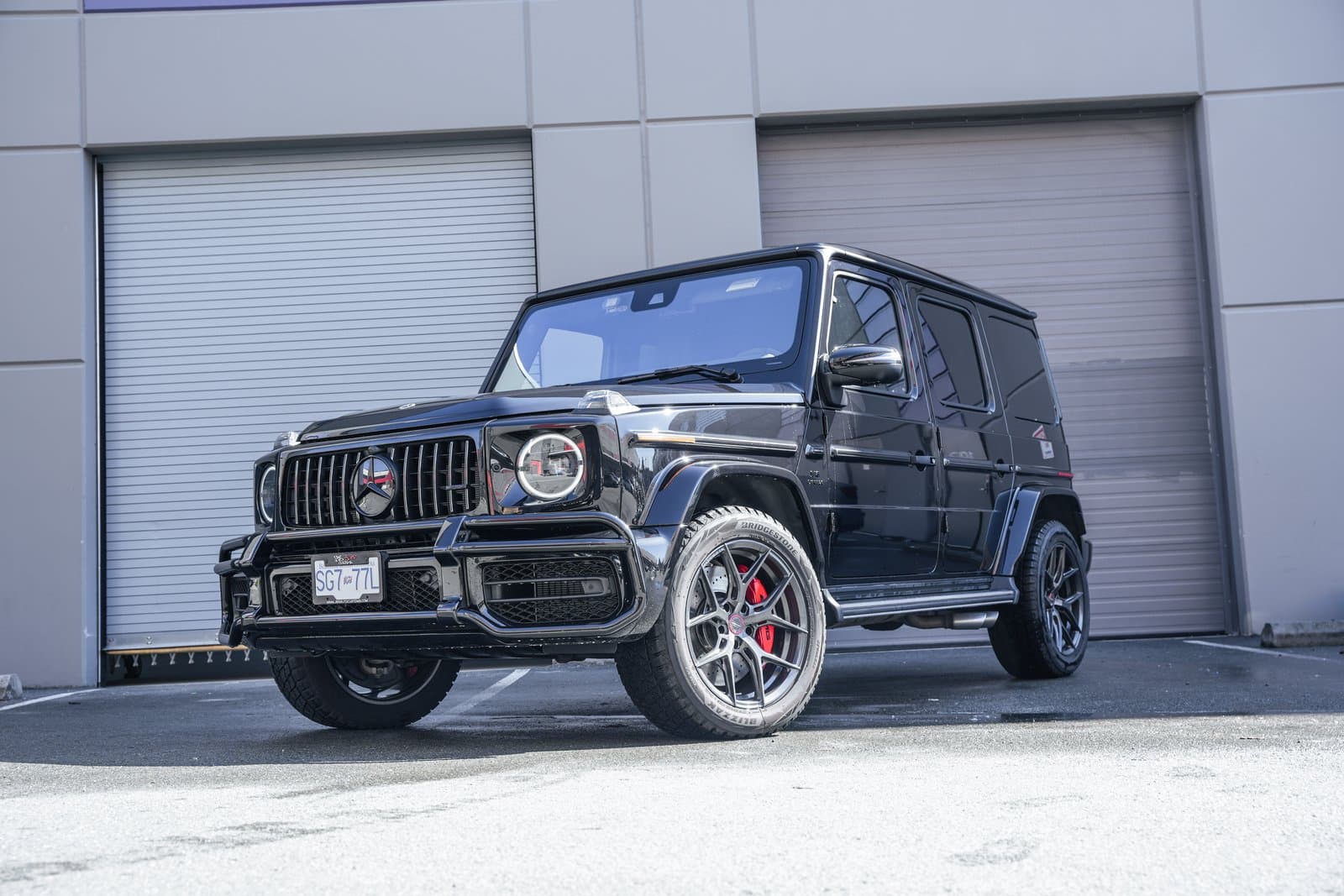
Related project: 2022 G63 AMG — 20" Vossen HF5 Gunmetal Wheels with Bridgestone Winter Tires