
What to Keep in Your Car for Vancouver's Wet Season
Published
Vancouver's wet season is not a single dramatic event. It is months of drizzle, weeks of heavier rain, and the occasional storm that floods low-lying streets. Most drivers adapt their behaviour when the weather turns — slower speeds, more following distance — but the cars themselves often arrive at spring with damage that a few small items kept in the vehicle could have prevented entirely.
Why the Wet Season Is Harder on Cars Than Drivers Realise
The issue is not the rain itself on a driven car. It is what rain does when the car is parked, and what driving through it repeatedly does to the small things that keep a car functional. Wet shoes and clothing introduce moisture into the cabin every commute. Wet roads splash contaminated water into wheel arches, door seals, and underbody components. The combination of road salt, moisture, and temperature fluctuation accelerates corrosion in hidden areas.
Most of the damage accumulates invisibly through the season and becomes apparent only in spring: stained carpets, corroded battery terminals, fogged headlights, and door locks that refuse to work on cold mornings. Some of this is inevitable; much of it is preventable with a small kit kept in the car.
The Wet-Season Driving Kit
A few specific items make a meaningful difference through the wet months. None of them are expensive or difficult to maintain.
Microfibre cloths — several of them — are the single most useful item in wet season. They absorb moisture quickly, do not scratch paint or glass, and can be used for windows, mirrors, light lenses, and interior surfaces. Keep them in a sealed bag so they stay dry. A wet microfibre left loose in the car is useless.
A quality rain poncho or compact umbrella stored under the front seat means you can step out to clear a licence plate, check a tyre, or deal with a minor issue without getting soaked and then getting into a wet car. The combination of a wet driver and a wet car interior is the fastest way to develop the damp-smell problem described in our other posts.
Silica gel packs — the kind that come in product packaging — are genuinely useful in a car. Placed under the front seats and in the footwells, they absorb moisture from the cabin air over days and weeks. Replace them every few months through winter. A small container of road salt absorber (available at automotive shops) placed in the footwell does the same job more aggressively for cars with a chronic damp problem.
A torch with fresh batteries and a small reflective vest are both practical and legally sensible. In the event of a breakdown on a dark, wet road, being visible to other traffic is the first priority. A headlamp is even more useful than a handheld torch because it keeps both hands free.
What to Check and Refresh Each Week Through Winter
A weekly 30-second check through the wet months prevents the small problems from becoming expensive ones. Wipe down the door seal rubber around all doors — moisture and grit collect in the seal groove and causes the seals to degrade faster. A dry cloth run along the seal each time you refuel is enough.
Check that the windscreen washer fluid reservoir is topped up with a winter-appropriate fluid — summer-rated fluid freezes at temperatures well above what Vancouver experiences, and an empty washer bottle on a road covered in grit is genuinely dangerous.
Run the climate control on heat for ten minutes once a week, even if you do not need it warm. This drives moisture out of the HVAC system and prevents the mildew smell that develops when the evaporator stays damp through an entire wet season without being dried out.
What to Do When You Get In After a Heavy Rain
The first thing to do after driving in a heavy rain is open all the doors and — if possible — leave them open for a few minutes to allow the cabin to breathe. This is especially important if you have been parked in a covered parkade through a rain event: the temperature difference between the cold, wet exterior and the relatively warm interior causes condensation to build up on every surface.
If the carpets are damp — especially the front footwells, which get wet from shoes — pull the floor mats out and dry them separately. Do not leave damp mats sitting on a damp carpet. A wet vac or a carpet dryer is worth having if the car regularly accumulates moisture. For occasional damp, silica gel packs are sufficient.
When to Act Now
If the car already has a damp smell — even a slight one — the wet season ahead will make it significantly worse. Acting before the heaviest rains arrive limits the amount of moisture the interior absorbs through the season. A professional interior detail that extracts existing moisture and treats biological buildup is the most effective starting point.
If the car is currently fine, keeping the small kit described above maintained through October to March costs almost nothing and prevents most of the small-damage issues that show up in spring.
For more on protecting your car through Vancouver seasons, see our daily-essential services or get in touch to discuss an interior detail before the wet season takes hold.
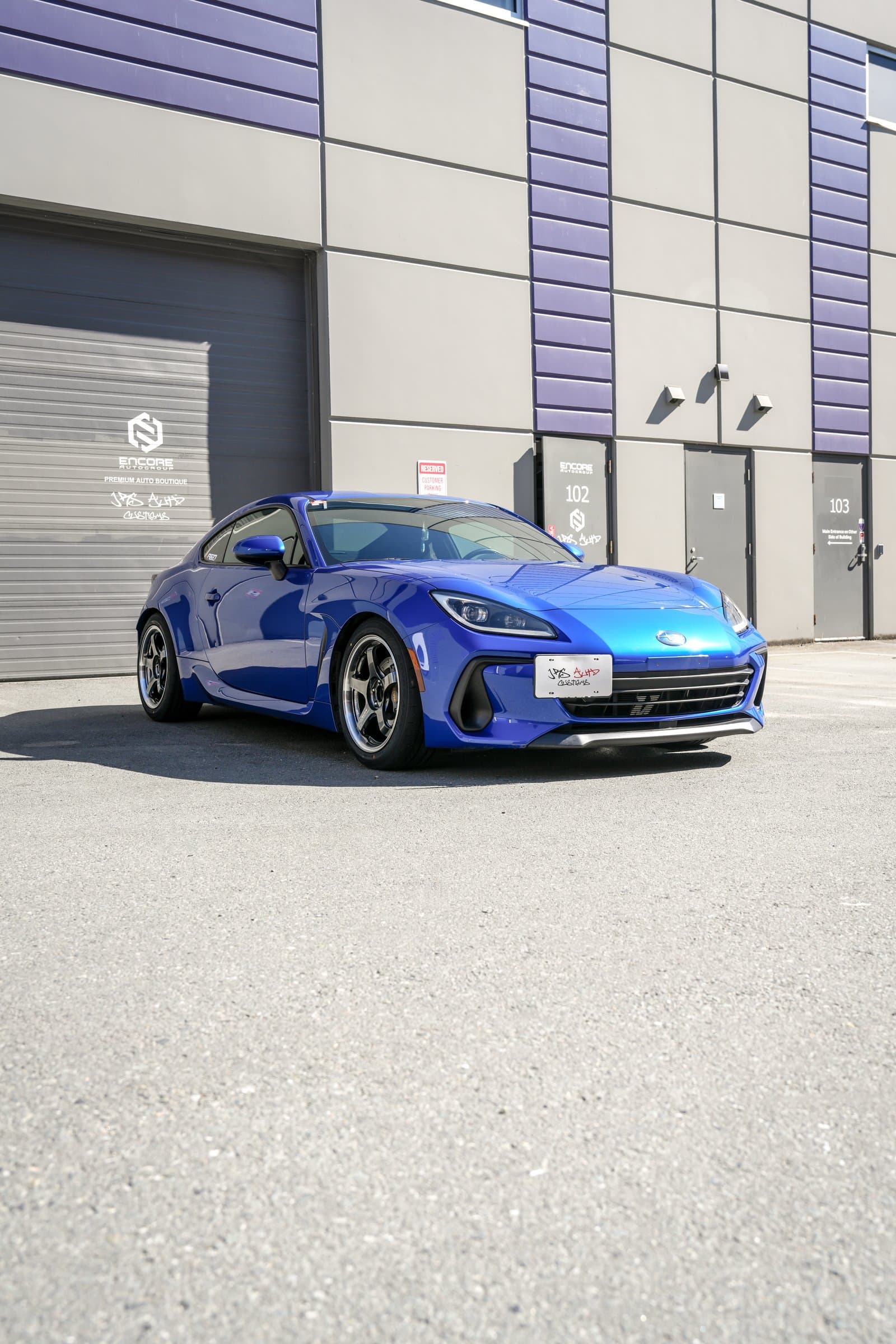
Related project: Subaru BRZ — Full Gloss Clear PPF