Vancouver Wheel Alignment After Winter Roads
Published
Wheel alignment is one of those things that does not announce itself until the damage is done. A car that was perfectly aligned in October can be badly out of spec by April, without you noticing anything until you see the tread wear or feel the pull. Vancouver's winter roads are particularly effective at knocking alignment out of specification, and the effects are not always obvious from the driver's seat.
What Winter Actually Does to Your Alignment
The main culprits are potholes, frost heave, and road salt. Potholes are the most obvious — a hard hit at speed bends suspension components, damages tie rods, and can shift the positions of the control arms. Frost heave is less visible but equally damaging: the ground shifts and freezes as temperatures cycle, and the forces transfer through the suspension mounting points. Road salt does not directly affect alignment, but it accelerates corrosion on suspension fasteners, which can make adjustments harder to secure properly and means bolts that should be straightforward to remove can be frozen in place.
Vancouver has a particular issue with road construction compounding the problem. Winter is when a lot of road maintenance happens, and the patchwork of temporary repairs, construction zones, and frost-damaged surfaces that follow construction season can be as hard on alignment as the weather itself.
Signs Your Alignment Needs Checking
Uneven or rapid tread wear is the most reliable sign. If you can see that one shoulder of a tyre is wearing faster than the other, or that the wear is tracking diagonally across the tread face, the alignment is almost certainly out. Catching this early — before the tyre is worn past the halfway point — means you can correct the alignment and get the full life out of the new set.
A steering wheel that is not centred when driving straight is another clear signal. If you hold the wheel straight and the car pulls to one side, or if you need to counter-steer to keep the car going straight, the alignment is off. Pull can also come from road crown, wind, or a brake issue, but alignment is the first thing to check.
A steering wheel that vibrates at certain speeds, particularly between 60 and 90 km/h, can indicate a bent component or an alignment issue that is causing the tyre to run at an angle. This is not always obvious — the car may feel fine at lower speeds — but the wear pattern on the tyres will tell the story if you know how to read it.
Why Alignment Matters More Than It Seems
Most drivers think of alignment in terms of tyre wear, and tyre wear is important: an aligned car gets more kilometres from every set of tyres. But alignment also affects how a car handles, how safely it brakes, and how predictably it responds in an emergency. A car that pulls or unevenly loads its tyres is less stable in a panic stop or a quick lane change. For a performance car or a car with lowered suspension, the handling impact of poor alignment is amplified significantly.
On Vancouver roads, where lane changes often involve quick decisions and surfaces can change from dry to wet within metres, predictable handling matters. An alignment that is even slightly off affects how the car responds at the limit — and the limit on a wet North Shore road is not the same as the limit on a flat highway.
When to Check and What to Expect
The best time to check alignment in Vancouver is early spring, before the warmer months bring higher speeds and more aggressive driving. A baseline check after winter gives you a clean reference point for the year. If you have hit a significant pothole at any point through the winter, it is worth checking regardless of the season. Many alignment shops will check and report on your current alignment for no charge before any work is done.
A full alignment adjusts all four wheels to the manufacturer's specifications. For most daily drivers, this means a two-wheel or four-wheel alignment depending on the car. For performance cars and anything with adjustable suspension, a four-wheel laser alignment gives the most accurate result and takes into account any modifications to the car's geometry.
Alignment After Lowering or Wheel Upgrades
If you have lowered the car or fitted new wheels, alignment is not optional — it is mandatory. Lowering changes the suspension geometry, and without correction the alignment will be outside specification. New wheels, particularly wider wheels, are more sensitive to alignment errors because the contact patch is larger and the consequences of running at an angle are more visible in the tread wear. After any wheel upgrade or suspension modification, a fresh alignment is part of the complete installation.
We do alignment checks and full alignment work at JRS Auto Customs in Vancouver. If you are unsure whether your car needs to be checked, bring it in and we can measure and report on the current state before recommending anything. Browse our wheel and suspension services to see what we cover.
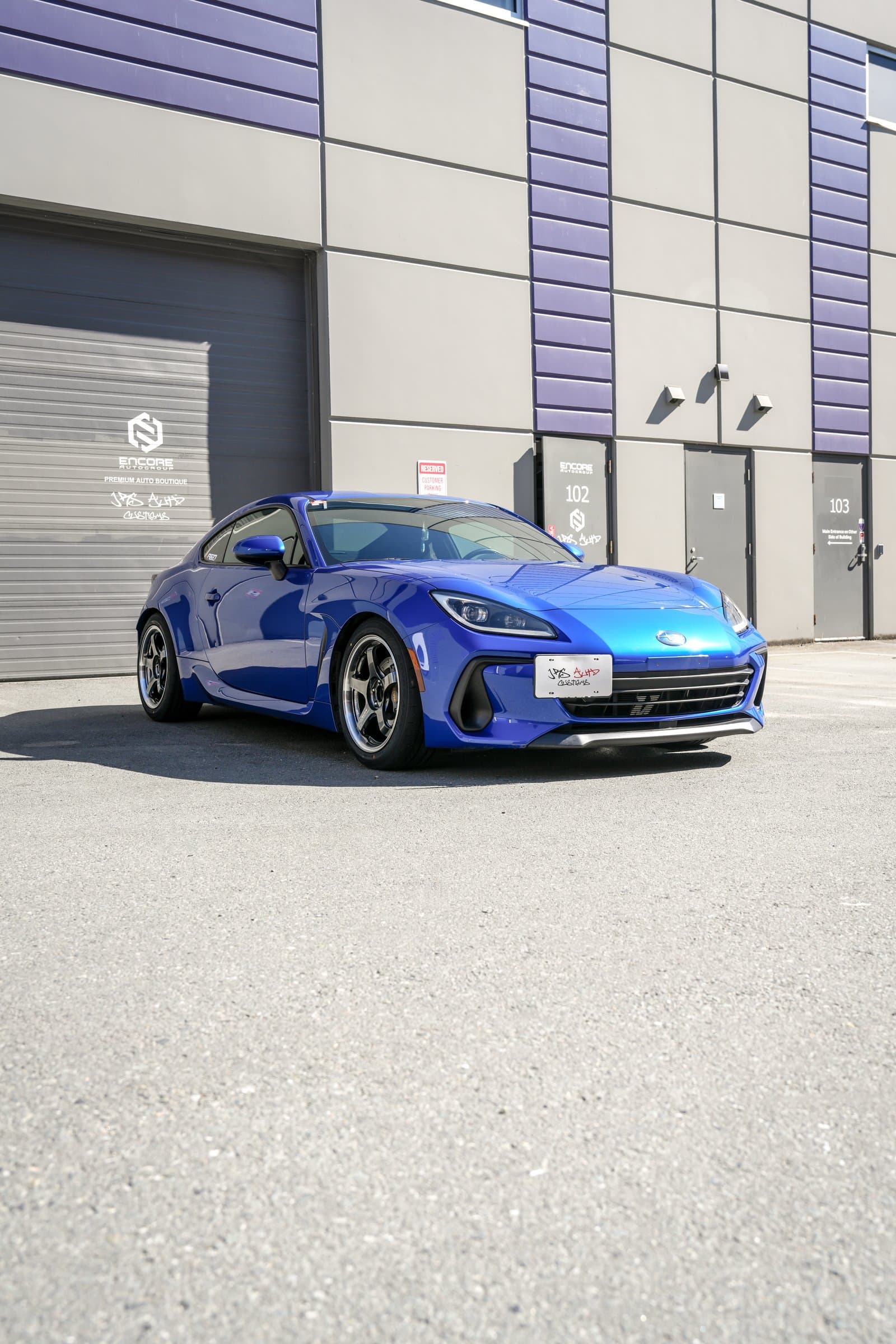
Related project: Subaru BRZ — Full Gloss Clear PPF