
Wheel Finishes and Vancouver Weather: What Lasts
Published
Vancouver's climate presents a specific challenge for wheels that does not exist in drier parts of the country. The combination of road salt in winter, mineral deposits from hard water in the summer, and the acidic brake dust that accumulates year-round means that the finish on your wheels matters in a way that purely aesthetic considerations do not capture. If you are choosing new wheels, the finish you pick affects how the wheels look in two years as much as it affects how they look on the day they are fitted. Here is a practical breakdown of how each finish actually performs in Vancouver conditions.
Why Wheel Finish Matters More in Vancouver Than Elsewhere
Road salt and calcium chloride brine are applied to Metro Vancouver roads from roughly October through March, and sometimes earlier following cold snaps. That salt sits in the barrel of the wheel and the back of the spokes where water and road spray carry it. Over a winter season, unprotected aluminium corrodes visibly. The corrosion is not just cosmetic: pitting in the wheel surface creates somewhere for brake dust and road film to accumulate, which accelerates the degradation and makes the wheel progressively harder to clean. The finish on a wheel acts as a barrier between the aluminium and that chemical environment — and different finishes provide that barrier differently.
BC hard water — particularly common in the Fraser Valley and parts of the North Shore — also leaves mineral deposits when water evaporates off the wheel surface. Combined with brake dust, which is iron-oxide and highly acidic, the result is a cleaning challenge that repeats every few weeks through the wet season. The easier the finish is to clean, the better it holds up visually.
Gloss Finish: Looks Good When Clean, Needs Regular Attention
A high-gloss painted or clear-coated finish — the standard finish on most OEM alloy wheels — looks sharp when it is clean. It also shows every bit of brake dust, road film, and water spot immediately, which means it needs cleaning every one to two weeks through the wet season to look its best. In terms of corrosion protection, a properly applied gloss clear coat over primer on aluminium provides excellent barrier protection. The risk is chipping: a stone chip in the clear coat exposes bare aluminium to salt immediately, and from that point the corrosion spreads under the remaining clear coat in a way that is hard to address without stripping and refinishing the wheel. Gloss wheels from quality manufacturers like Vossen come pre-clear-coated from the factory and hold up well with consistent cleaning.
Satin Finish: The Practical Middle Ground
A satin or brushed-satin finish sits between gloss and matte in terms of sheen. It hides brake dust and minor scratches better than gloss, which makes it more forgiving through the Vancouver winter season. The slightly textured surface of a satin finish also makes it easier to clean — contaminants do not bond to the surface as readily as they do to a mirror-polished gloss finish. Many aftermarket wheels from Vossen and Forgelite come in satin finishes specifically for this reason. Satin finishes are typically a powder coat or a low-gloss clear application, both of which provide good corrosion barrier protection. The main drawback is that satin finishes cannot be polished out if they get scratched — the only remedy is a full refinish.
Matte Finish: Bold Look, Higher Maintenance
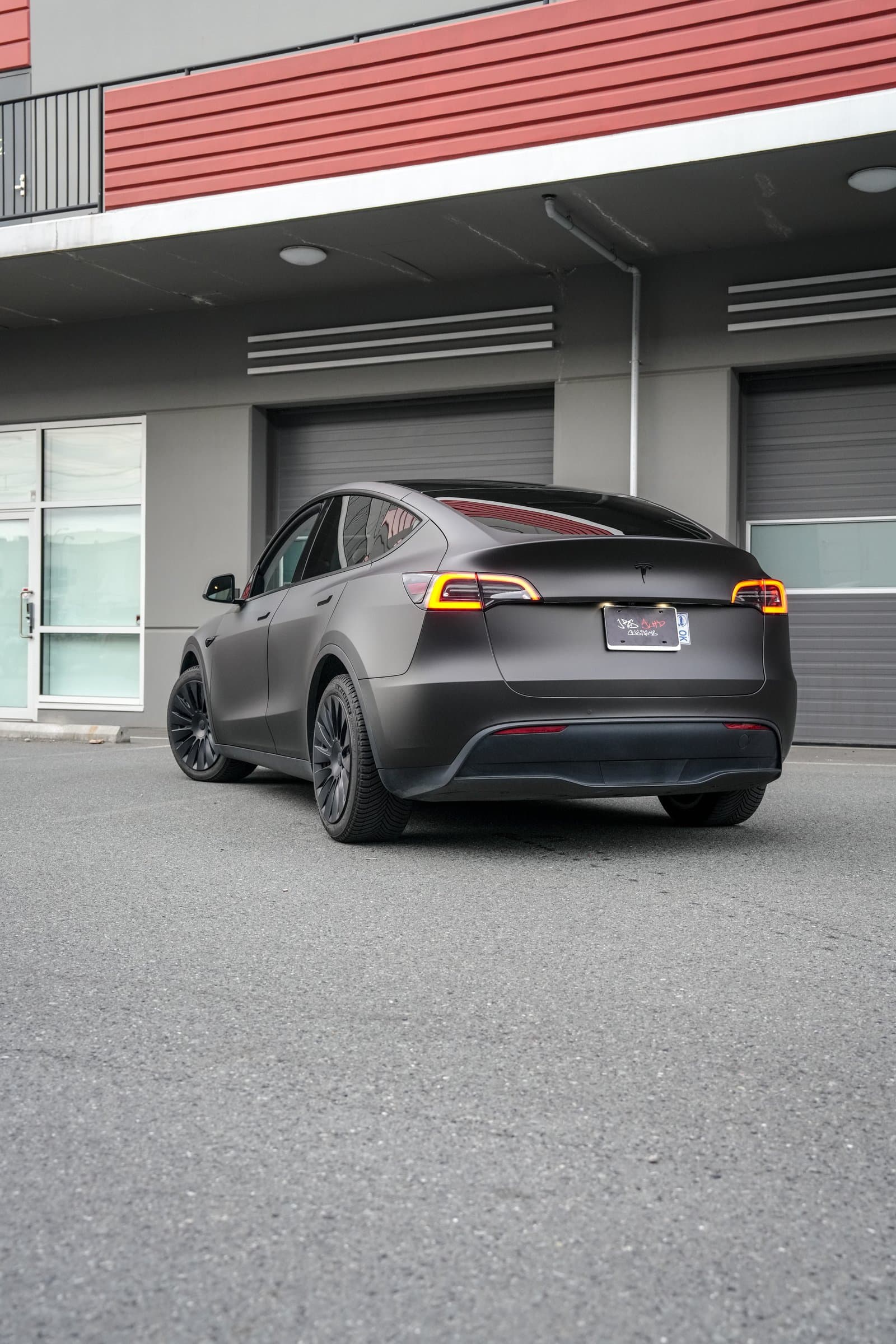
Matte-finished wheels have become popular for the way they look on dark-coloured vehicles — particularlyTeslas and performance cars where the flat finish reads as deliberately premium. In terms of Vancouver durability, matte finishes are genuinely the highest-maintenance option for a specific reason: the flat, non-reflective surface means that road film and brake dust do not show as immediately as they do on gloss, which paradoxically leads some owners to neglect cleaning longer than they should, and the accumulated contamination etches into the matte surface in a way that is harder to restore than it would be on a gloss finish. Matte clear coat also chips more visibly than satin or gloss because the contrast between the damaged spot and the surrounding surface is sharper. If you run matte wheels in Vancouver, you need to clean them regularly — not less often than gloss, but with the same frequency.
Powder Coat and Anodised Finishes: The Most Durable Options
A full powder coat on the wheel face and barrel provides the thickest, most uniform barrier against salt and moisture. Powder coat is electrostatically applied and baked, which means it penetrates spokes and barrel surfaces that liquid paint cannot reach consistently. Anodised finishes — more common on high-end forged wheels — create a chemically bonded oxide layer on the aluminium surface that is harder than the base metal itself, meaning it is extremely resistant to scratching and provides excellent corrosion resistance. For Vancouver drivers who want the lowest long-term maintenance burden, a quality powder coat or anodised finish on a forged wheel is the most resilient choice, though it comes at a higher initial cost. If you are choosing new wheels, ask about the finish specification and whether it covers the barrel as well as the face — a face-only clear coat leaves the barrel exposed to salt accumulation over a winter season.
The Bottom Line
For most Vancouver drivers, a satin or brushed finish from a quality manufacturer provides the best balance of visual appeal and durability in local conditions. It hides brake dust better than gloss, cleans more easily than matte, and provides a solid corrosion barrier. If you are on a budget and choosing between gloss and matte, gloss is the more forgiving option because it can be machine-polished to remove oxidation and restore appearance — matte and satin cannot be corrected in the same way. JRS Auto Customs can advise on wheel options that account for Vancouver's specific conditions — see their wheels service page.
Related project: Tesla Model Y TPU Color Change to Gloss Black